
From US$ 1,400 /person
Kalash Valley Tour
Eight days into the Kalash valleys of Chitral — Bumburet, Rumbur and Birir, and a culture found nowhere else on earth.
View trip & itinerary
Chitral lies in the Hindu Kush, in a different watershed from the Karakoram Highway, with its own passes, its own seasons and its own calendar. In three of its side valleys — Bumburet, Rumbur and Birir — live the Kalasha, the last people in Pakistan practising a polytheist religion that predates Islam in the region. UNESCO added their traditions to its list of intangible cultural heritage in 2018.
Their year turns on festivals: Chilam Joshi in mid-May, Uchal in late August and Choimus in December, and we run departures timed to each. Chitral is reached by a flight over the Hindu Kush that depends on the weather, or by road through the Lowari Tunnel, and at about 1,500 metres it is one of the few trips in the north where altitude is not a concern.
From US$ 1,400 /person
Eight days into the Kalash valleys of Chitral — Bumburet, Rumbur and Birir, and a culture found nowhere else on earth.
View trip & itinerary
From US$ 1,650 /person
Four days in the Kalash valleys for Chilam Joshi, the spring festival — walnut branches, milk poured over thresholds, and dancing that goes on until the light fails. Nine days from Islamabad, with two full days in the valleys.
View trip & itineraryFrom US$ 1,650 /person
The Kalasha harvest festival in late August — the herds come down from the high pastures, the wheat is in, and the valleys dance for three days with almost nobody watching. The quiet one.
View trip & itinerary
From US$ 1,880 /person
The world's highest polo ground at 3,743 metres, and the one week a year it is used. Gilgit against Chitral, no umpire worth the name, and ten thousand people camped on a pass with no village on it.
View trip & itinerary
From US$ 3,000 /person
Fifteen days across the Hindu Kush — Swat's Buddhist past, the Kalash valleys, Shandur Pass and down through Hunza.
View trip & itinerary
From US$ 2,850 /person
Sixteen days across the whole north — the Kalash valleys, Shandur Pass, Hunza's forts and Skardu, linked by the Karakoram Highway.
View trip & itinerary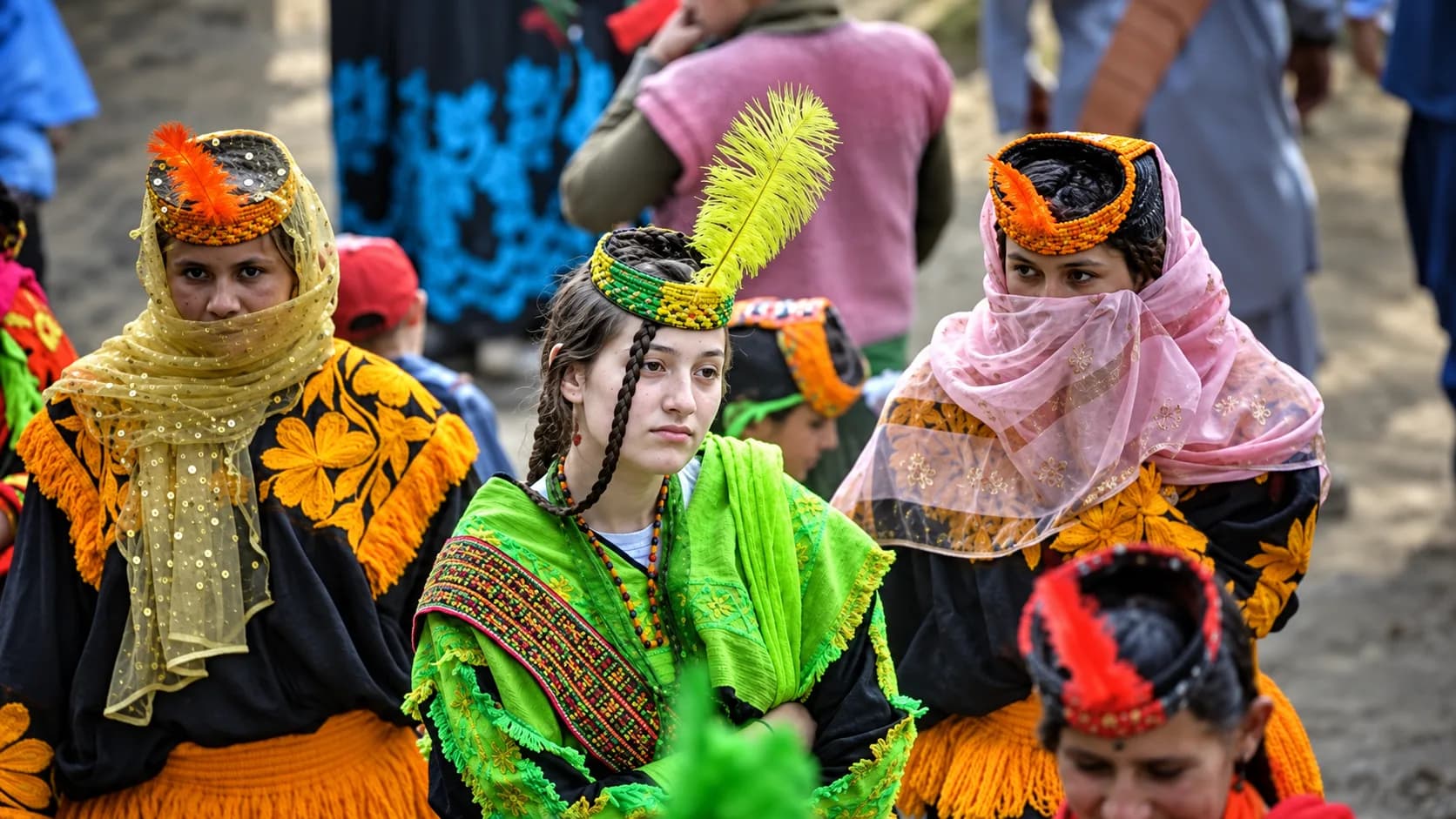
Planning a trip to Chitral? Explore our verified 2026–2027 Kalash Valley festival calendar, road conditions, Lowari Tunnel details, and tour logistics.
Read more →
Three days of free-style polo on the highest ground on earth, at 3,700 m between Chitral and Gilgit. When it runs, how to reach it, and what to expect.
Read more →
Women travel northern Pakistan alone every season and most describe it as easier than expected. Here is what to expect, what to wear, and where to be careful.
Read more →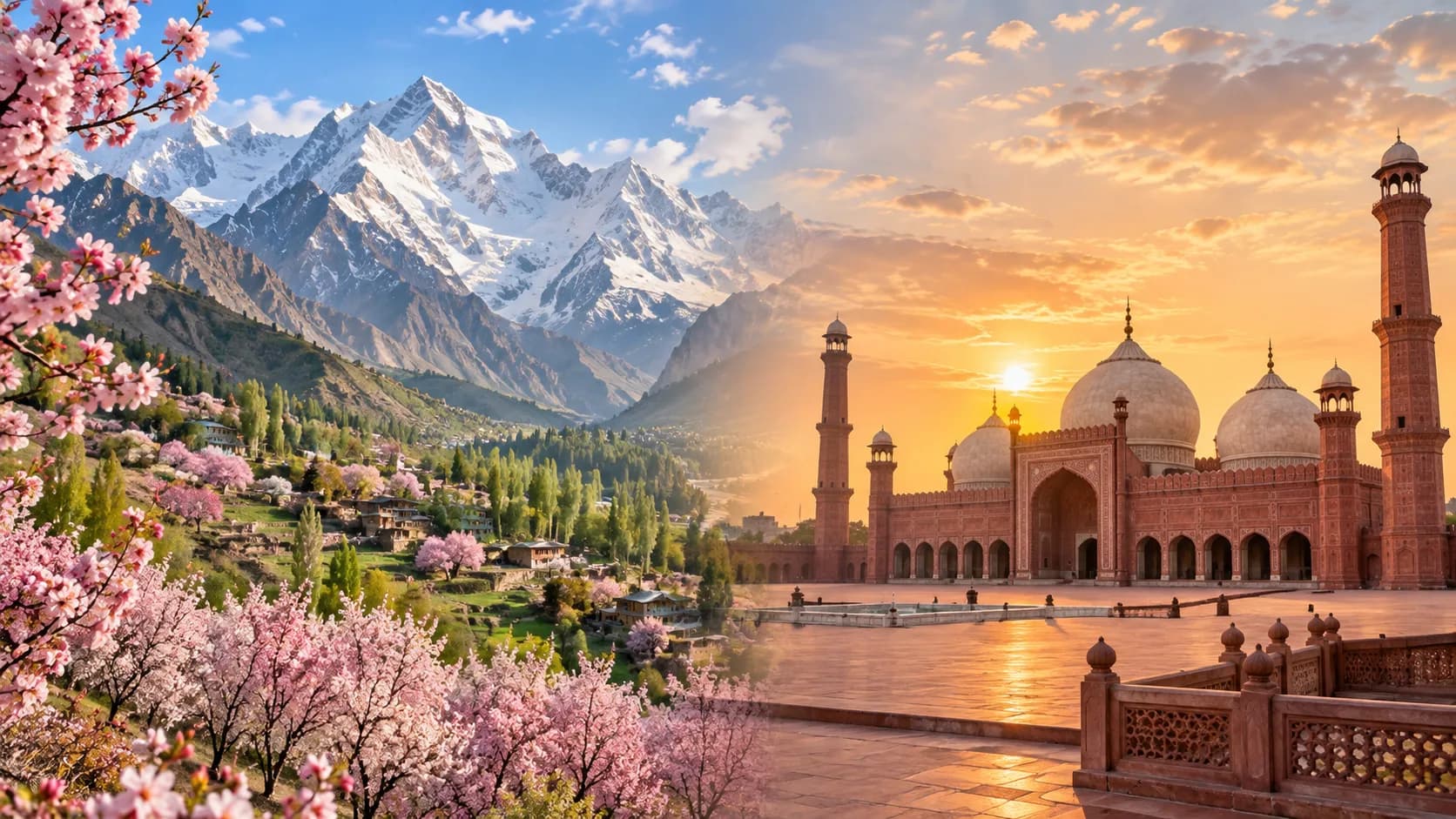
Planning a trip to Pakistan? Discover the best months for Karakoram trekking, Hunza cherry blossoms, and Punjab cultural tours in our complete 2026–2027 seasonal guide.
Read more →The people of three side valleys of Chitral — Bumburet, Rumbur and Birir — who practise a polytheist religion that predates Islam in the region. UNESCO added their traditions to its list of intangible cultural heritage in 2018.
Chilam Joshi runs in mid-May, Uchal in late August and Choimus in December, and we run fixed departures timed to each. You do not have to travel during a festival — outside those weeks the valleys are quieter and in some ways a better visit, because there is more time to talk to people.
It is spectacular and entirely weather-dependent. If it is cancelled we drive instead, through Mardan, Malakand, Dir and the Lowari Tunnel, which is a long day and included in the price of our trips at no extra cost.
The valleys are not a restricted area needing a No Objection Certificate, unlike some border zones elsewhere in the country. The permits and entry fees on our itineraries are included and arranged by us.
The valleys are a living community, not an exhibit. Ask before photographing anyone and accept a no. During festivals the dancing is a religious observance rather than a performance laid on for visitors. Dress modestly — Chitral is conservative.
Tell us who is travelling and roughly when. A trip planner — not a call centre — replies within three hours between 9am and 11pm Pakistan time with a day-by-day itinerary and the full price, per person, with nothing hidden underneath it.


