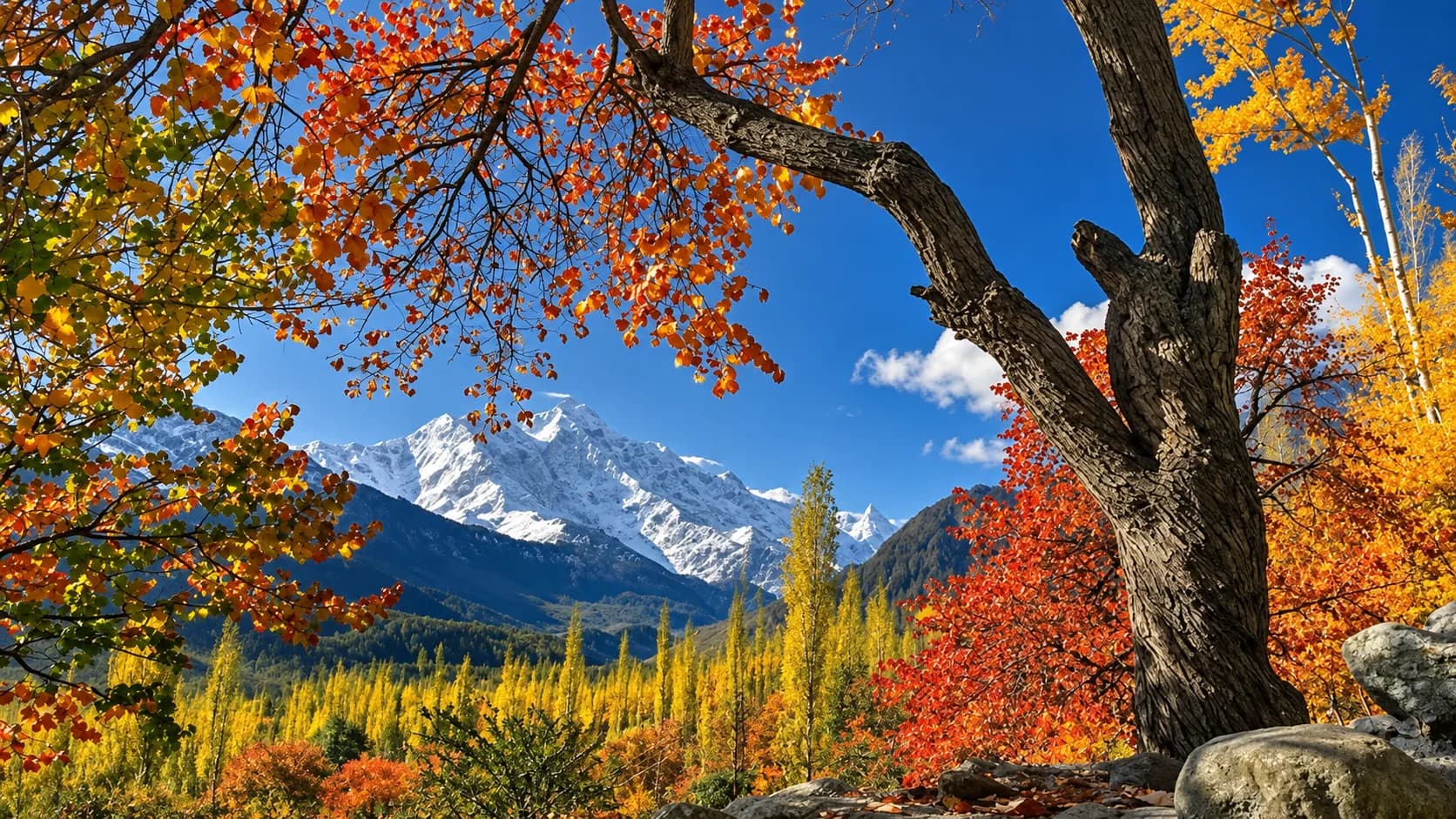
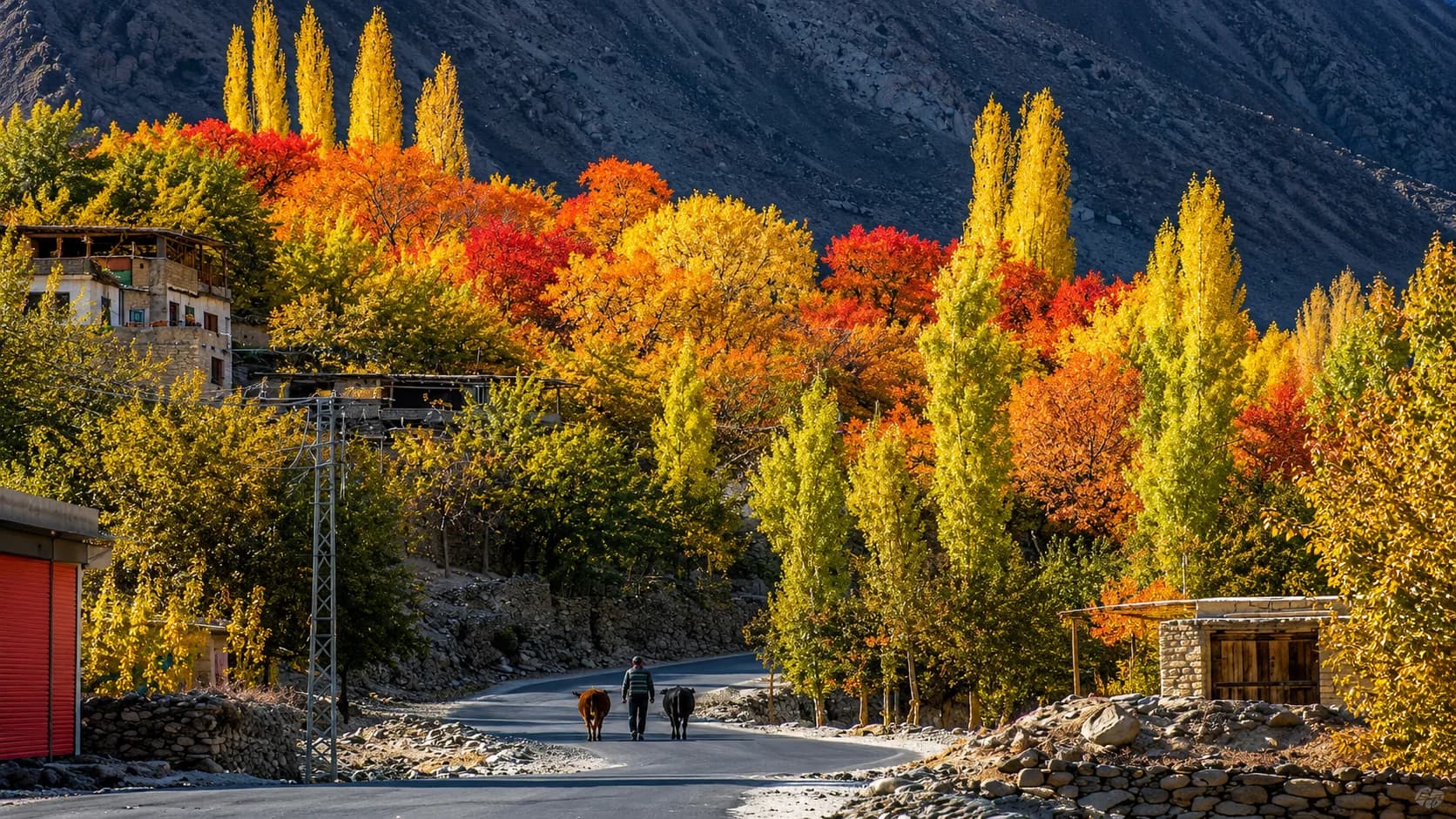
There is a brief, spectacular window every year when the deep green valleys of the Karakoram transform into a vibrant canvas of gold, orange, and crimson. Compared with the spring blossom season, autumn in Gilgit-Baltistan receives fewer visitors while offering significantly clearer mountain views.
As the intense summer heat of the southern plains fades and the high-altitude trekking season winds down, the skies over the north clear of summer haze. This reveals razor-sharp views of 7,000-meter peaks perfectly framing terraced orchards of fiery apricot and poplar trees. If you are planning an October trip to Pakistan, timing, logistics, and location are everything.
First-Hand Experience: Navigating Hunza in Autumn
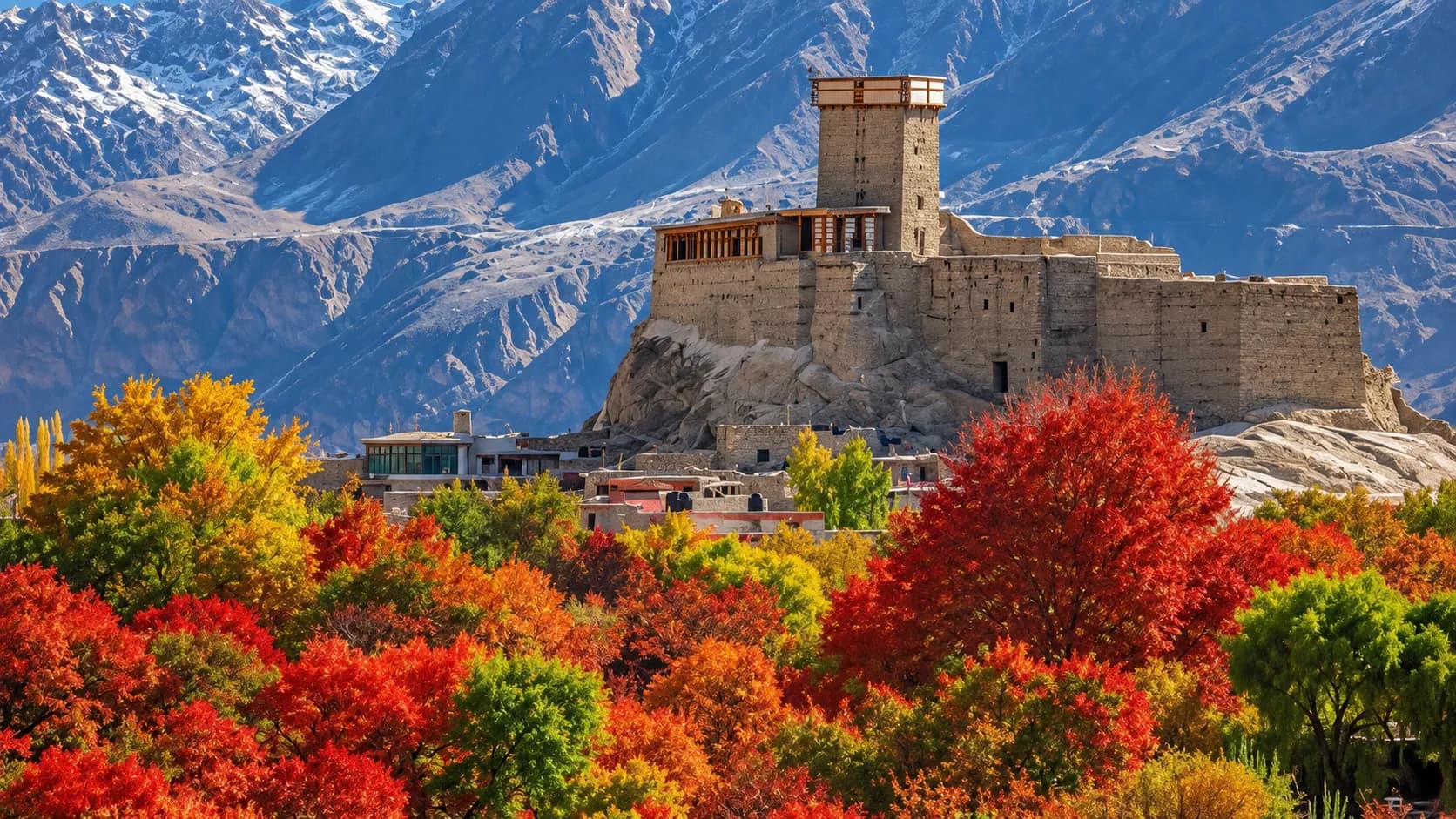
Having coordinated autumn departures across the Karakoram for years, the most common mistake I see travelers make is misjudging the timeline. Autumn does not happen all at once; it rolls down the mountainsides as temperatures drop. During our October overland trips, we usually notice the first golden poplars around Upper Gojal, like Passu and Sost, turning color before Karimabad reaches its peak. According to local guides in central Hunza, the strongest colors usually appear after the first few nights of near-freezing temperatures.
The second thing I wish travelers knew is how sharply the temperature drops. You can be comfortable in a t-shirt at 2:00 PM at Baltit Fort with daytime highs around 14°C to 18°C. By 6:00 PM, glacial winds sweep through the valley, and nighttime temperatures plummet to between 2°C and 6°C. Because of this chill, packing strategic layers is non-negotiable, and families traveling with children should ensure they book higher-end accommodations with reliable heating systems rather than basic guesthouses.
When and Where: The 2026–2027 Fall Color Timeline
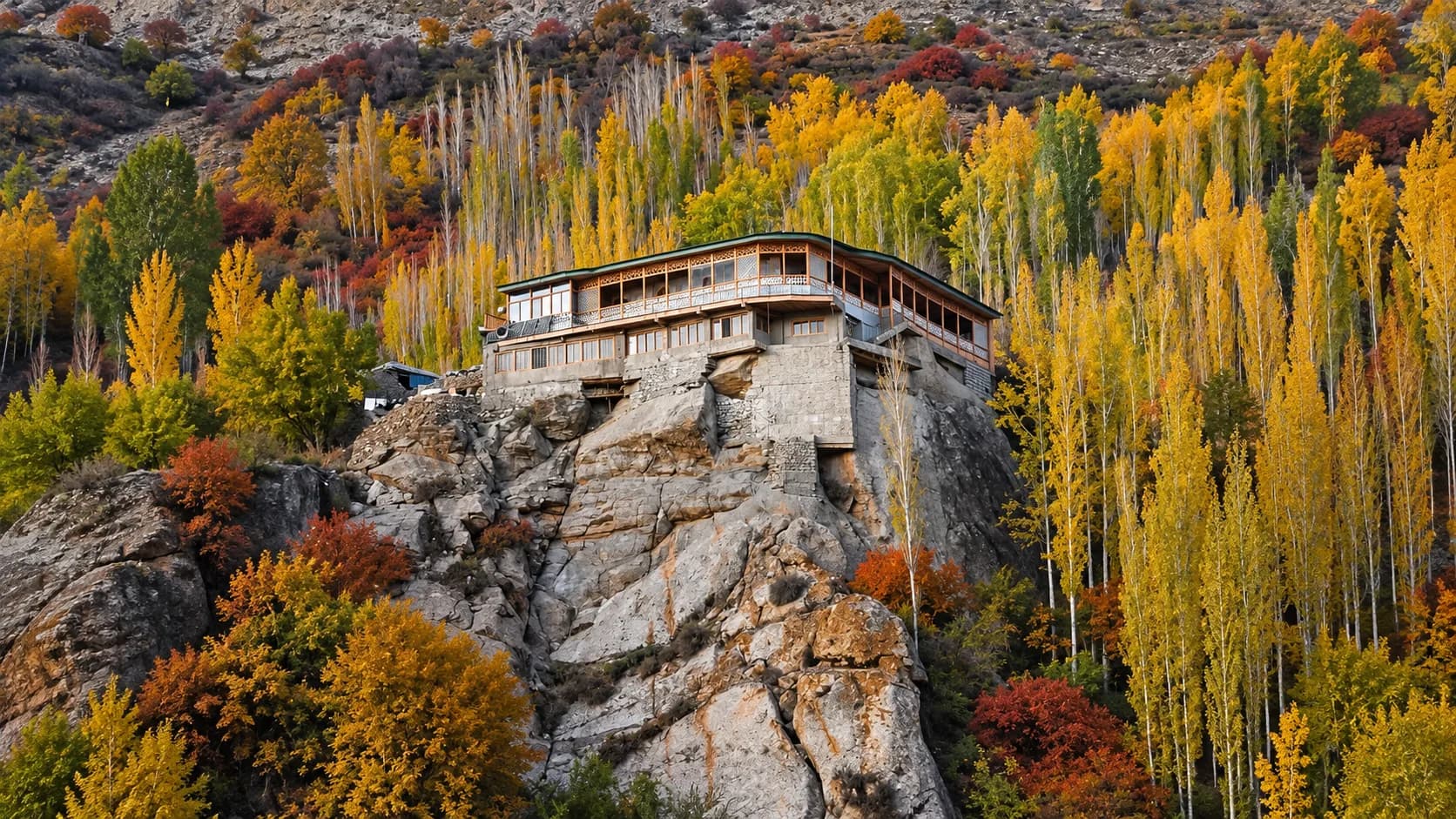
The transformation follows a predictable altitude schedule from the second week of October until mid-November. Here is what to expect for the upcoming season:
| Timing | Altitude & Region | What to Expect |
|---|---|---|
| Oct 10 – Oct 20 | Upper Gojal, Khunjerab Pass, Phander Valley | The high-altitude birch trees turn pale yellow. Nighttime temperatures drop near freezing. The first light dustings of winter snow cap the surrounding peaks. |
| Oct 20 – Oct 31 | Central Hunza (Karimabad), Nagar, Skardu | Peak Season. Apricot, cherry, and walnut trees erupt in vibrant reds and deep oranges. The golden poplars lining the rivers hit peak color in late October. |
| Nov 1 – Nov 15 | Lower Hunza, Gilgit City, Skardu Valley Floor | The late autumn window. Valleys are draped in copper and brown leaves. Crowds are virtually gone, but Babusar Pass often faces closure due to heavy snowfall. |
While the entire Karakoram Highway is breathtaking, certain valleys offer unparalleled foliage:
- Karimabad (Central Hunza): The cultural heart of the region, where terraced orchards turn into a cascading sea of yellow beneath Baltit Fort. Travelers looking to experience this specific valley at a relaxed pace can explore our dedicated Hunza Valley Tour.
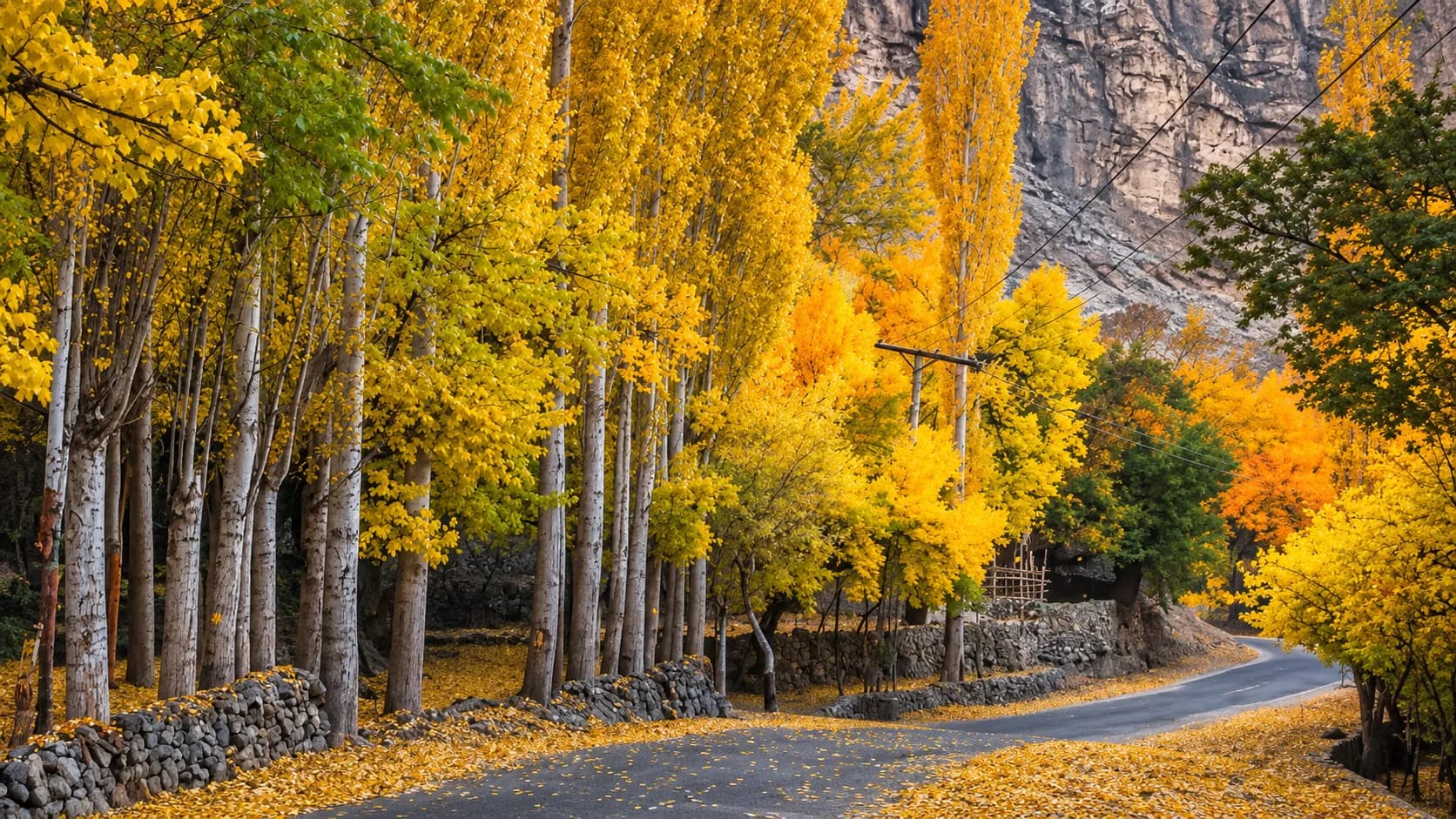
- Passu (Upper Gojal): Bright golden poplars lining the Hunza River, backed by the dramatic granite spires of the Passu Cones.
- Hopper Valley (Nagar): Cooler microclimates mean its colors often peak several days earlier against the black-ice Hopper Glacier.
- Phander Valley (Ghizer): A quieter alternative featuring deep-blue lakes bordered by vibrant golden willows.
Logistics: Road Conditions, Costs, and Connectivity
You have two primary options for reaching the north. PIA operates daily flights from Islamabad to Gilgit and Skardu, offering incredible views of Nanga Parbat, but flights are strictly subject to clear weather. By road, the drive from Islamabad takes 12 to 14 hours. In early October, the scenic Babusar Pass is usually open, but it typically closes for the winter between late October and late November due to extreme snowfall. Travelers should always have a backup plan to use the year-round Karakoram Highway via Besham.
Autumn is shoulder season, making it excellent value. For independent domestic travelers, budget 7-day packages from Lahore or Islamabad can start around PKR 25,000 to PKR 60,000 depending on the vehicle and hotel quality. For international travelers seeking premium, all-inclusive 10-day overland tours with vetted 4x4 transport, guaranteed heated accommodations, and a local guide, costs typically range from $1,200 to $1,400 USD.
For connectivity, international travelers must purchase a local SCOM SIM card upon arrival in Gilgit. Standard networks like Jazz and Telenor work in main towns but frequently drop near high passes and remote valleys.
Photography, Packing, and 10-Day Itinerary
To capture the best images, avoid shooting in the harsh midday sun. The golden hour in Hunza happens early—around 4:00 PM to 5:00 PM—because the sun dips behind the towering peaks well before standard sunset time. Bring a circular polarizing filter (CPL) to cut the glare off the Hunza River and Attabad Lake, making the autumn leaves pop against the blue water.
A highly efficient 10-day itinerary ensures you hit the colors at their peak. Start with an overland drive or flight to Gilgit, transitioning immediately to central Hunza (Karimabad) for two nights to explore Baltit and Altit Forts. Dedicate day four to the turquoise waters of Attabad Lake and the golden orchards of Gulmit and Passu. Push north to the Khunjerab Pass on day five, then retreat south to explore the Hopper Glacier in Nagar. Conclude with a domestic flight out of Gilgit or Skardu.
Whether you choose our focused Hunza Valley Tour 2027 or expand your journey across two regions with the 10-Day Hunza & Skardu Tour, booking early ensures heated boutique accommodations along peak dates. Check our Northern Pakistan Packing Guide to pack the right thermal layers for chilly October nights.