Bamiyan Buddhas, Band-e-Amir & Kabul Cultural Tour
- 8 days, Kabul to Kabul
- Max altitude 2,900 m (Band-e-Amir)
- Best season May to October
- Four to ten travellers
- Kabul, Bamiyan and Balkh, Afghanistan
- Read the safety section first
- 8-day itinerary
About this tour
Before you read anything else on this page, read the first section of Good to know. Most Western governments, including the UK, the US and Australia, advise against all travel to Afghanistan. Standard travel insurance does not apply there, the de facto authorities require a visa, permits and registration, and a departure can be cancelled at short notice. This trip is for people who have weighed that, not people who have not yet seen it.
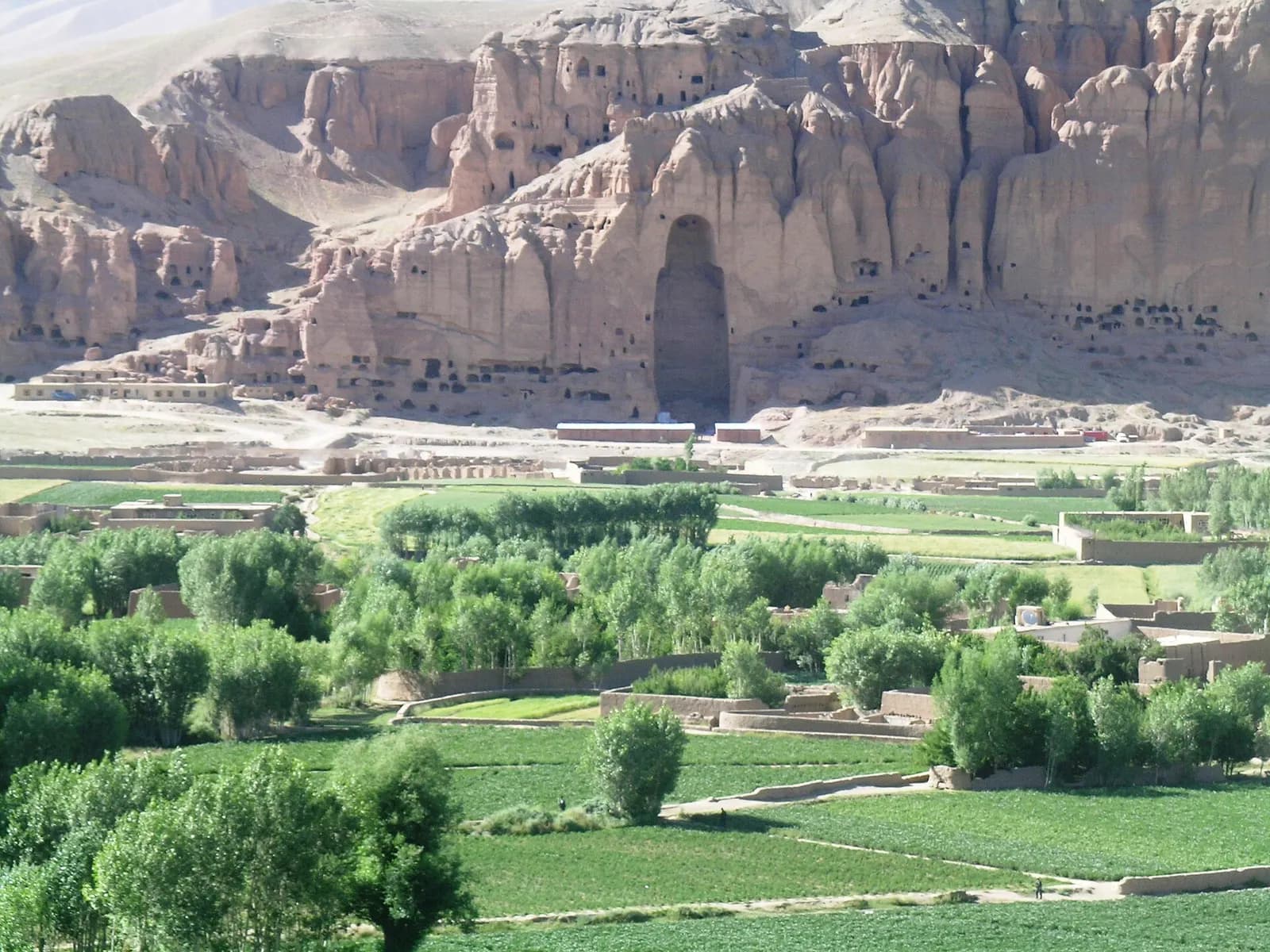
What it offers in return is the central highlands of Afghanistan, which for most of the last forty years very few outsiders have been able to see. The Bamiyan valley lies at about 2,500 metres between the Hindu Kush and the Koh-i-Baba, a band of green fields and poplars beneath a long sandstone cliff. For some fifteen centuries that cliff held two standing Buddhas, 55 and 38 metres tall. They were blown up in March 2001. What you visit now are the niches where the Buddhas stood, and the hundreds of cave monasteries cut into the rock around them, some still carrying fragments of painted plaster.
Around the valley are the ruins that explain why it mattered. Shahr-e Gholghola, the City of Screams, is the hilltop citadel destroyed in Genghis Khan's campaign of 1221. Shahr-e Zuhak, the Red City, guards the eastern entrance to the valley from a cliff above the Kabul road, and we stop there on the way in. Seventy-five kilometres west, Band-e-Amir is Afghanistan's first national park: a chain of six lakes held back by natural travertine dams at about 2,900 metres, an implausible blue against red and grey cliffs.
Kabul takes two days at either end — the Gardens of Babur, where the founder of the Mughal empire is buried, the bird sellers of the old city, and Chicken Street, where Kabul's carpet and antique traders have worked since the hippie trail. Then a domestic flight north to Mazar-i-Sharif for the tiled Shrine of Hazrat Ali, the Blue Mosque, and the ancient city walls of Balkh twenty kilometres away.
We have not run this itinerary before, and we will not pretend otherwise. Each departure is confirmed only after we have checked the current advisories, the flight schedules and the permit position, and we will tell you plainly if any of those has changed.
Trip highlights
The Buddha niches and cave monasteries of Bamiyan
The two standing Buddhas, 55 and 38 metres tall, were destroyed in 2001. The niches where they stood remain, cut into a kilometre of sandstone cliff alongside hundreds of monastic caves, some with fragments of their painted ceilings still in place.
The lakes of Band-e-Amir National Park
Six lakes stepped down a valley at about 2,900 metres, dammed not by people but by walls of travertine deposited from mineral-rich water. The colour runs from turquoise to deep blue, and the setting is bare red and grey cliff.
Shahr-e Gholghola, the City of Screams
The hilltop citadel of medieval Bamiyan, destroyed with its population during the Mongol campaign of 1221. A short, steep climb through the mud-brick ruins gives the best view along the valley to the Buddha cliff.
Kabul: Chicken Street, the bird market and the Gardens of Babur
The terraced garden where Babur, first of the Mughal emperors, asked to be buried; the lanes of the old city where songbirds and fighting partridges are sold; and the carpet and antique shops of Chicken Street.
The Blue Mosque of Mazar-i-Sharif
The Shrine of Hazrat Ali, a fifteenth-century foundation rebuilt and retiled many times since, set in a white marble courtyard with its famous flocks of white pigeons. Reached by a domestic flight from Kabul, with the old city walls of Balkh the same afternoon.
Route
- 1 Start
- 2 Stop in order
- 8 Finish
- Route travelled
Loading map…
At a glance
- 8 days, Kabul to KabulThree nights each in Kabul and Bamiyan, one in Mazar-i-Sharif, and two road days through the Hindu Kush.
- Max altitude 2,900 m (Band-e-Amir)Bamiyan town is about 2,500 m. The road from Kabul crosses the Shibar Pass at roughly 3,000 m, but you drive over it rather than stay.
- Best season May to OctoberWarm, dry days in the highlands. Mazar-i-Sharif is very hot in July and August.
- Four to ten travellersSmall groups only, with an Afghan guide throughout.
- Kabul, Bamiyan and Balkh, AfghanistanKabul, Shahr-e Zuhak, Bamiyan, Band-e-Amir, Mazar-i-Sharif and Balkh.
- Read the safety section firstGovernment advisories, insurance, permits and conduct rules, set out plainly in Good to know.
Day by day
Day 1Arrive Kabul, 1,790 m
Met at Kabul airport and driven to the hotel. Passports are checked and copied for registration, and in the evening the guide runs through the practical rules — dress, photography, checkpoints — that the rest of the trip depends on. Overnight in Kabul.
Day 2Kabul: the Gardens of Babur, the old city and Chicken Street
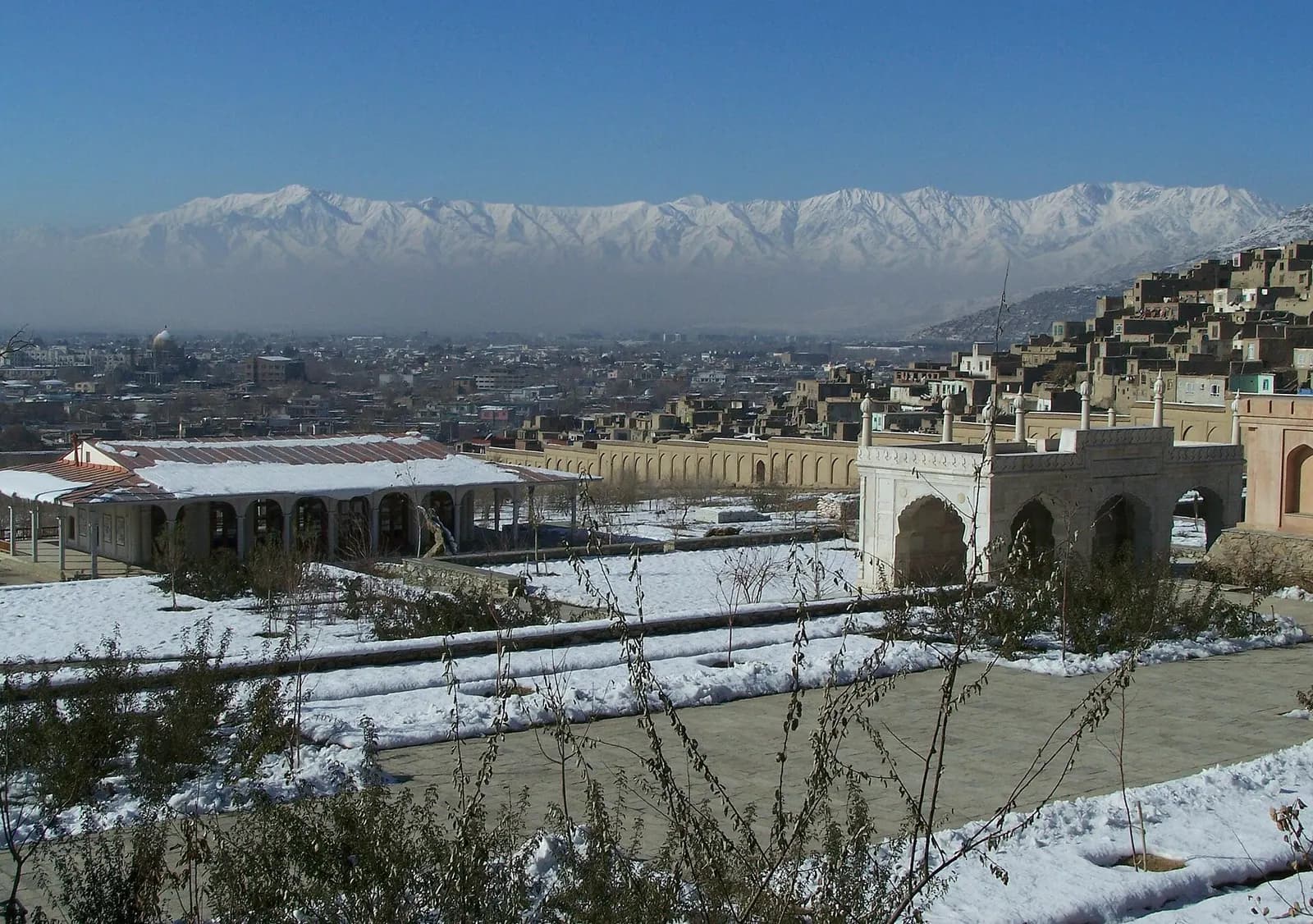
Morning at the Gardens of Babur, the Mughal emperor's terraced garden and tomb on the slope of the Sher Darwaza, with the Shah Jahan mosque and a view over the city to the mountains. Then the old city lanes near the Pul-e Khishti mosque where the bird market is held, and an afternoon among the carpet, lapis and antique dealers of Chicken Street. Overnight in Kabul.
Day 3Drive to Bamiyan, 2,500 m, by way of Shahr-e Zuhak
Five to six hours by road, west through the Ghorband valley and over the Shibar Pass, the watershed of the Hindu Kush at roughly 3,000 metres. The exact road is chosen on the day on the advice of the guide and the authorities. Before reaching Bamiyan town you stop at Shahr-e Zuhak, the Red City, whose fortified walls climb a cliff above the river junction at the eastern entrance to the valley. Overnight in Bamiyan.
Day 4Bamiyan: the Buddha niches, the caves and Shahr-e Gholghola
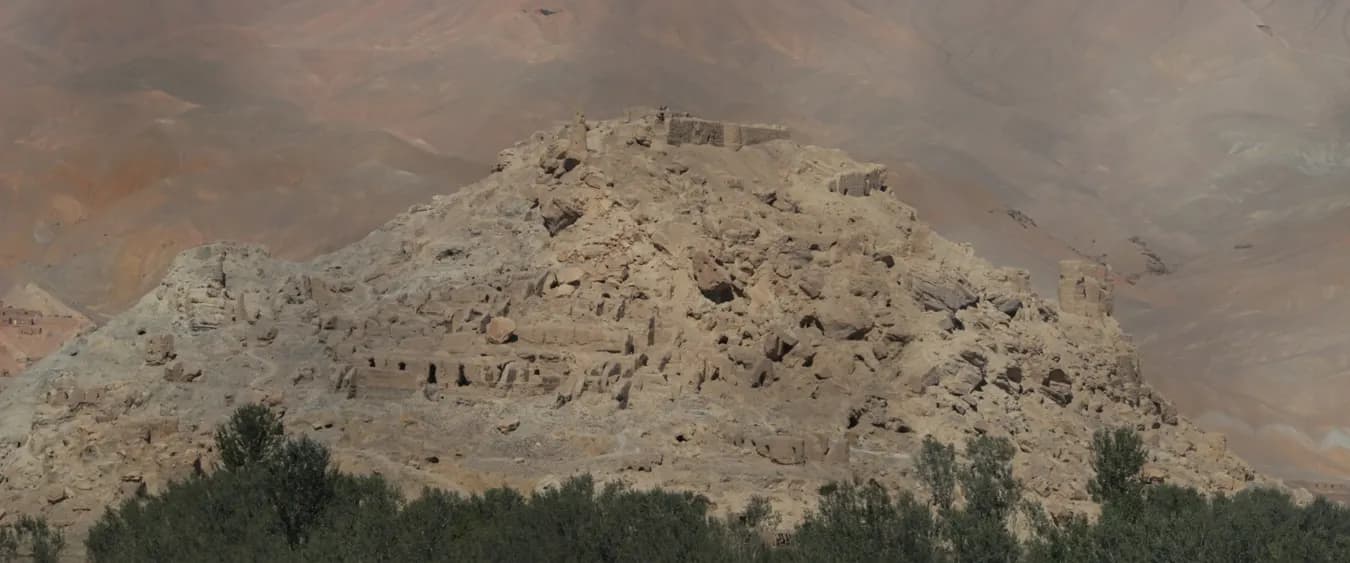
A full day in the valley. Morning at the cliff: the niches where the two Buddhas stood until 2001, and the cave monasteries around them, some still holding traces of painted plaster. Afternoon at Shahr-e Gholghola, a short but steep climb through the ruins of the citadel destroyed in 1221, with the whole cliff face in view from the top. Overnight in Bamiyan.
Day 5Band-e-Amir National Park, 2,900 m
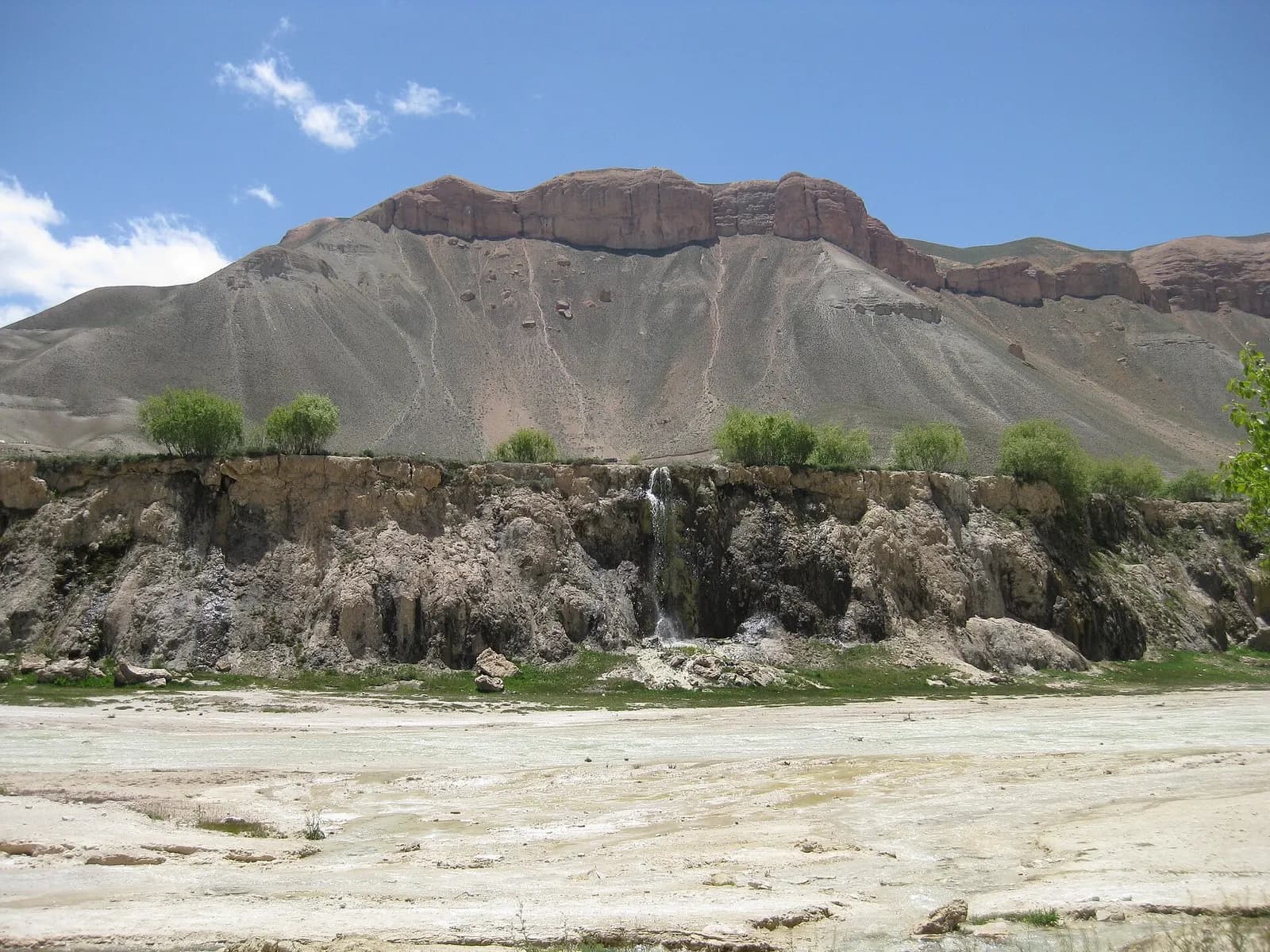
About two hours each way on the road west from Bamiyan to Band-e-Amir. Most of the day is spent walking the shores of the main lakes — Band-e Haibat, the largest, and the smaller lakes stepped below it — and looking at the travertine walls that hold them back. Swimming and boating depend on the rules in force on the day. Back to Bamiyan in the late afternoon. See Good to know about access for women, which has changed here before.
Day 6Drive back to Kabul, 1,790 m
Five to six hours back over the Shibar Pass to Kabul, with stops for tea and lunch on the way. Late afternoon free, or a visit to the National Museum if time allows and it is open. Overnight in Kabul.
Day 7Fly to Mazar-i-Sharif — the Blue Mosque and Balkh
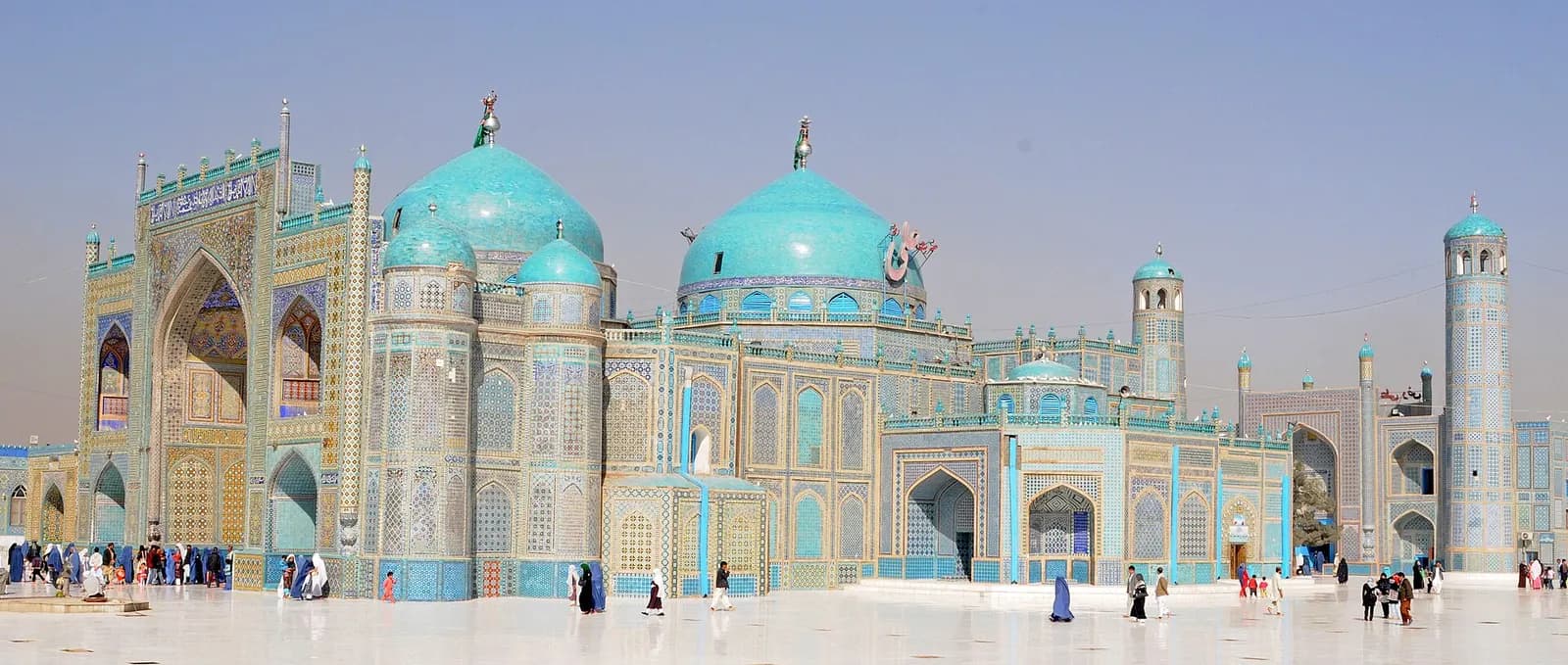
Early flight north over the Hindu Kush, about an hour in the air. Morning at the Shrine of Hazrat Ali, the Blue Mosque, with its tiled domes and white pigeons; then twenty kilometres west to Balkh, one of the oldest cities in Central Asia, for its earthen ramparts and the fluted dome of the Green Mosque of Khwaja Abu Nasr Parsa. Overnight in Mazar-i-Sharif. If domestic flights are not operating, this day is replaced with a second day around Kabul — see Good to know.
Day 8Fly to Kabul and depart
Morning flight back to Kabul and a transfer to the international terminal for your onward flight. Book an international departure no earlier than the afternoon, and ideally keep a spare day: domestic schedules in Afghanistan change with little notice.
What’s included
- Seven nights' accommodation: three in Kabul, three in Bamiyan and one in Mazar-i-Sharif, in the best hotels and guesthouses available, twin share
- Breakfast daily, and lunch and dinner from day two to day seven
- An English-speaking Afghan guide throughout
- All ground transport in private vehicles with experienced local drivers, including the Kabul–Bamiyan road both ways
- CONFIRM — Kabul–Mazar-i-Sharif–Kabul domestic flights
- CONFIRM — Tourist permits and provincial registration in Kabul, Bamiyan and Balkh, arranged on your behalf
- CONFIRM — Security escorts or police accompaniment wherever the authorities require them
- Entry fees at the Bamiyan sites, Band-e-Amir National Park, the Gardens of Babur and the Blue Mosque
- Airport transfers in Kabul
Not included
- International flights to and from Kabul
- CONFIRM — The Afghan visa, applied for before travel; we provide the supporting letter
- Specialist travel insurance valid for Afghanistan — a condition of booking, and standard policies will not do
- Lunch and dinner on day one and day eight
- Drinks, tips and personal spending
- Single rooms, available at a supplement
- Extra nights or costs caused by cancelled flights, closed roads or changed regulations
Good to know
Safety, advisories and insurance
Most Western governments advise against all travel to Afghanistan. That includes the UK Foreign, Commonwealth & Development Office, the US State Department and the Australian government, and the advice covers the whole country, Kabul and Bamiyan included. Read the current advice from your own government before you book, and again before you fly. We will not tell you it is wrong, and we will not tell you the risk is zero. The risks those governments describe include terrorism, kidnapping and arbitrary detention, and the ability of your embassy to help you there is very limited or absent.
The practical consequence is insurance. A standard travel policy is void in a country your government advises against travelling to. You need specialist cover written for high-risk destinations, including medical treatment and evacuation from Afghanistan, and we will ask to see the policy before we confirm your place.
The situation in Afghanistan can change quickly. A departure may be postponed, rerouted or cancelled at short notice — a new regulation, a closed road, a flight that stops running, a change in the security picture. When that happens we will tell you as soon as we know, and the terms of what is refundable are set out in your booking conditions. Please read them.
Visas, permits and registration
The country is governed by the de facto authorities, the Taliban administration. Foreign visitors need an Afghan visa obtained before travel from a mission issuing them, and once inside the country a tourist permit and registration with the provincial authorities in each province visited. We arrange the permits and registration and provide the supporting letter for the visa, but the rules and the issuing missions change, so the exact process is confirmed with you at the time of booking. Expect checkpoints on the roads, where documents are inspected; carry your passport and copies at all times.
Dress, conduct and photography
Women must cover their hair, arms and legs in public, with a loose, long top over trousers or a long skirt; a headscarf is the minimum and some places expect more. Men should wear long trousers and keep their shoulders covered. Alcohol is prohibited. Restrictions on women's access to parks and public gardens, including Band-e-Amir and some sites in Kabul, have been introduced and enforced unevenly since 2022, and how they apply to foreign women has varied. If you are a woman considering this trip, talk to us first: we will tell you what we know at the time and will not take your booking on assumptions.
Do not photograph checkpoints, officials, soldiers, government buildings or women. Ask before photographing anyone at all, and accept no for an answer. The guide will tell you when the camera should stay in the bag, and that instruction is not negotiable.
Season, roads and flights
May to October is the season for the highlands. Days in Bamiyan are warm and dry; nights at 2,500 metres are cool and can be cold at either end of the season. Mazar-i-Sharif, at under 400 metres, is very hot in high summer. The Kabul–Bamiyan road takes five to six hours and the route is chosen on the day. The Mazar-i-Sharif flights are scheduled domestic services that change at short notice; if they are not running, day seven becomes a second day around Kabul instead, because the road north over the Salang Pass is too long to fit.
Accommodation, money and connectivity
Kabul has a small number of hotels used to foreign guests. Bamiyan has simple guesthouses and small hotels: clean rooms, shared or basic bathrooms in places, and electricity that comes and goes. Bring US dollars in clean, recent notes and change them to afghanis as needed; foreign cards do not work in Afghan ATMs and almost nowhere takes a card. Mobile coverage is reasonable in Kabul, Bamiyan and Mazar-i-Sharif, and a local SIM can be arranged, but expect the internet to be slow and occasionally shut off.
Questions about this trip
Is it safe to travel to Afghanistan?
Most Western governments, including the UK, the US and Australia, advise against all travel to Afghanistan, and we think you should take that advice seriously rather than read past it. The risks they cite include terrorism, kidnapping and detention, and consular help is very limited. Standard travel insurance is void; specialist high-risk cover is a condition of booking. Departures are confirmed only after we have reviewed the current situation, and may be cancelled at short notice if it changes.
Are the Bamiyan Buddhas still there?
No. Both statues, 55 and 38 metres tall, were destroyed in March 2001. What you visit are the empty niches where the Buddhas stood, the cave monasteries cut into the cliff around them, and the site's surviving fragments of painting. The niches themselves are enormous and the scale of what was lost is very clear standing beneath them.
Do I need a visa, and what permits are needed?
Yes. An Afghan visa is needed before travel, issued by missions of the de facto authorities, and inside the country you need a tourist permit and registration in each province you visit. We arrange the permits and registration and provide the letter for your visa application. The process changes often, so we confirm it with you at the time of booking.
Can women join this tour?
Yes, but please talk to us before booking. Women must dress conservatively, covering hair, arms and legs, and restrictions on women entering parks — including Band-e-Amir — and some public gardens have been applied to visitors at times since 2022. We will tell you what we know about the current position and adjust the itinerary or advise against travel if we need to.
How hard is this tour?
Physically, not very. Walking is short and easy apart from the steep climb up Shahr-e Gholghola, and the highest point you stay at is about 2,500 metres in Bamiyan. The demands are the two five- to six-hour road days, simple accommodation in Bamiyan, and the patience that checkpoints, rules and changing plans require.
What happens if the flight to Mazar-i-Sharif is cancelled?
Domestic flights in Afghanistan change at short notice. If they are not operating, day seven becomes a second day around Kabul and Mazar-i-Sharif is dropped; the road there over the Salang Pass is too long to fit into eight days. We recommend keeping a spare day before your international flight home.
Can I travel alone, or book this privately?
Single travellers join the group and can share a room or pay the single supplement. Private departures for two or more are possible on the same itinerary or a variation of it. If you want the Wakhan instead, see our Afghan Wakhan Corridor expedition, and the Afghanistan page for both trips together.
What is the best month to go?
May, June, September and early October are the most comfortable: warm, dry days in Bamiyan and bearable heat in Mazar-i-Sharif. July and August are fine in the highlands but very hot in the north. From November the Bamiyan road can be affected by snow.
Explore the region
You might also consider
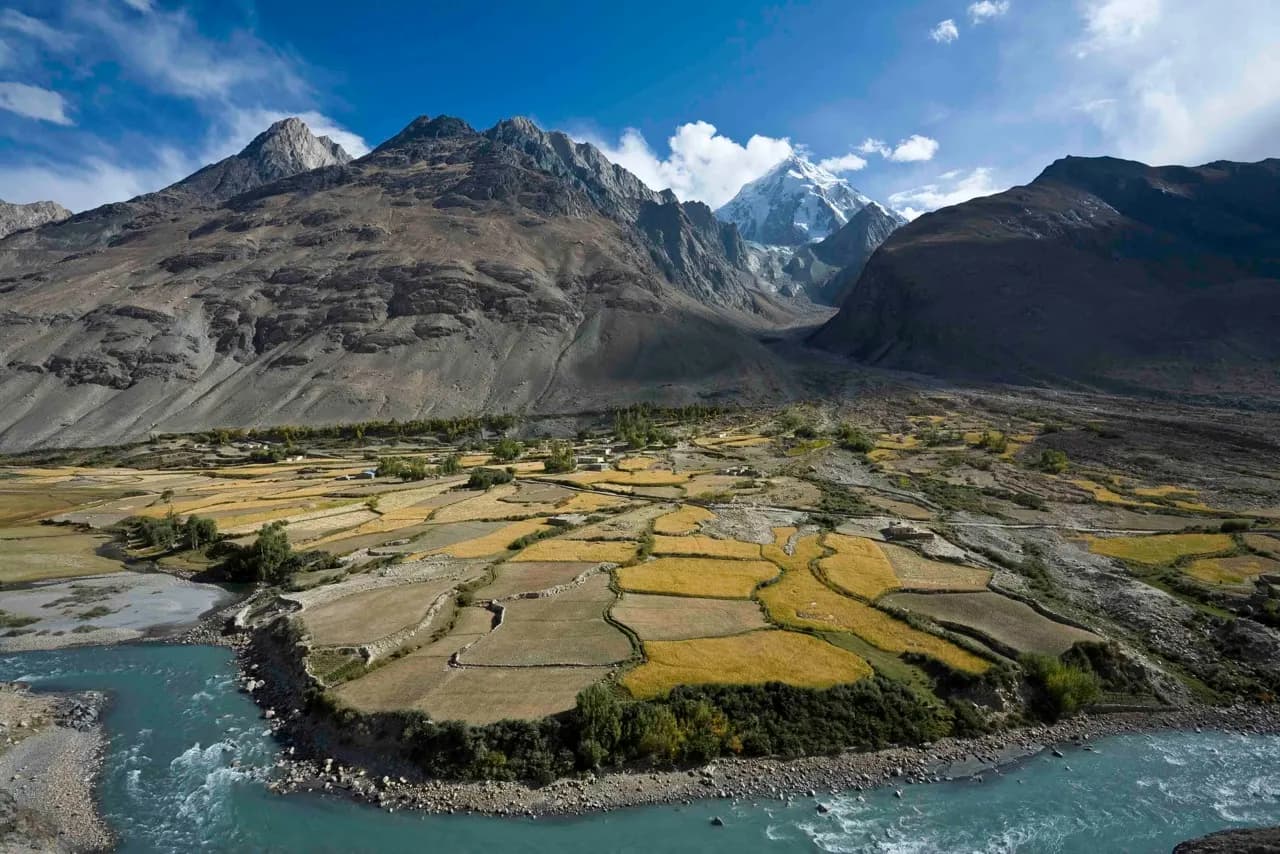
Photographs: Tracy Hunter from Kabul,, Afghanistan (CC BY 2.0); Sven Dirks, Wien (CC BY-SA 4.0); WilliamEHenry (CC BY-SA 4.0), via Wikimedia Commons.
Enquire about this trip
Tell us who is travelling and roughly when. A trip planner — not a call centre — replies within three hours between 9am and 11pm Pakistan time with a day-by-day itinerary and the full price, per person, with nothing hidden underneath it.
- Every itinerary written from scratch around your dates.
- Licensed operator, running these routes since 2020.
- A full costing up front — no deposit to see one.
- +92 310 5344471
- info@elhamasia.com
- 9am – 11pm PKT, seven days a week
- Office No. 227, Rohtas Road, G-9/1, Islamabad, Pakistan


