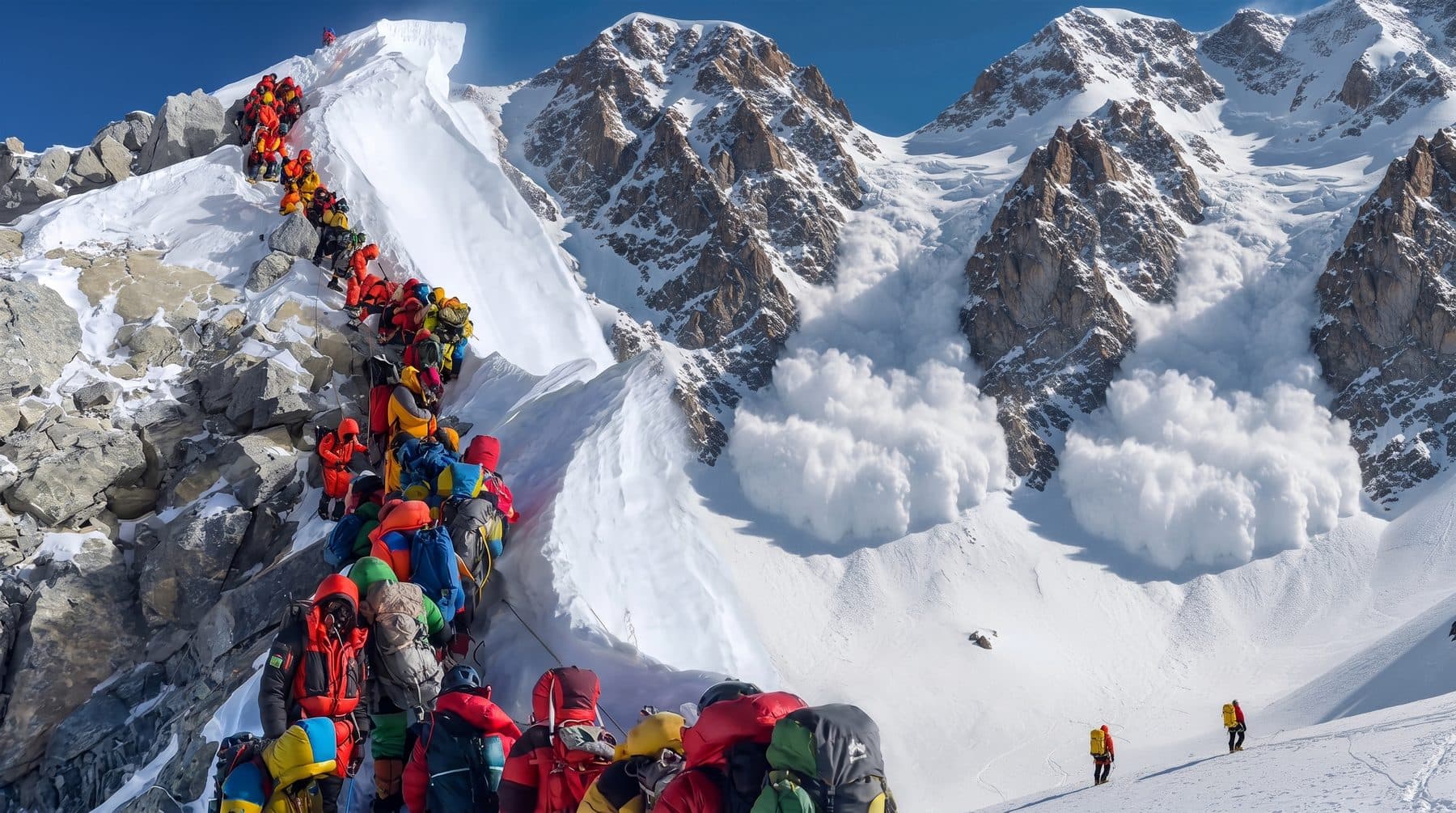
Island Peak with Everest Base Camp
- Island Peak, 6,189 m
- 17 days, Kathmandu to Kathmandu
- Two acclimatisation days plus Kala Patthar
- A climbing guide to every two
- A fifteen-hour summit day
- Khumbu, Nepal
- 17-day itinerary
About this tour
Island Peak — Imja Tse on the map — is the mountain most people climb first. At 6,189 metres it is a genuine Himalayan summit reached by a genuine glacier and a genuine headwall, and it is done by people who had never worn crampons a fortnight earlier. That is not marketing. It is what the skills day at Chhukung is for.
This itinerary puts it at the end of the Everest Base Camp trek rather than selling it on its own, which is the right way round for two reasons. The walk in to base camp and Kala Patthar is the acclimatisation — by the time you turn into the Imja valley you have already slept at 5,164 metres, which is the single biggest factor in whether summit day goes. And it means one trip buys the two things most people come to the Khumbu for.
Seventeen days: the standard EBC route with both acclimatisation days kept in, then Chhukung for a day of rope work, crampon technique, jumar and abseil practice on real ice, then base camp at about 5,100 metres and a summit push starting around one in the morning.
Summit day is long and it is the reason the trip is graded as it is. You walk on rock in the dark, rope up at the glacier, cross it past crevasses on fixed line, and finish on a headwall of roughly 100 to 125 metres at an angle that feels steeper than it is at that altitude. The summit ridge is narrow and the view from it — Lhotse's south face filling the sky, Makalu, Baruntse, Ama Dablam below you — is the reason nobody regrets the alarm.
We carry a reserve day. Island Peak turns people back for weather and for wind on the ridge, and a team with a second attempt summits far more often than a team with one.
Trip highlights
A 6,189 m summit, with no experience needed
Island Peak is the standard first Himalayan peak for a reason: real glacier travel, real fixed ropes and a real headwall, on a mountain where all of it can be taught in a day to someone fit and willing. The certificate at the end says 6,189 metres and it is not a participation award.
The skills day at Chhukung
A full day on real ice before you go near the mountain — crampons, ice axe, harness, jumar, abseil and rope work with the climbing guides. Operators who skip this send people at a headwall having practised on a hotel lawn in Kathmandu, or not at all.
Everest Base Camp and Kala Patthar first
Not a bolt-on. Sleeping at 5,164 m at Gorak Shep and standing at 5,545 m on Kala Patthar is the acclimatisation that makes the summit possible, and it means one trip gives you the two things people come to the Khumbu for.
The view from the ridge
Lhotse's south face fills the sky directly in front of you, with Makalu at 8,485 m to the east, Baruntse and Ama Dablam below. It is the single best summit view available to a first-time Himalayan climber.
A reserve day for the summit
Island Peak turns people back for wind on the ridge more often than for fitness. A team with a second window summits far more often than a team with one, and this itinerary carries that day rather than selling it back to you.
Route
- 1 Start
- 2 Stop in order
- 11 Finish
- Route travelled
Loading map…
At a glance
- Island Peak, 6,189 mImja Tse — glacier, fixed ropes and a headwall, with no prior experience required.
- 17 days, Kathmandu to KathmanduThe EBC trail, a skills day at Chhukung, and a reserve day for the summit.
- Two acclimatisation days plus Kala PattharYou sleep at 5,164 m before you go anywhere near the mountain.
- A climbing guide to every twoOn summit day. On the trek it is one guide to the group.
- A fifteen-hour summit dayAway at one in the morning, back at Chhukung by evening.
- Khumbu, NepalLukla, Namche, Gorak Shep, Chhukung and the Imja valley.
Day by day
Day 1Arrive Kathmandu, 1,300 m
Met at the airport and driven to the hotel. Kit check with the climbing guide in the afternoon, which on this trip is a real inspection rather than a formality — boots, layers and a sleeping bag rated to minus twenty. Anything missing is hired or bought in Thamel the same evening.
Day 2Fly to Lukla, 2,860 m, and walk to Phakding, 2,651 m
Thirty-five minutes in a Twin Otter onto the sloping strip at Lukla. In peak season the flight leaves from Ramechhap rather than Kathmandu, which means a very early road transfer — see Good to know. Then three easy hours down the Dudh Kosi, losing height deliberately on the first afternoon.
Day 3Phakding to Namche Bazaar, 3,440 m
Five to six hours, crossing and recrossing the river on suspension bridges, then the long climb from the Hillary Bridge to Namche — 600 metres of switchbacks with the first view of Everest near the top.
Day 4Namche — acclimatisation
Climb to the Everest View Hotel at 3,880 m for Everest, Lhotse and Ama Dablam, then back down to sleep at 3,440. Climb high, sleep low. Afternoon in Namche for anything still missing from the kit list and the last dependable cash machine.
Day 5Namche to Tengboche, 3,867 m
Five hours contouring above the Dudh Kosi with Ama Dablam ahead, down to Phunki Tenga and up through rhododendron to the monastery. The afternoon puja is open to anyone who arrives quietly.
Day 6Tengboche to Dingboche, 4,410 m
Five to six hours. The trees stop above Pangboche and the valley opens into stone-walled grazing. Dingboche is where the Imja valley branches east — you will come back through here in ten days on the way to the mountain.
Day 7Dingboche — acclimatisation on Nangkartshang
A steep climb to about 5,080 m on the Nangkartshang ridge for Makalu, Lhotse and a first proper look at Island Peak itself at the head of the Imja valley, then back down to sleep at 4,410. Most people learn what altitude feels like today, which is the right day to learn it.
Day 8Dingboche to Lobuche, 4,940 m
Five hours up the Khumbu valley to Thukla, then the steep pull to the pass and the memorial cairns for climbers who did not come back. A level walk on moraine to Lobuche after that.
Day 9Lobuche to Gorak Shep, 5,164 m, and Everest Base Camp, 5,364 m
Seven to eight hours in two halves: up the glacier's lateral moraine to Gorak Shep, lunch, then out and back to base camp across rock and ice under the Khumbu Icefall. The highest night of the trip, and the acclimatisation that the summit depends on.
Day 10Kala Patthar, 5,545 m, at dawn — then down to Dingboche
Up in the dark for two hours of switchbacks to the top of Kala Patthar and sunrise on the whole south-west face of Everest. Then breakfast and a long descent back down the valley to Dingboche, where the air is thick enough to recover in.
Day 11Dingboche to Chhukung, 4,730 m
A short three hours east into the Imja valley, with Island Peak ahead and the Lhotse wall growing on the left. Deliberately easy: the point of today is to arrive rested for tomorrow.
Day 12Chhukung — the climbing skills day
A full day on real ice with the climbing guides: crampon technique, ice axe, harness and knots, ascending a fixed rope on a jumar, abseiling, and moving as a roped party. Nobody goes to base camp without having done this, and nobody should. The afternoon is spent fitting the gear you will actually use.
Day 13Chhukung to Island Peak Base Camp, 5,100 m
Three to four hours up the valley to a camp on a sandy flat below the moraine. Tents, a cook crew and an early dinner. The guides brief the summit plan, hand out the ropes and check every harness before anyone sleeps. Lights out by seven, which nobody manages.
Day 14Summit day — Island Peak, 6,189 m — and back to Chhukung
Away between one and two in the morning. Two hours on rock and scree by headtorch to high camp, then a gully and a long rising traverse to the glacier at first light. Rope up, cross the snowfield past the crevasses on fixed line, and then the headwall: 100 to 125 metres of fixed rope at an angle that feels considerably steeper at 6,100 metres than it looks from below. The summit ridge is narrow and corniced, and the view is Lhotse's south face straight in front of you with Makalu beyond. Down the same way, back to base camp for late breakfast, and on to Chhukung. Fourteen to sixteen hours.
Day 15Reserve day
Held for the summit. Island Peak turns groups back for wind on the ridge and for fresh snow on the glacier more often than for anything else, and this is the day that lets you go again. If yesterday went to plan, it is a rest day at Chhukung or an easy walk down to Dingboche.
Day 16Chhukung to Namche Bazaar, 3,440 m
A long descent, seven to eight hours, down the Imja valley and back through Pangboche and Tengboche. Losing 1,300 metres, and everyone walks faster than they did coming up.
Day 17Namche to Lukla, and fly to Kathmandu
Six to seven hours down to Lukla for the last night on the trail, or straight through to the morning flight depending on the schedule. Back in Kathmandu with a day room, a shower and a dinner with the crew.
What’s included
- CONFIRM — Kathmandu–Lukla–Kathmandu flights, or the Ramechhap transfer and flight in peak season
- Two nights in Kathmandu, twelve in teahouse lodges and two under canvas at Island Peak Base Camp
- All meals on trek and at base camp
- A licensed English-speaking trekking guide throughout, and a climbing guide to every two people on summit day
- Group climbing equipment: ropes, ice screws, snow bars, harnesses, helmets, crampons and ice axes
- Porters, one between two trekkers, with a capped load and rescue insurance
- Island Peak climbing permit, Sagarmatha National Park entry and the Khumbu Pasang Lhamu Rural Municipality permit
- Base camp tents, kitchen and cook crew, and the garbage deposit
Not included
- International flights to and from Kathmandu
- Nepal visa, issued on arrival
- Travel insurance — which must cover climbing to 6,500 m and helicopter evacuation, and is a condition of joining
- Personal clothing, boots and a sleeping bag rated to minus twenty
- Meals in Kathmandu other than breakfast
- Drinks, hot showers, wifi, battery charging and laundry on the trail
- Tips for the guides, cook and porters
- Costs arising from an early descent, a rescue or a delayed Lukla flight
Good to know
What summit day actually involves
This is the part worth reading twice. You leave camp between one and two in the morning and you are moving for fourteen to sixteen hours. The first two hours are rock and scree in the dark. Then a gully, a traverse, and the glacier — where you rope up, put crampons on, and cross a snowfield with crevasses in it on fixed line. The headwall at the end is 100 to 125 metres of fixed rope which you ascend on a jumar; the angle is around 45 to 50 degrees, which is not steep in the Alps and feels entirely different at 6,100 metres. The summit ridge is narrow, corniced, and short.
None of that requires previous experience. All of it requires that you did the skills day, that you are honest about your fitness, and that you do what the climbing guide says on the ridge without discussion.
The skills day is not optional and not everyone includes one
A full day at Chhukung on real ice: crampons, axe, harness, knots, jumaring a fixed line, abseiling, roped movement. Compare what you are offered elsewhere. A briefing in a Kathmandu hotel garden is not this, and the difference shows up at the bergschrund at five in the morning when somebody cannot work a jumar in gloves.
Why the EBC trek comes first
It is not there to pad the itinerary. By the time you turn east into the Imja valley you have slept at 5,164 metres at Gorak Shep and stood at 5,545 on Kala Patthar. That is the acclimatisation that decides summit day. Trips that go straight to Island Peak in ten days have a markedly worse summit rate for exactly this reason, and they cost about the same.
The Lukla flight, and Ramechhap
In both peak seasons the Lukla service moves out of Kathmandu to Ramechhap, four to five hours east by road, which means leaving the hotel at one or two in the morning. It is normal and it is on most operators' itineraries nowhere at all. Lukla is also a weather airport in both directions: keep a spare day in your international ticket, two if changing it is expensive.
Kit you must have, and kit we provide
We provide the group climbing equipment — ropes, ice screws, snow bars, harnesses, helmets, crampons and ice axes. You bring your own boots, clothing and a sleeping bag rated to about minus twenty for the two nights at base camp.
Boots are the thing people get wrong. Stiff mountaineering boots that take a crampon, worn in before you fly. Everything else can be hired in Kathmandu; boots that do not fit will ruin summit day and cannot be fixed at 5,100 metres.
Insurance, specifically
Your policy must cover mountaineering to 6,500 metres and helicopter evacuation. Trekking cover to 6,000 is not enough and a standard travel policy is nowhere close. This is a condition of joining rather than a recommendation, and we ask for the policy number and the emergency assistance line before you fly.
Turning round
The climbing guide decides whether the group goes up and whether it continues, and that decision is not open to negotiation on the day. Wind on the summit ridge, fresh snow over crevasses on the glacier, or someone moving too slowly to be off the headwall before the afternoon are all reasons to stop. Booking this trip is agreeing to that in advance, when it is easy to agree to.
Questions about this trip
Do I need climbing experience for Island Peak?
No, and that is what the mountain is known for. What you need is hill fitness, a head for a narrow ridge, and a full day of instruction before you go — which is what the skills day at Chhukung is. You will learn crampons, ice axe, roped glacier travel, ascending a fixed rope on a jumar and abseiling, all on real ice at 4,730 metres, with the guides who will be beside you on summit day.
How hard is summit day?
It is the hardest single day we sell in Nepal outside an 8,000 m expedition. Fourteen to sixteen hours, starting between one and two in the morning: rock and scree in the dark, a gully, a long traverse, then the glacier roped up past crevasses, then a fixed-rope headwall of 100 to 125 metres at around 45 to 50 degrees at 6,100 metres. No single move is technical. Doing all of them in sequence at that altitude is the difficulty.
Why does the trip include Everest Base Camp?
Because it is the acclimatisation, not a sightseeing detour. Sleeping at 5,164 metres at Gorak Shep and standing at 5,545 on Kala Patthar before you go anywhere near the mountain is the single biggest factor in whether summit day works. The ten-day Island Peak trips that skip it cost about the same and turn a much larger share of their clients round.
What is the summit success rate?
Ask any operator quoting you a number how they count it, because most count anyone who reached high camp. Honestly: on a well-acclimatised team with a reserve day, most people who start summit day finish it. The two things that stop people are wind on the summit ridge and fresh snow on the glacier, neither of which is about you. That is precisely why the reserve day is in the itinerary.
How high is Island Peak?
6,189 metres. Its Nepali name is Imja Tse; the English name comes from the 1953 Everest expedition, who thought it looked like an island in a sea of ice from Dingboche. It is classed as a trekking peak, which is a permit category rather than a comment on difficulty.
What equipment do I need to bring?
Stiff mountaineering boots that take a crampon, worn in before you fly, your own clothing layers, and a sleeping bag rated to about minus twenty for the two nights at base camp. We provide the group climbing equipment: ropes, ice screws, snow bars, harnesses, helmets, crampons and ice axes. Almost everything except boots can be hired in Kathmandu, and boots that do not fit cannot be fixed at 5,100 metres.
What insurance do I need?
Cover for mountaineering to 6,500 metres and helicopter evacuation. Trekking cover to 6,000 metres is not enough for this trip, and a standard travel policy covers neither. It is a condition of joining, and we ask for the policy number and the 24-hour emergency line before you fly.
When is the best time to climb Island Peak?
March to May and late September to November. Spring is warmer with more snow on the headwall and base camp busy with Everest traffic on the way in. Autumn has the clearest air, colder nights and firmer conditions on the glacier. Winter is climbable but the cold at 6,189 metres is a different proposition, and the monsoon closes it.
What if I do not want to summit once I am there?
Then you do not, and nobody will make it awkward. Some people decide at base camp, some at the glacier, some on the headwall. Chhukung and base camp are both perfectly good places to wait with a member of the crew while the rest of the group goes up. It is worth saying that this happens on most trips and it is never the person anyone expected.
Is the Lukla flight included, and what if it is cancelled?
Included, and in peak season it operates from Ramechhap rather than Kathmandu — a four to five hour drive east starting around one in the morning. Lukla flies in the morning or not at all, and days are lost in both directions every season. Keep a spare day in your international ticket. A helicopter seat out is usually available at your own cost if a delay runs on.
You might also consider
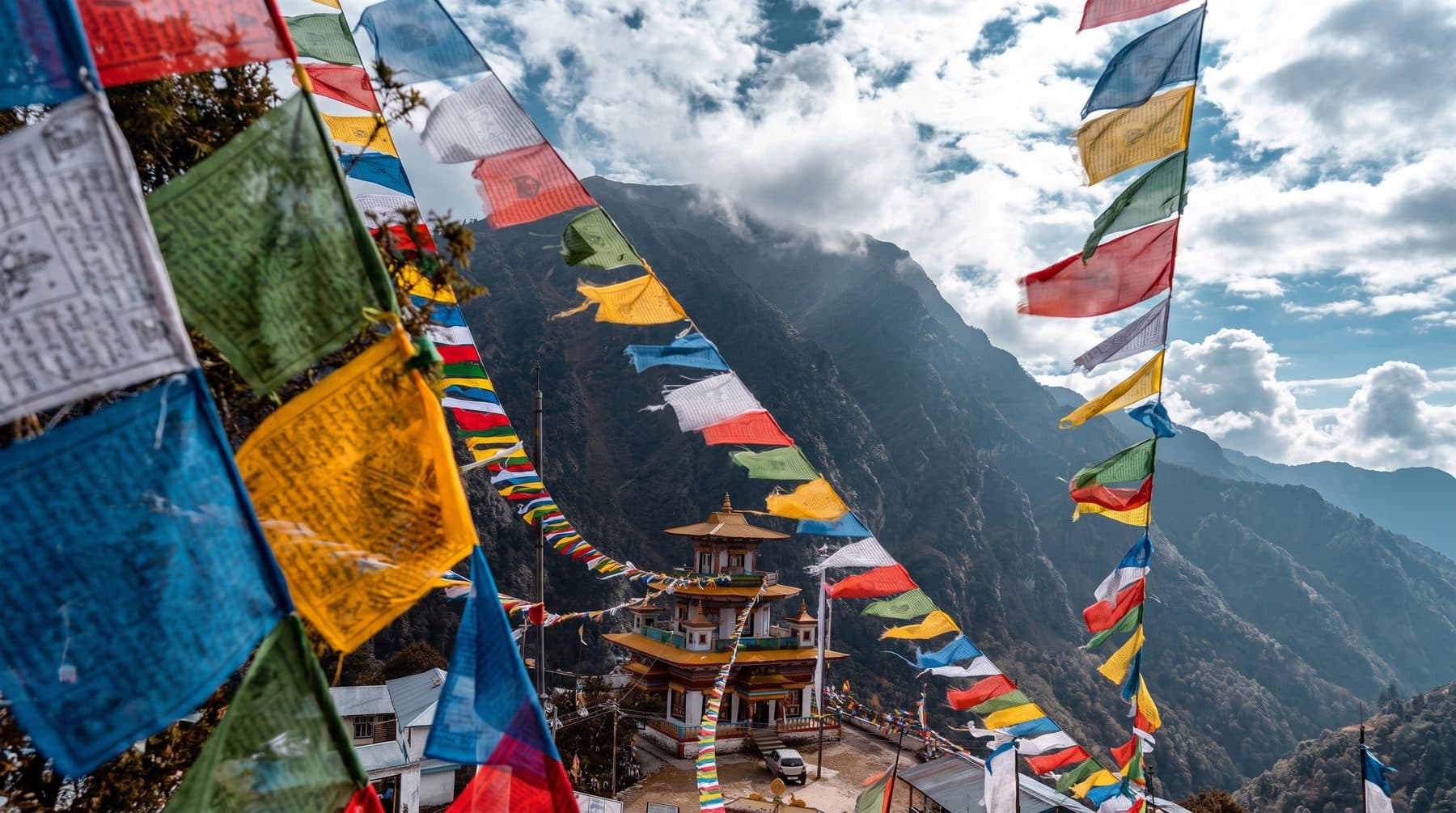 Manaslu TrekAround the eighth-highest mountain on earth — the Budhi Gandaki gorge, Tibetan villages, the Larkya La at 5,106 m and a fraction of the crowds.From US$ 2,300
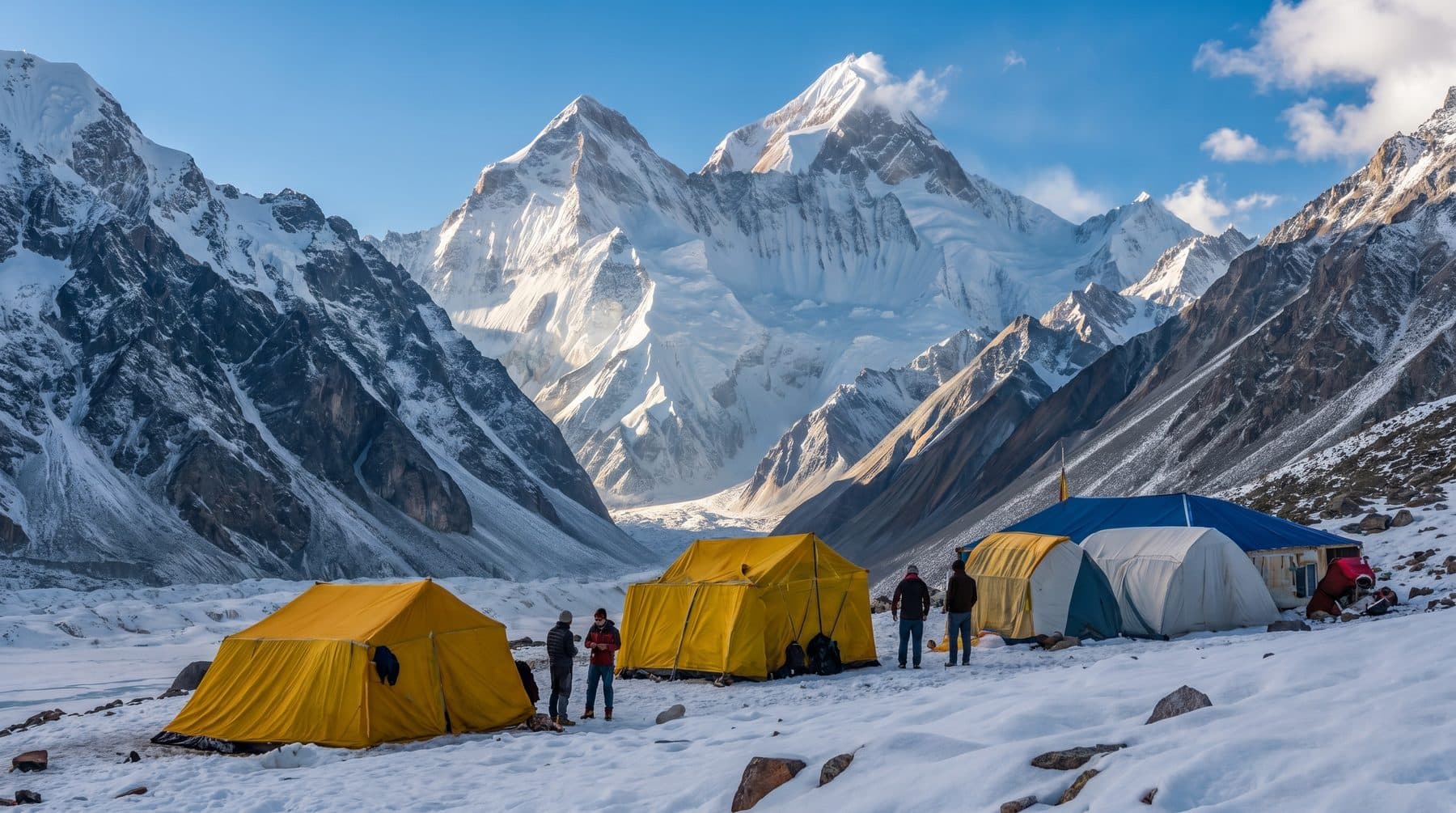 Everest Base Camp TrekThe world's most famous trail — Namche, Tengboche and Kala Patthar's Everest panorama, walked at a pace that gets people there.From US$ 1,850
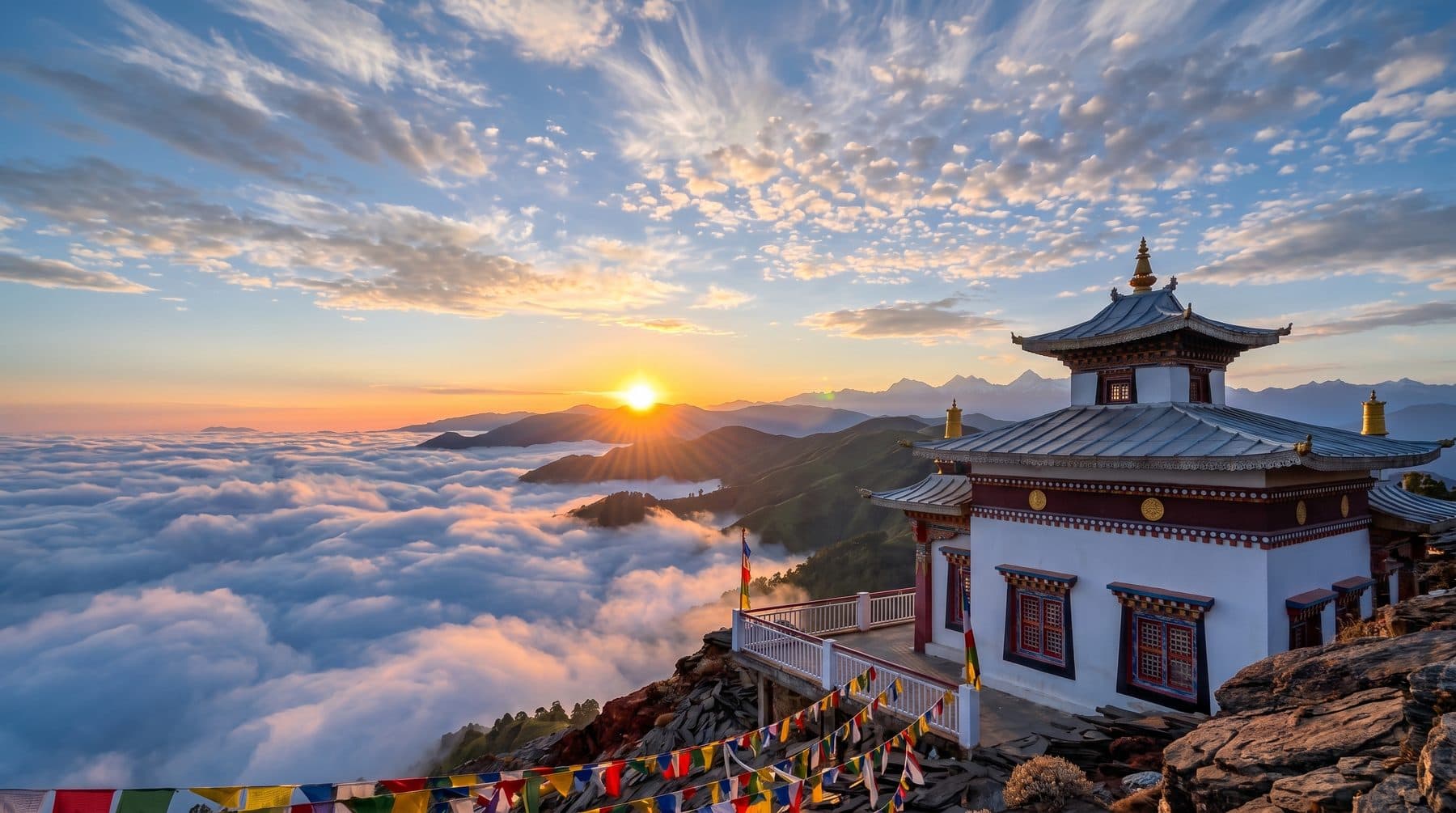 Annapurna Base Camp TrekInto the Annapurna Sanctuary — rhododendron forest, Gurung villages and a 4,130 m amphitheatre with 360 degrees of mountain around it.From US$ 2,850
Enquire about this trip
Tell us who is travelling and roughly when. A trip planner — not a call centre — replies within three hours between 9am and 11pm Pakistan time with a day-by-day itinerary and the full price, per person, with nothing hidden underneath it.
- Every itinerary written from scratch around your dates.
- Licensed operator, running these routes since 2020.
- A full costing up front — no deposit to see one.
- +92 310 5344471
- info@elhamasia.com
- 9am – 11pm PKT, seven days a week
- Office No. 227, Rohtas Road, G-9/1, Islamabad, Pakistan


