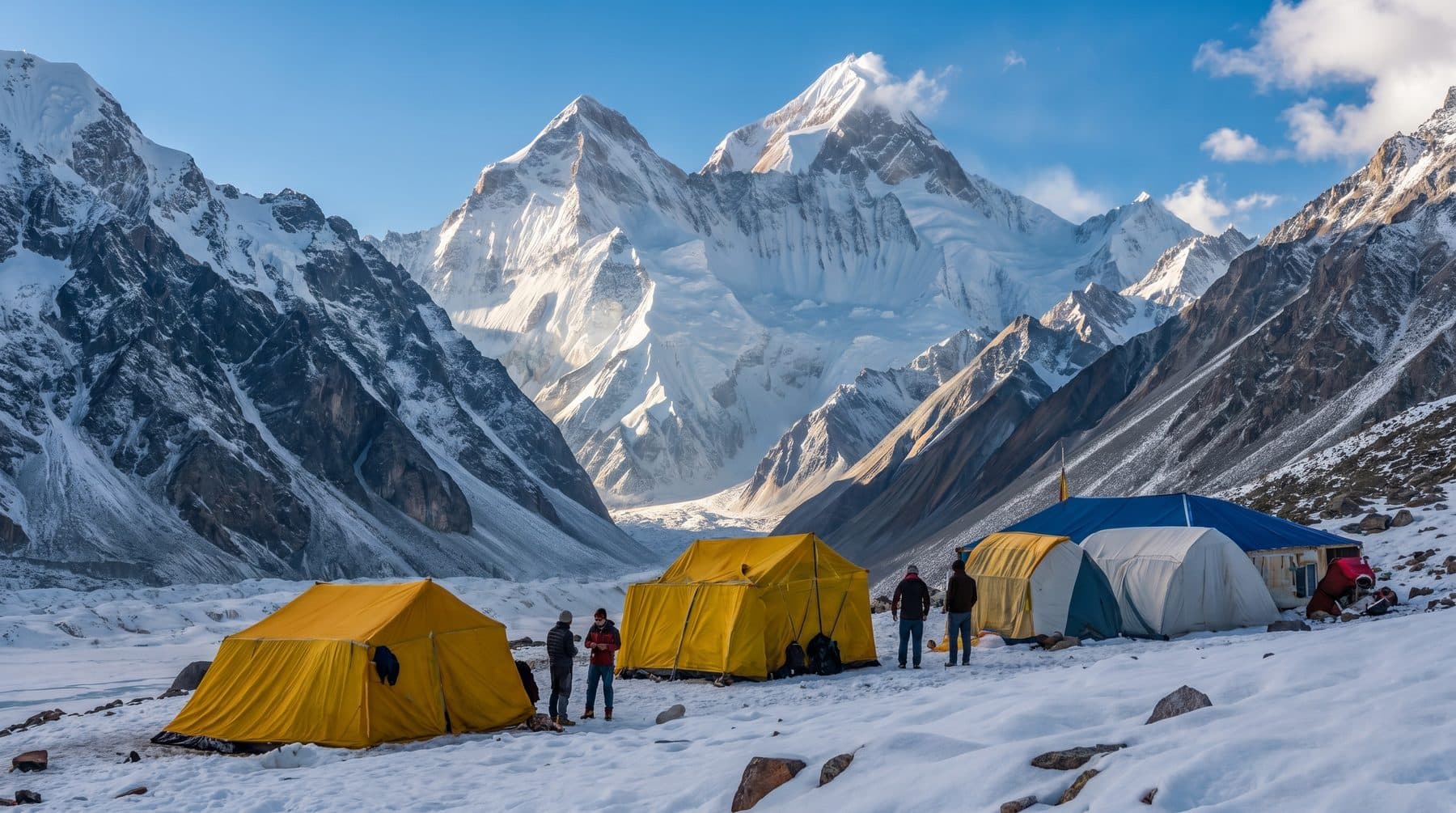
Everest Base Camp Trek
- Kala Patthar, 5,545 m
- 14 days, Kathmandu to Kathmandu
- Two full acclimatisation days
- Teahouse lodges throughout
- Khumbu, Nepal
- Five to seven hours a day
- 14-day itinerary
About this tour
Everest Base Camp is the most walked high-altitude trek on earth, and the one most often done badly. The trail itself is not the difficulty: it is a well-made path through the Khumbu, busy with yak trains and porters, with a lodge and a plate of dal bhat at the end of every day. The difficulty is that it climbs from 2,860 metres at Lukla to 5,545 metres at Kala Patthar in eight days, and altitude does not care how fit you are.
So the itinerary is the product. Ours is fourteen days with two full acclimatisation days built in — Namche on day four and Dingboche on day seven — and neither is a rest day in the sense of lying down. You climb several hundred metres above the village and sleep back at it, which is what acclimatisation actually is. The twelve-day itineraries sold elsewhere save you two days and cost a meaningful share of the group its summit morning at Kala Patthar.
What you are walking towards is the head of the Khumbu valley. Namche Bazaar at 3,440 metres is a Sherpa town built into a horseshoe with a Saturday market that has run for centuries. Tengboche has the largest gompa in the region and Ama Dablam standing behind it, and there is a reasonable argument that Ama Dablam is the better mountain. Then the trees stop, the valley opens into moraine, and you walk the last three days on the side of a glacier with Nuptse, Lhotse and Pumori around you.
Base camp itself, at 5,364 metres, is a field of rock and ice that is a tented city in April and empty in October. The view of Everest is better from Kala Patthar the following dawn at 5,545 metres, which is why the itinerary does both and does them in that order.
We have run the Khumbu with the same Kathmandu crew since 2020. The guide is licensed and English-speaking, the porters are insured and load-limited, and the thing we will tell you before you book is the thing about the Lukla flight, below.
Trip highlights
Sunrise on Kala Patthar
5,545 metres, and the reason the itinerary puts base camp first and this second. Everest hides behind Nuptse from base camp itself; from here the whole south-west face stands clear at first light, which is the photograph you came for.
Two acclimatisation days, not one
Namche on day four and Dingboche on day seven, each climbing several hundred metres above the village and sleeping back down at it. This is the single difference between itineraries that get people to Kala Patthar and itineraries that turn them round at Lobuche.
Namche Bazaar and the Tengboche gompa
A Sherpa town built into a horseshoe at 3,440 metres with a market that predates the trekking, and the largest monastery in the Khumbu at 3,867 metres with Ama Dablam directly behind it.
The Khumbu glacier, walked along its side
The last three days leave the treeline behind for moraine and ice, with Nuptse, Lhotse and Pumori closing in. Base camp at 5,364 metres is a tented city in April and an empty field of rock in October.
A crew that is paid and insured properly
Licensed English-speaking guide, porters carrying a capped load and covered by rescue insurance. In a region where that is not universal, it is worth asking every operator you are comparing.
Route
- 1 Start
- 2 Stop in order
- 10 Finish
- Route travelled
Loading map…
At a glance
- Kala Patthar, 5,545 mThe Everest view everyone comes for, better than the one from base camp.
- 14 days, Kathmandu to KathmanduTwelve on the trail, two acclimatisation days inside them.
- Two full acclimatisation daysNamche and Dingboche. The short itineraries drop these first.
- Teahouse lodges throughoutTwin share, and honestly described in Good to know.
- Khumbu, NepalLukla, Namche, Tengboche, Dingboche, Gorak Shep.
- Five to seven hours a dayNo technical ground. The altitude is the difficulty, not the trail.
Day by day
Day 1Arrive Kathmandu, 1,300 m
Met at the airport and driven to the hotel in Thamel. Afternoon kit check with the guide — this is when we find out that somebody's boots are new, which is a problem worth having on day one rather than day five. Permits are arranged while you sleep.
Day 2Fly to Lukla, 2,860 m, and walk to Phakding, 2,651 m
The famous flight: thirty-five minutes in a Twin Otter onto a sloping strip cut into a hillside. In peak season it leaves from Ramechhap instead of Kathmandu — see Good to know, because it changes your day and nobody mentions it until you have paid. Then a gentle three hours down the Dudh Kosi to Phakding, deliberately losing height on the first afternoon.
Day 3Phakding to Namche Bazaar, 3,440 m
The day the trek begins in earnest. Five to six hours, crossing the Dudh Kosi repeatedly on suspension bridges strung with prayer flags, then the long climb from the Hillary Bridge up to Namche — 600 metres of switchbacks with the first sight of Everest through the trees near the top, if the cloud allows.
Day 4Namche — acclimatisation, and the Everest View
Not a rest day. You climb to the Everest View Hotel at 3,880 metres for Everest, Lhotse and Ama Dablam over breakfast, then come back down to sleep at 3,440. Climb high, sleep low, which is the whole mechanism. Afternoon in Namche: the Sherpa museum, the bakeries, and the last reliable ATM on the trail.
Day 5Namche to Tengboche, 3,867 m
Five hours, contouring high above the Dudh Kosi with Ama Dablam ahead for most of it, then down to the river at Phunki Tenga and a steep climb through rhododendron to the monastery. Tengboche gompa is the largest in the Khumbu, and the afternoon puja is open to visitors who arrive quietly.
Day 6Tengboche to Dingboche, 4,410 m
Five to six hours, and the day the landscape changes. The last of the trees end around Pangboche and the valley opens into grazing and stone-walled fields. Dingboche sits in a side valley under Ama Dablam's east face, and the wind gets up every afternoon.
Day 7Dingboche — acclimatisation on Nangkartshang
The second acclimatisation day, and the harder of the two. A steep climb up Nangkartshang ridge to about 5,080 metres for Makalu, Lhotse and Island Peak, then back down to sleep at 4,410. Most people find this the day they learn what altitude feels like, which is much better learnt here than at Lobuche.
Day 8Dingboche to Lobuche, 4,940 m
Five hours, and the walk stops being pretty and starts being serious. Up the Khumbu valley to Thukla, then the steep pull to the Thukla pass and the memorials — a ridge of stone cairns for climbers who did not come back, including Scott Fischer and Babu Chiri Sherpa. It is a quiet hour. Then a level walk on moraine to Lobuche.
Day 9Lobuche to Gorak Shep, 5,164 m, and Everest Base Camp, 5,364 m
The big day: seven to eight hours in two halves. Three hours up the glacier's lateral moraine to Gorak Shep, lunch, then the out-and-back to base camp over rubble and ice. In April it is a city of tents under the Khumbu Icefall; in October it is an empty field with the icefall still there. Back to Gorak Shep to sleep, which is the highest night of the trip.
Day 10Kala Patthar, 5,545 m, at dawn — then down to Pheriche, 4,371 m
Up in the dark for the climb most people remember longest: two hours of slow switchbacks on scree to the top of Kala Patthar for sunrise on the whole south-west face of Everest, with Nuptse and Pumori either side. Cold, slow, and worth every minute. Then breakfast and a long descent to Pheriche, where the air is thick enough to sleep properly.
Day 11Pheriche to Namche Bazaar, 3,440 m
Six to seven hours, retracing the valley and losing a thousand metres. Everything smells different on the way down — juniper, then pine, then woodsmoke — and everyone walks faster than they did coming up.
Day 12Namche to Lukla, 2,860 m
The last trail day, six to seven hours, with the Hillary Bridge and the river crossings in reverse. An evening in Lukla that is traditionally spent with the crew, and traditionally longer than planned.
Day 13Fly to Kathmandu
Early flight out, weather permitting — mornings are when Lukla flies. Afternoon free in Kathmandu, and a day room held so there is somewhere to shower and repack. Dinner together.
Day 14Depart Kathmandu
Transfer to the airport for your onward flight. If you have kept a spare day for the Lukla weather and did not need it, this is the day to see Bhaktapur or Patan instead.
What’s included
- CONFIRM — Kathmandu–Lukla–Kathmandu flights, or the Ramechhap transfer and flight in peak season
- Two nights in Kathmandu and eleven in teahouse lodges on the trail, twin share
- All meals on trek — breakfast, lunch and dinner from Lukla to Lukla
- A licensed English-speaking guide for the whole trek
- Porters, one between two trekkers, with a capped load and rescue insurance
- Sagarmatha National Park entry permit and the Khumbu Pasang Lhamu Rural Municipality permit
- All ground transport and airport transfers in Nepal
- Staff wages, insurance and equipment
Not included
- International flights to and from Kathmandu
- Nepal visa, issued on arrival
- Travel insurance — which must cover trekking to 5,600 m and helicopter evacuation, and will not be optional
- Meals in Kathmandu other than breakfast
- Drinks, hot showers, wifi, battery charging and laundry on the trail
- Tips for the guide and porters
- Costs arising from an early descent, a rescue or a delayed Lukla flight
Good to know
The Lukla flight, and the thing nobody tells you until afterwards
In the two peak seasons — roughly March to May and late September to November — Lukla flights do not leave from Kathmandu. Air traffic at Kathmandu is too congested, so the service moves to Ramechhap (Manthali), which is a four to five hour drive east. That means a road transfer leaving Kathmandu at about one or two in the morning to make a first-light departure.
It is not a secret, and it is also not on most itineraries until you have paid. Ours says it here, at the top, because it is the single most common thing clients arrive not expecting.
And it is a weather flight in both directions
Lukla flies in the morning or not at all, and days are lost in both directions every season. Build a spare day into your international ticket — one at minimum, two if your flight home is expensive to change. If the delay runs on, a helicopter seat out is usually available at your own cost, typically several hundred dollars a head shared between passengers, and your insurance may or may not cover it. Read that clause before you travel rather than at Lukla.
What a teahouse is actually like
A wooden room, two single beds, a foam mattress and a blanket. No heating in the rooms — the warmth is a yak-dung stove in the dining room, lit in the evening. Bring a sleeping bag rated to about minus ten. Toilets are usually shared and often squat, and above Dingboche the plumbing tends to freeze, which makes them exactly what you are imagining.
Hot showers cost money and increasingly are not worth it above 4,000 metres, where getting cold and wet is a real risk rather than an inconvenience. Charging a phone costs money, and the price goes up with altitude. Bring a power bank and a head torch, and expect wifi to be sold by the hour and to be bad.
Altitude, honestly
The card grades this trek moderate and the walking is. The altitude is not. Eight of your nights are above 4,000 metres and you will sleep at 5,164 at Gorak Shep. Mild headache, broken sleep and breathlessness on stairs are normal and are not, by themselves, altitude sickness. Persistent vomiting, confusion, a headache that does not lift with painkillers and fluid, or any loss of coordination are, and the response to all of them is to go down, immediately, at any hour.
Our guides carry a pulse oximeter and are instructed to turn people round. Descending is a decision the guide makes, not a negotiation, and booking with us is agreeing to that. Nobody has ever thanked us for it on the day.
Diamox is worth discussing with your own doctor before you leave. It is a prescription drug, it has side effects, and it is not a substitute for the acclimatisation days.
Insurance is a condition, not a suggestion
Your policy must cover trekking to 5,600 metres and helicopter evacuation. A standard travel policy usually covers neither, and a rescue from Gorak Shep costs thousands. We will ask for the policy number and the emergency line before you fly.
Permits, and money
Two permits are needed in the Khumbu: the Sagarmatha National Park entry permit and the Khumbu Pasang Lhamu Rural Municipality permit. Both are included and we arrange both. The old TIMS card is no longer required for this region.
Carry cash in rupees. The last dependable ATM is in Namche, prices rise steadily with altitude because everything is carried or flown in, and nothing above Namche takes a card.
Porters
One porter between two trekkers, carrying a capped load, insured, and equipped. This is worth checking with anyone you compare us against — it is not universal in the Khumbu, and the difference is not visible on a website.
Questions about this trip
How hard is the Everest Base Camp trek?
The walking is moderate — five to seven hours a day on a well-built trail with no technical ground, no ropes and nothing you need previous experience for. The altitude is what makes it demanding: you sleep above 4,000 metres for eight nights and reach 5,545 metres at Kala Patthar. If you can walk uphill for six hours carrying a day sack, on consecutive days, without it ruining you, you can do this trek. Fitness does not protect you from altitude, which is why the acclimatisation days matter more than your training.
What is the success rate, and why do people not make it?
Most people who turn back do so for one of two reasons, and neither is fitness. The first is altitude, and it is far more common on the compressed twelve-day itineraries that drop an acclimatisation day. The second is a stomach illness picked up from food or water low down, which leaves someone too weak to go high. Both are substantially reducible: take the fourteen-day version, treat your water, and eat the cooked vegetarian food rather than the meat that was carried up unrefrigerated.
When is the best time to trek to Everest Base Camp?
Two seasons. Spring, March to May, is warmer, the rhododendrons flower low down and base camp is full of expedition tents preparing for Everest — it is the livelier season and the busier one. Autumn, late September to November, has the clearest air and the most reliable mountain views, colder nights and an empty base camp. Winter is possible but brutally cold at Gorak Shep, and the monsoon between June and mid-September brings cloud, leeches low down and flights that do not go.
Do Lukla flights really leave from Ramechhap?
In both peak seasons, yes. Kathmandu's airport is too congested to handle the Lukla shuttle during March–May and late September–November, so the service moves to Ramechhap, four to five hours east by road. That means leaving Kathmandu around one or two in the morning to catch a first-light flight. It is normal, it is not a downgrade, and the only thing wrong with it is how many operators leave it off the itinerary until after the deposit has cleared.
What happens if the Lukla flight is cancelled?
You wait, and the cost of waiting is yours — that is true of every operator, and anyone who tells you otherwise is selling something. Lukla flies in the morning or not at all, and days go in both directions every season. Keep at least one spare day in your international ticket, two if changing it is expensive. If a delay runs on, a helicopter seat is usually available at your own cost, shared between passengers, and whether your insurance covers it depends on a clause worth reading before you leave home.
Can you see Everest from Everest Base Camp?
Barely, and this surprises people. From base camp itself the summit is hidden behind the west shoulder of Nuptse; what you see is the Khumbu Icefall, which is spectacular in a different way. The Everest view everyone has in mind comes from Kala Patthar at 5,545 metres the following morning, which is why the itinerary does base camp on day nine and Kala Patthar at dawn on day ten rather than the other way round.
What are the teahouses like?
Basic and perfectly adequate. A wooden room with two single beds, a foam mattress and a blanket, no heating except the stove in the dining room, and usually shared toilets that are often squat and frequently frozen above Dingboche. Bring a sleeping bag rated to about minus ten. Hot showers and phone charging cost extra and the price climbs with the altitude, because everything up there was carried or flown in.
What insurance do I need?
A policy that explicitly covers trekking to 5,600 metres and helicopter evacuation. Most standard travel policies cover neither, and a helicopter rescue from Gorak Shep runs into thousands of dollars. This is a condition of joining the trek, not advice — we ask for the policy number and the emergency assistance line before you fly.
How much extra money should I bring?
Budget roughly US$ 15 to 25 a day on the trail for drinks, charging, wifi, hot showers and snacks, plus tips for the guide and porters at the end. Carry it as Nepali rupees in cash: the last dependable ATM is at Namche, and nothing higher up takes a card. Prices rise steadily with altitude for the obvious reason.
Is it too crowded?
In spring, the trail between Lukla and Namche is genuinely busy and base camp is a working expedition town. It thins out above Dingboche, and it thins out enormously in autumn. If quiet matters more to you than the spectacle of base camp in climbing season, come in October — same mountains, clearer air, a fraction of the people.
You might also consider
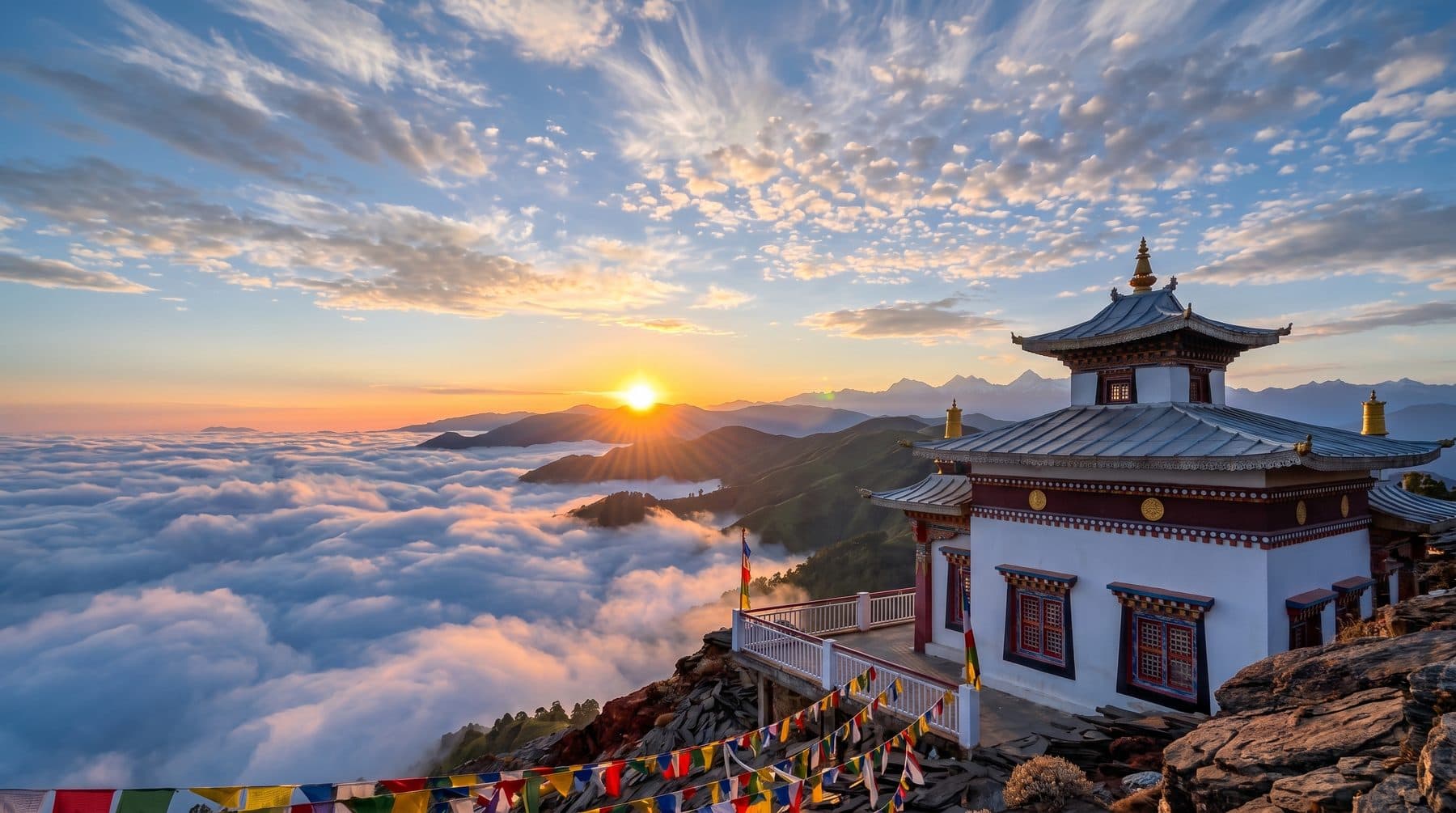 Annapurna Base Camp TrekInto the Annapurna Sanctuary — rhododendron forest, Gurung villages and a 4,130 m amphitheatre with 360 degrees of mountain around it.From US$ 2,850
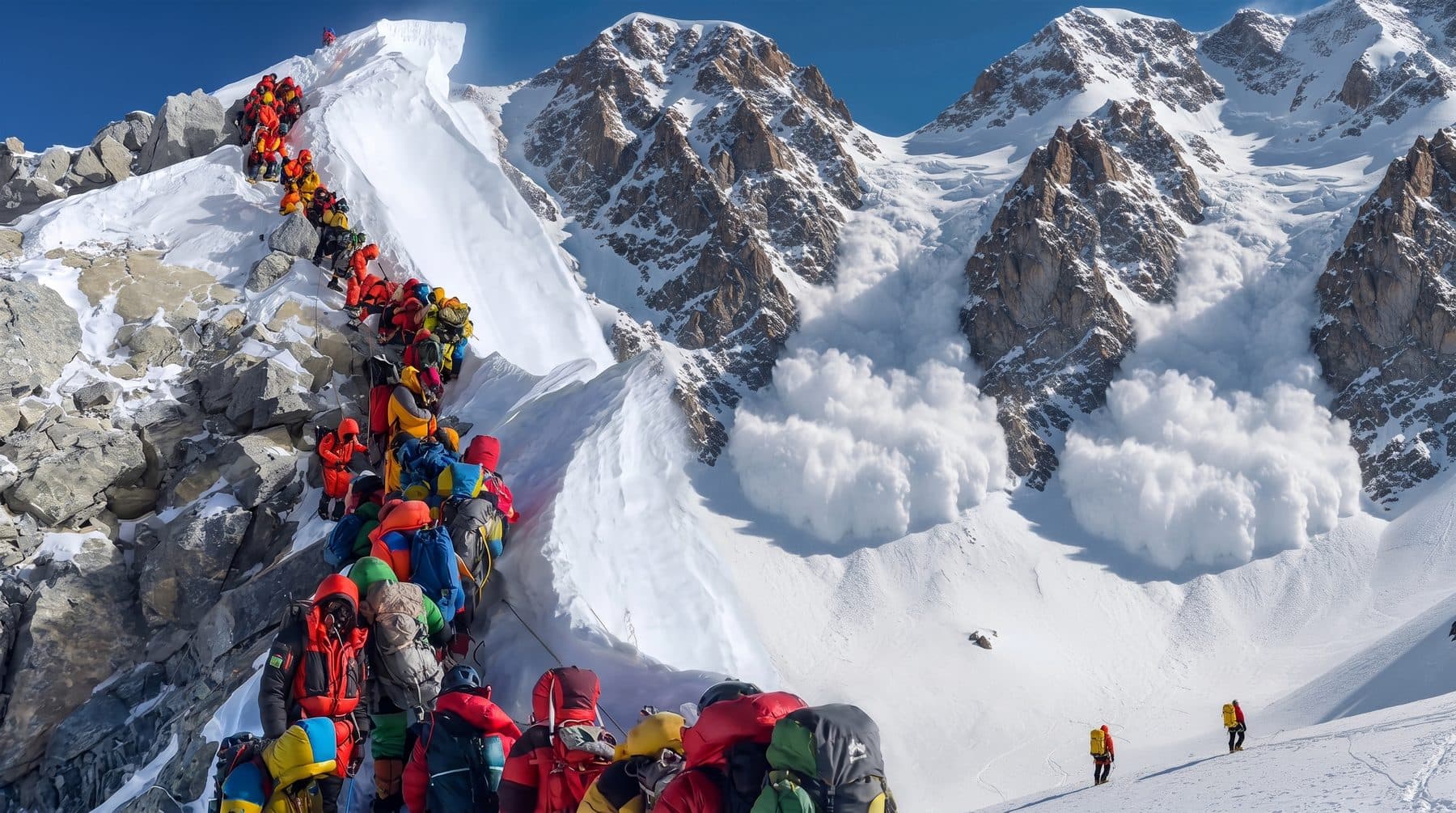 Island Peak with Everest Base CampThe Everest Base Camp trail and a 6,189 m summit in one trip — ropes, crampons, a skills day at Chhukung and full climbing support.From US$ 2,050
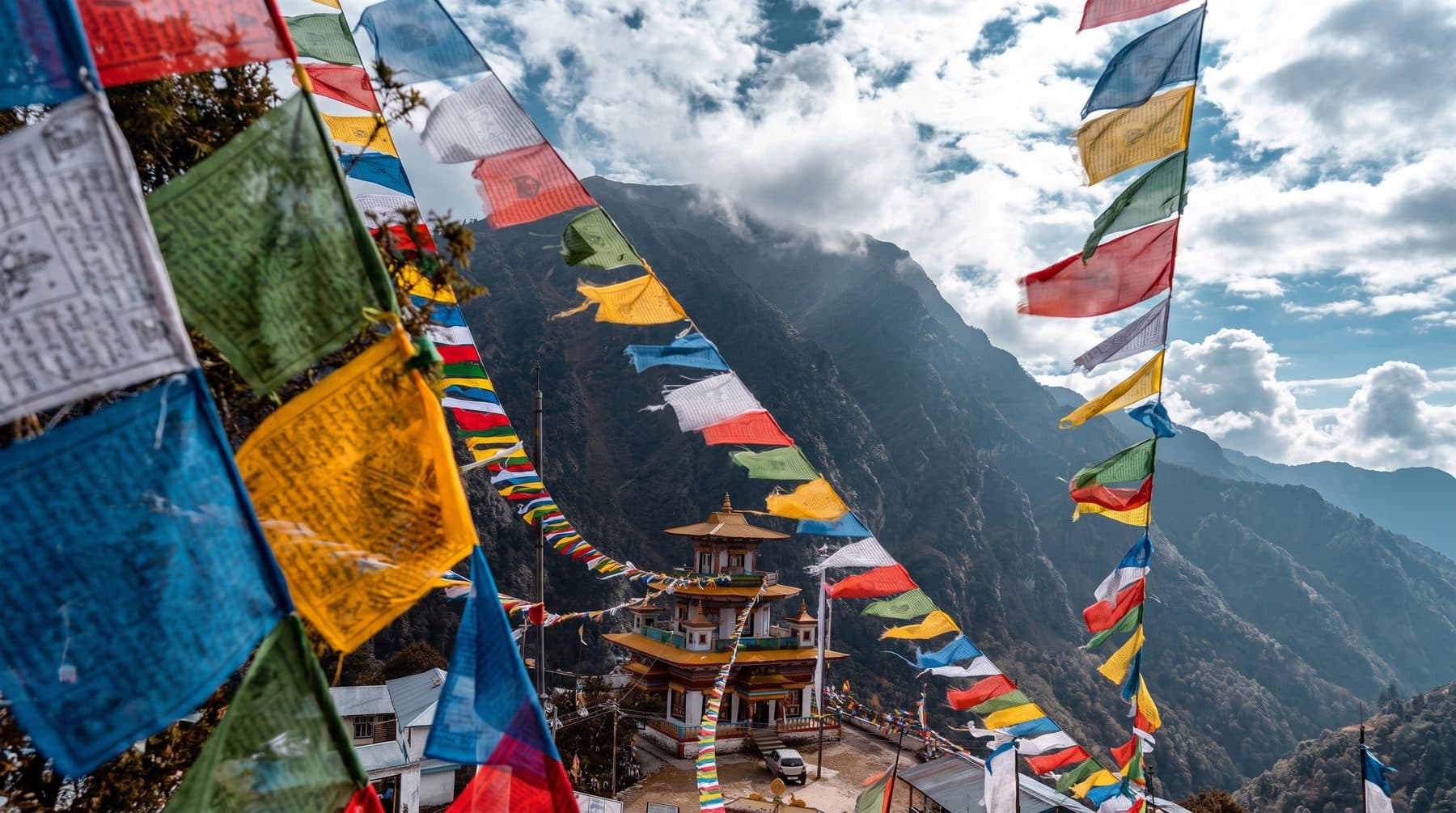 Manaslu TrekAround the eighth-highest mountain on earth — the Budhi Gandaki gorge, Tibetan villages, the Larkya La at 5,106 m and a fraction of the crowds.From US$ 2,300
Enquire about this trip
Tell us who is travelling and roughly when. A trip planner — not a call centre — replies within three hours between 9am and 11pm Pakistan time with a day-by-day itinerary and the full price, per person, with nothing hidden underneath it.
- Every itinerary written from scratch around your dates.
- Licensed operator, running these routes since 2020.
- A full costing up front — no deposit to see one.
- +92 310 5344471
- info@elhamasia.com
- 9am – 11pm PKT, seven days a week
- Office No. 227, Rohtas Road, G-9/1, Islamabad, Pakistan


