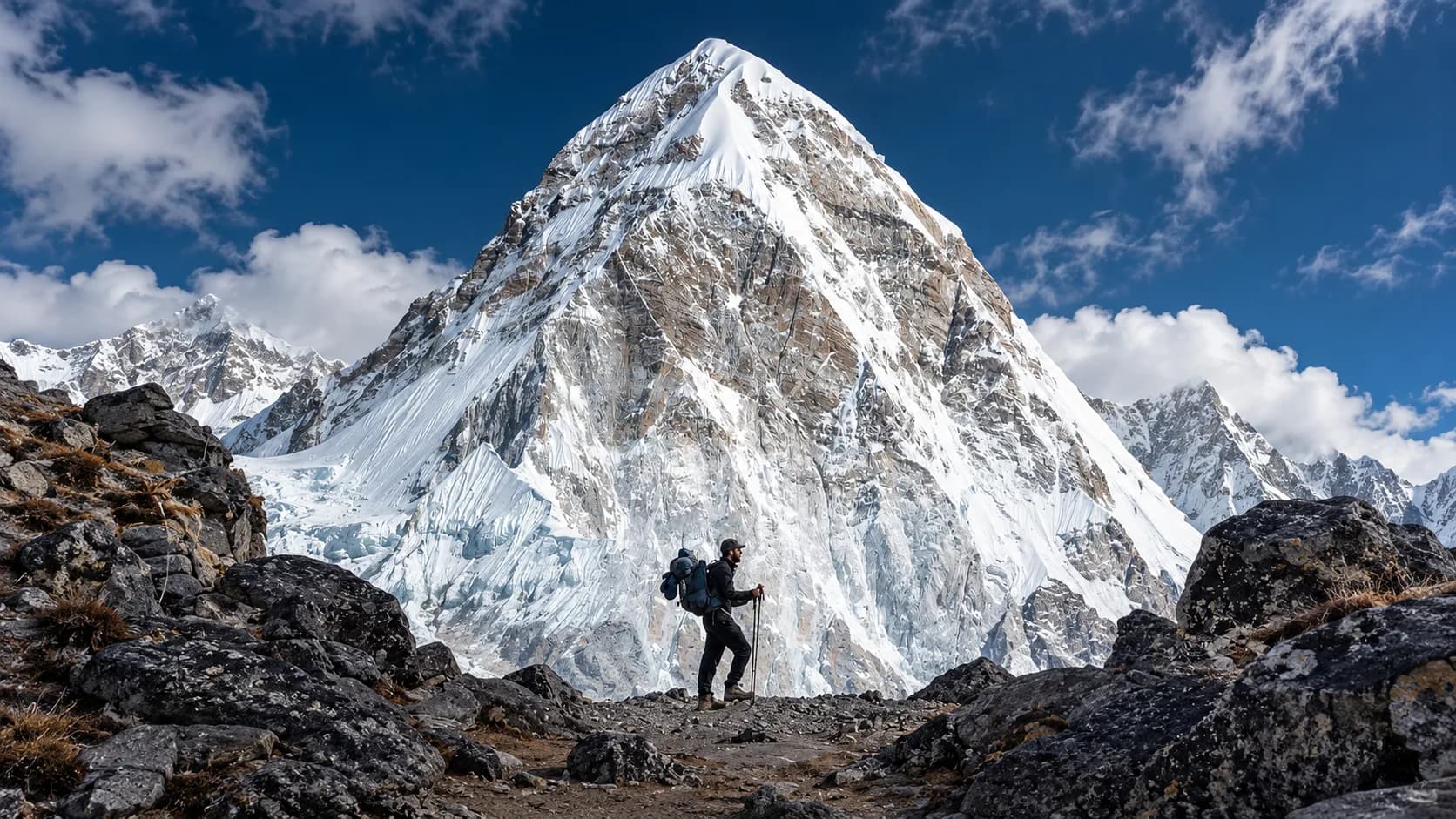
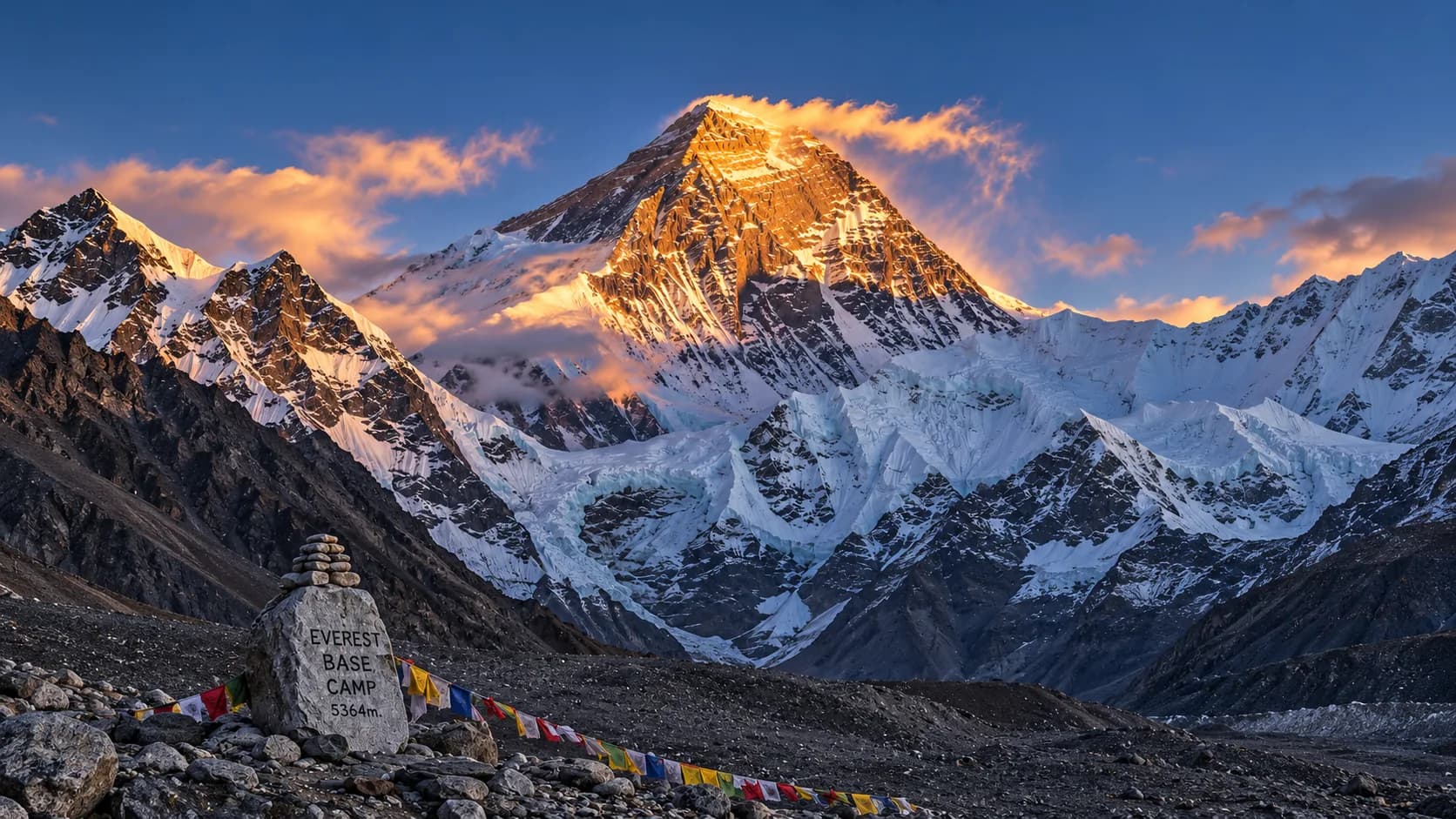
Everest and K2 are the two highest mountains on Earth, but the treks to their respective base camps offer completely different experiences. Everest Base Camp (EBC) in Nepal is a highly developed cultural trail. K2 Base Camp (K2BC) in Pakistan is a self-sufficient wilderness expedition. If you are planning a high-altitude hike for 2027, choosing between the Himalayas and the Karakoram comes down to your experience level and what kind of trek you actually enjoy.
Many trekkers who complete Everest Base Camp describe the transition to K2 as a shock to the system. While EBC features teahouses and daily comforts, K2 requires navigating shifting glaciers and camping on the ice. Here is a complete breakdown of the terrain, altitude, costs, and logistics to help you decide which route fits your 2027 travel plans.
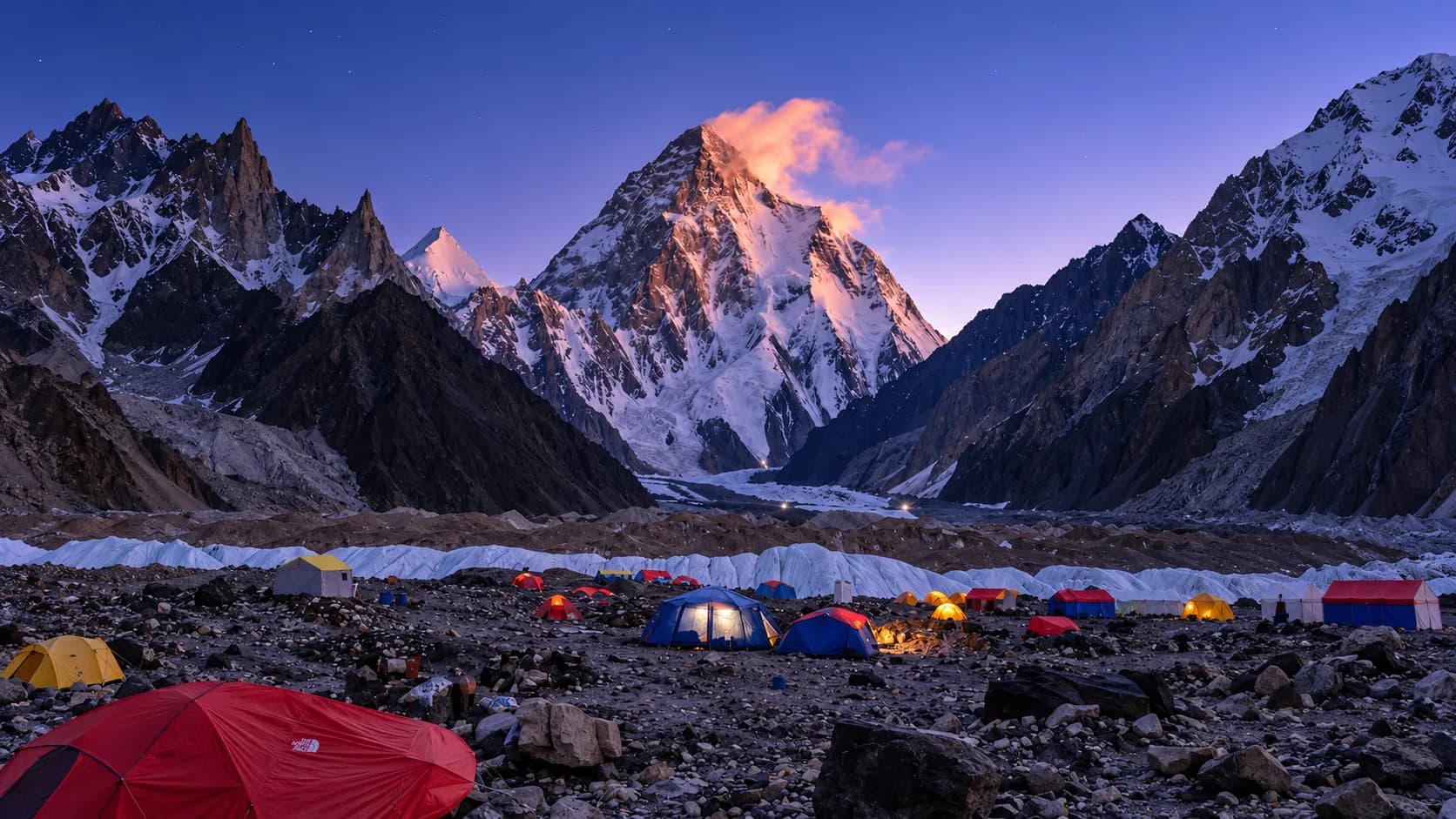
K2 Base Camp vs Everest Base Camp: Quick Comparison
| Feature | Everest Base Camp (EBC) | K2 Base Camp (K2BC) |
|---|---|---|
| Country | Nepal (Himalayas) | Pakistan (Karakoram) |
| Base Camp Altitude | 5,364 meters | ~5,150 meters |
| Duration | 12–14 days | 14–21 days |
| Accommodation | Permanent Teahouse Lodges | Tent Camping Only |
| Difficulty | Moderate to Hard | Strenuous / Hard |
| Annual Visitors | 35,000 to 50,000+ | Under 1,000 |
| Best Season | Mar–May & Sep–Nov | Late June to early September |
The Reality of the Trails: Operations & Infrastructure
In managing fleet operations and daily mountain logistics across Gilgit-Baltistan for Elham Asia[cite: 39], I frequently coordinate with hikers who arrive in Pakistan expecting the infrastructure of Nepal. The reality is vastly different.
The Everest route is deeply woven into the local Sherpa culture, passing through active villages with bakeries and cell towers. On the Baltoro Glacier route to K2, you leave permanent settlements behind at the village of Askole. From that point forward, there are no villages or teahouses. Your entire expedition—tents, fuel, and food—must be packed in by your porter team.
- The Everest Teahouse Experience: EBC is famous for its "teahouse" culture. Every evening, you arrive at a permanent wooden or stone lodge. You sleep in a real bed, eat in a dining room, and can often purchase Wi-Fi, hot showers, and device charging.
- The K2 Expedition Experience: K2 is a 100% camping expedition. You sleep in expedition tents pitched directly on rock or glacial ice, and an expedition cook prepares your meals in a dedicated mess tent.
Terrain and Difficulty
While Everest Base Camp (5,364m) sits at a slightly higher altitude than K2 Base Camp (~5,150m), the physical demands of the Karakoram terrain are generally considered tougher.
The Khumbu region features heavily trodden, well-maintained dirt trails, engineered stone steps, and solid steel suspension bridges. It is a steep hike, but the footing is generally secure. The K2 route is relentless. You spend days walking directly on the Baltoro Glacier, navigating loose scree, uneven ice fins, and glacial meltwater streams. The path changes every season as the glacier shifts, requiring constant focus, robust hiking boots, and excellent ankle support.
Crowds and Isolation
Overtourism has become a significant factor in the Himalayas. Statistics from the Sagarmatha National Park indicate that the Everest region receives between 35,000 and over 50,000 visitors annually. During the peak spring months, the trail often experiences heavy foot traffic, and popular teahouses book out months in advance.
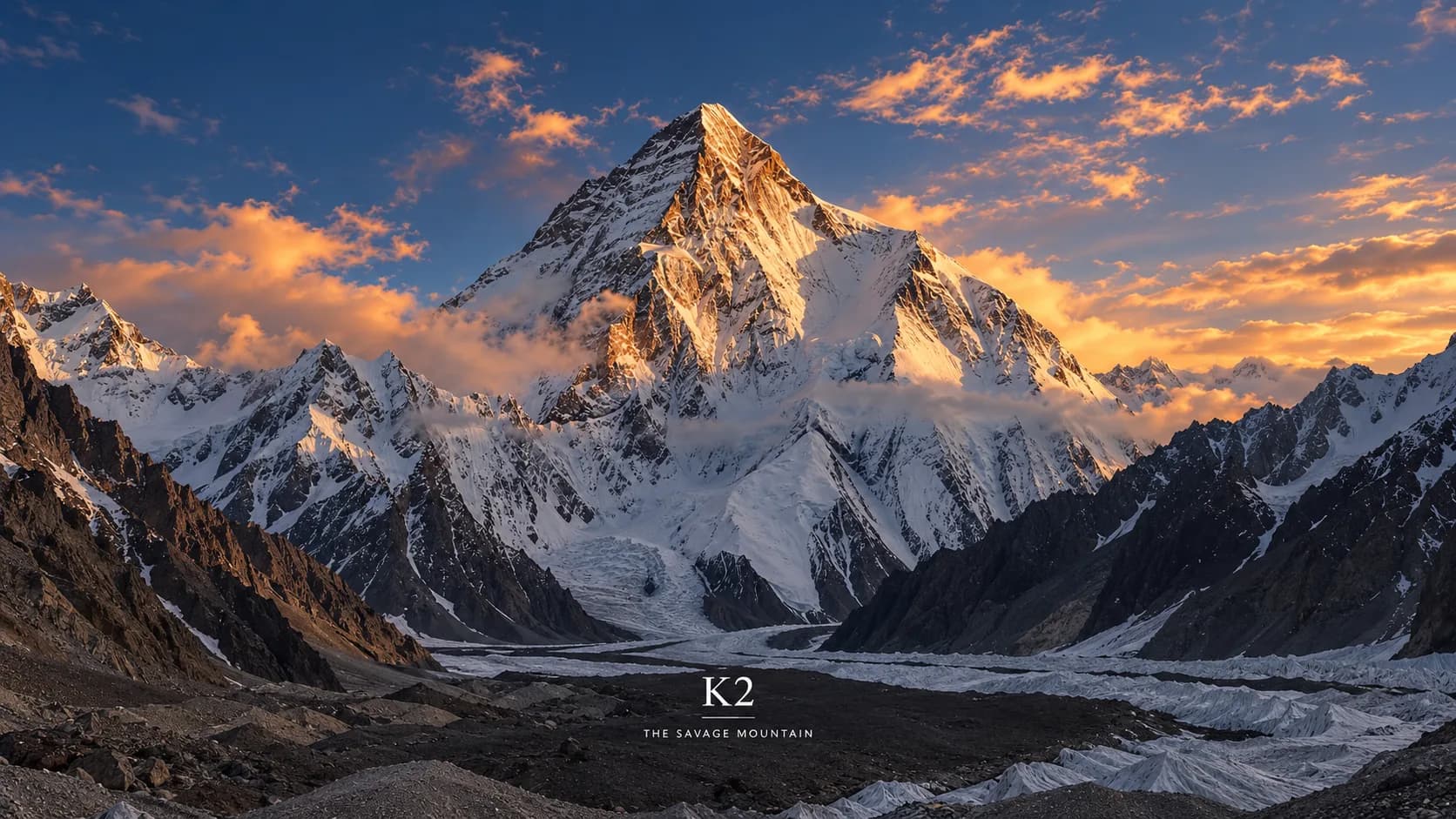
The K2 Base Camp trek sees a fraction of that volume, with fewer than 1,000 foreign trekkers reaching the camp in a typical year. The logistical difficulty of the Karakoram naturally filters out casual hikers. You can hike for hours on the Baltoro Glacier and only see the jagged granite spires of the Trango Towers. For those looking to escape crowded trails, K2 offers a significantly quieter environment.
Safety and Helicopter Evacuation
Emergency medical evacuation arrangements differ wildly between the two countries. In Nepal, a massive network of private commercial helicopters makes rescues relatively straightforward from the EBC trail.
In Pakistan, medical evacuation on the K2 route relies on military-operated helicopters via Askari Aviation. The helicopter will not dispatch unless a heli-deposit is paid upfront by your tour operator or backed by specific high-altitude rescue insurance. Because rapid extraction is heavily dependent on weather and military clearance, conservative acclimatization on the K2 trek is absolutely critical.
Who Should Choose Everest Base Camp?
- First-time Himalayan trekkers: The well-marked trails and gradual acclimatization structure make it accessible to fit beginners.
- Comfort seekers: Hikers who prefer sleeping in beds and having access to basic amenities like Wi-Fi and heated dining rooms.
- Culture lovers: Those who want to experience the rich, local Buddhist culture and interact with Sherpa communities along the route.
Who Should Choose K2 Base Camp?
- Experienced trekkers: Hikers who have completed multi-day treks and are comfortable walking 6 to 8 hours a day on uneven, icy terrain.
- Wilderness lovers: Those who embrace multi-day tent camping and are willing to trade hot showers and phone signals for absolute remoteness.
- Photographers and explorers: Hikers seeking raw, dramatic glacial scenery—like the 360-degree mountain amphitheater at Concordia—without the crowds.
2027 Logistics, Visas, and Permits
Trekking to Everest requires a standard Nepal visa, a Sagarmatha National Park permit, and a TIMS card, which are easily acquired.
The K2 Base Camp sits in a restricted military zone inside the Central Karakoram National Park (CKNP). You cannot hike it independently. You must apply for a specific Trekking and Mountaineering Visa well in advance, travel with a licensed Pakistani operator, and secure government clearance.
An all-inclusive K2 Base Camp Trek booked directly through a local premium operator covers these complex logistics, providing the mandatory guides, 4x4 jeeps, permits, camping infrastructure, and porter wages for the roughly 20-day journey.
Frequently Asked Questions
Is K2 Base Camp harder than Everest Base Camp? Yes. While Everest Base Camp is slightly higher, the K2 Base Camp trek is physically tougher due to the rugged, unstable glacial terrain and the necessity of camping every night. Everest features packed dirt trails and comfortable teahouses.
When is the best time to trek to K2 Base Camp? Unlike Everest, which peaks in the Spring and Autumn, the primary trekking window for K2 Base Camp is during the height of summer, from late June to early September. Winter snows make the Karakoram passes impassable during the rest of the year.
Do I need technical climbing skills for K2 Base Camp? No. The journey to K2 Base Camp is a strenuous, high-altitude trek, not a technical climb. You do not need ropes or ice axes for the standard route, though you must be extremely fit and have prior multi-day hiking experience.