Indochina Heritage Trail: Vietnam, Cambodia & Thailand
- 14 days, Hanoi to Bangkok
- Max altitude under 300 m
- Best season November to April
- 6 to 16 travellers
- Vietnam, Cambodia & Thailand
- One night on Ha Long Bay
- 14-day itinerary
About this tour
This is three countries in fourteen days, and the itinerary is built around a simple rule: fly the long distances and spend the time on the ground. Hanoi to Hoi An is 750 kilometres, Hoi An to Siem Reap is further, and Siem Reap to Bangkok is a day by road with a border in the middle. So there are three internal flights, and between them you stay long enough in each place — two nights in Hanoi, one on the water, three in Hoi An, three at Angkor and four in Bangkok — to see it properly rather than photograph it from a coach.
It starts in Hanoi, in the Old Quarter's narrow streets and around the Temple of Literature, then drives two and a half to three hours east to Ha Long Bay for a night on a traditional-style junk among the limestone karsts. The boats on the bay vary a great deal; ours is a mid-range to upper-range cruise with private cabins and en-suite bathrooms, and the exact vessel is confirmed when you book.
From the north you fly south to Da Nang and drive forty-five minutes to Hoi An, a trading port whose old town of wooden shophouses, Chinese assembly halls and the Japanese Covered Bridge is a UNESCO World Heritage Site. It is at its best in the early morning and after dark, when the lanterns are lit and the day-trippers have gone. A half day at the Cham temple ruins of My Son, an hour inland, is included.
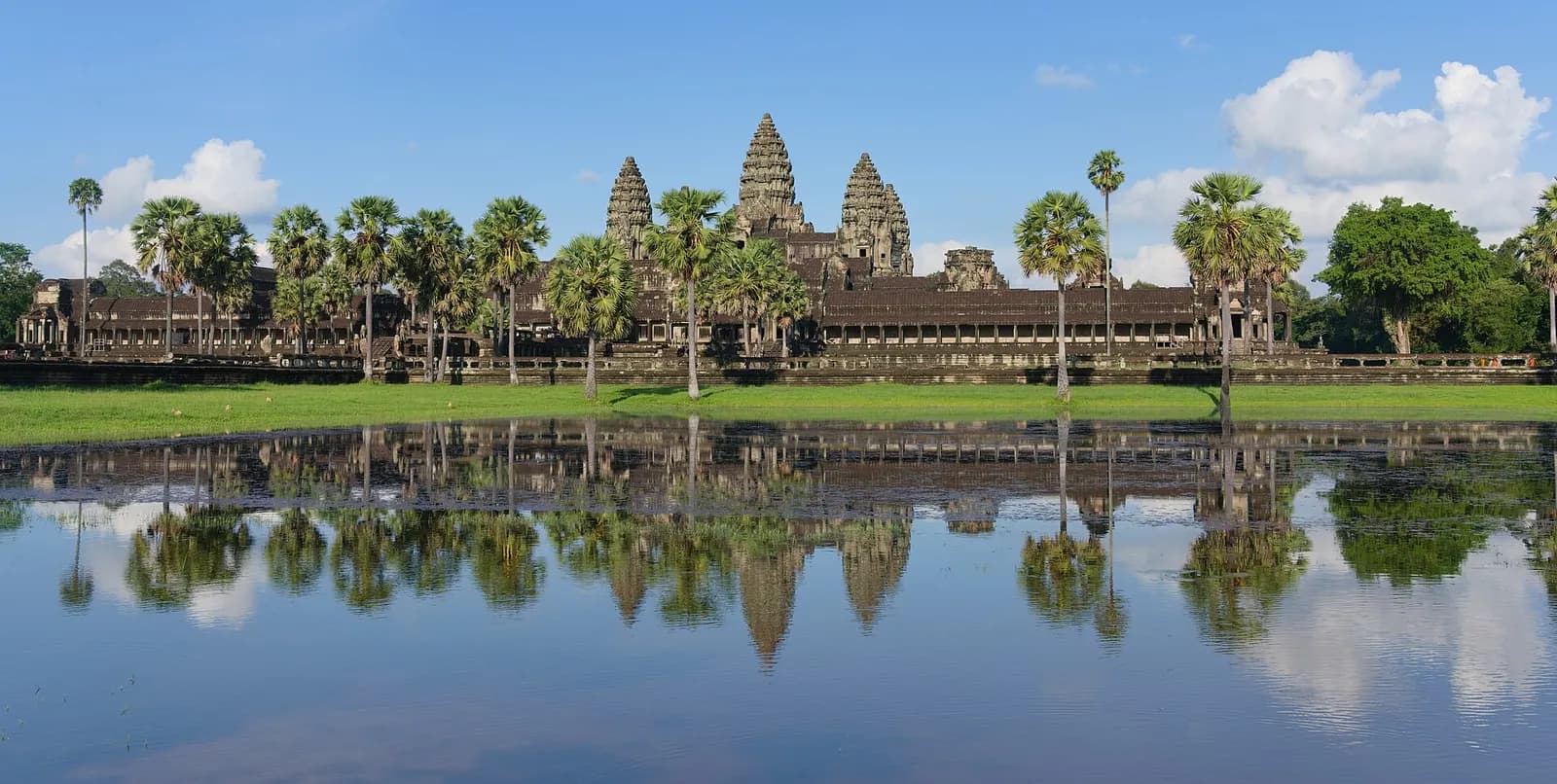
Then Cambodia. Three nights in Siem Reap give you two full days among the temples of Angkor: Angkor Wat at sunrise, the faces of the Bayon, the roots of Ta Prohm, and the pink sandstone carving of Banteay Srei forty kilometres north. A late afternoon among the stilt houses of the Tonle Sap lake shows how most people around Angkor live now.
The last four nights are in Bangkok: the Grand Palace and the Temple of the Emerald Buddha, Wat Pho and the river, an early start for the floating market at Damnoen Saduak, and a free day at the end. This is a first visit to the region, paced for people who want to understand what they are looking at, and it ends in a city with flights to everywhere.
Trip highlights
Overnight junk cruise in Ha Long Bay
Around 1,600 limestone islands rising out of the Gulf of Tonkin, seen from the deck of a traditional-style junk with private en-suite cabins. You sleep on board, which means the bay at dusk and dawn rather than only in the middle of the day, when it is busiest.
Hoi An's lantern-lit ancient town
A sixteenth- to nineteenth-century trading port of wooden shophouses, family chapels and the Japanese Covered Bridge, a UNESCO World Heritage Site. Three nights here, so you can walk it early in the morning and again after dark, when the silk lanterns are lit along the Thu Bon river.
Sunrise at the Angkor Wat complex
The largest religious monument in the world, built in the twelfth century, with the sun coming up behind its five towers. Two full days at Angkor take in the Bayon, Ta Prohm and Banteay Srei as well, at a pace that allows for the midday heat.
Bangkok's Grand Palace and floating markets
The Grand Palace and the Temple of the Emerald Buddha, then Wat Pho's reclining Buddha across the road. A separate early start reaches the floating market at Damnoen Saduak, about two hours west of the city, before the tour buses do.
Route
- 1 Start
- 2 Stop in order
- 10 Finish
- Route travelled
Loading map…
At a glance
- 14 days, Hanoi to BangkokThirteen nights across Vietnam, Cambodia and Thailand, with three internal flights.
- Max altitude under 300 mClose to sea level throughout. Altitude plays no part in this trip; heat does.
- Best season November to AprilThe dry season across most of the route. Hottest in March and April.
- 6 to 16 travellersA tour leader throughout, with local guides at each site.
- Vietnam, Cambodia & ThailandHanoi, Ha Long Bay, Hoi An, Siem Reap and Bangkok.
- One night on Ha Long BayA cabin with its own bathroom on an overnight junk-style cruise boat.
Day by day
Day 1Arrive Hanoi
Met at Noi Bai airport and driven about forty-five minutes into the city to the hotel near the Old Quarter. Evening welcome briefing with the tour leader, then a first walk round Hoan Kiem Lake, which is where Hanoi spends its evenings. Overnight in Hanoi.
Day 2Hanoi — the Old Quarter and the Temple of Literature
A full day on foot and by cyclo: the Temple of Literature, Vietnam's first university, founded in 1070; the outside of the Ho Chi Minh Mausoleum and the One Pillar Pagoda; then the Old Quarter's streets, each historically named for the trade practised on it. Evening water-puppet performance, a northern Vietnamese art form. Overnight in Hanoi.
Day 3Drive to Ha Long Bay — overnight on the cruise
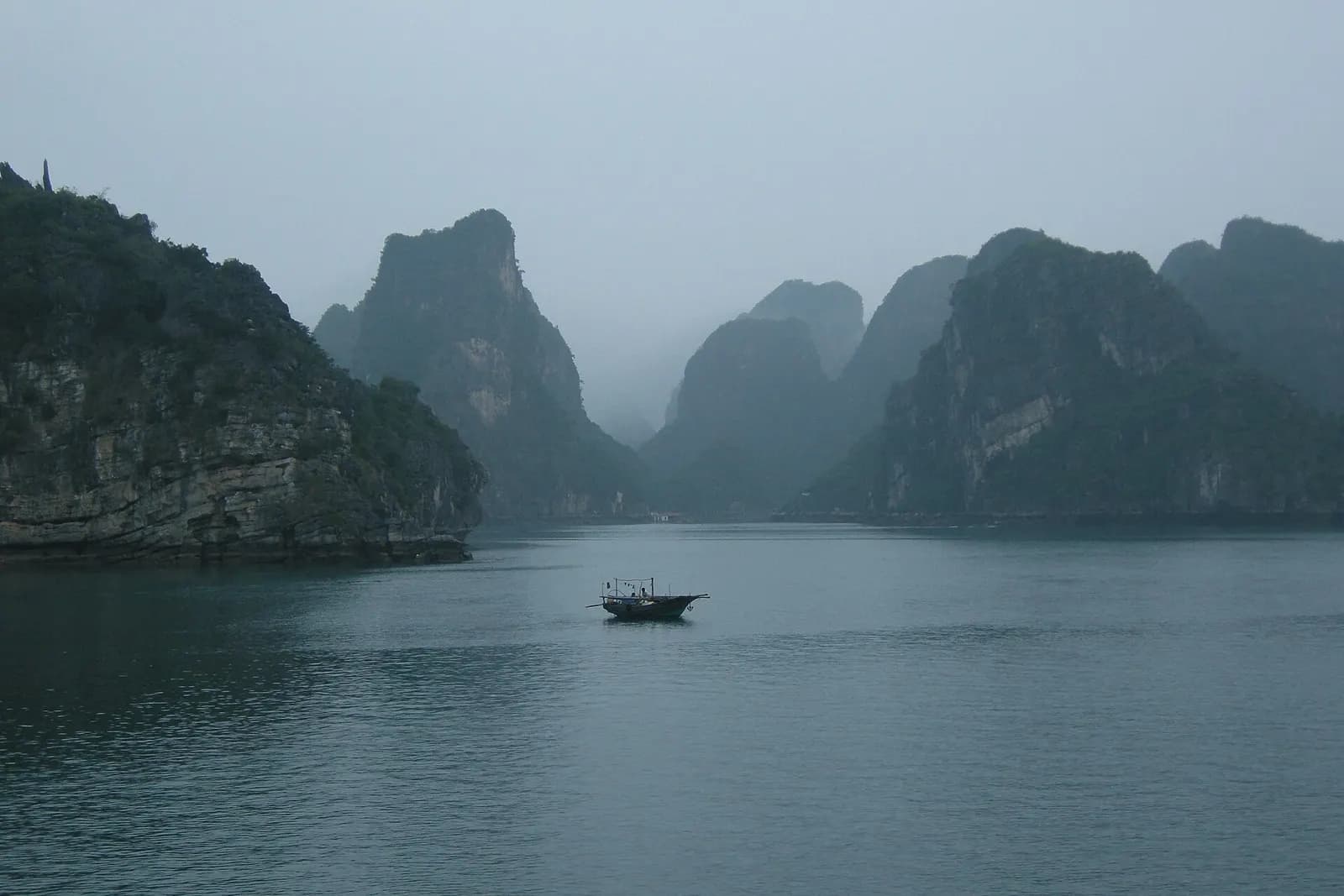
Two and a half to three hours by expressway to the harbour, boarding around midday. The afternoon is spent cruising among the karsts, with a stop to kayak or visit a cave depending on the boat's route that day. Dinner on board and a night on the water, in a cabin with its own bathroom.
Day 4Ha Long Bay — fly to Da Nang, drive to Hoi An
Early tai chi on deck for those who want it, brunch as the boat returns, and ashore by late morning. Drive back to Hanoi's airport (about three hours) for the afternoon flight to Da Nang, roughly one hour twenty minutes, then forty-five minutes by road to Hoi An. A long travel day, but it saves a full day of driving. Overnight in Hoi An.
Day 5Hoi An — the ancient town
A morning walk through the old town with a local guide before the heat and the crowds build: the Japanese Covered Bridge, a Chinese assembly hall, a merchant's house still lived in by the same family. Afternoon free for the tailors, the market or a bicycle out to the rice fields. After dark the lanterns go up along the river. Overnight in Hoi An.
Day 6My Son Sanctuary — afternoon free in Hoi An
An early start to reach My Son, about an hour inland, as it opens: the ruined brick temples of the Cham kingdom, built between the fourth and thirteenth centuries in a valley ringed by hills, and badly damaged by bombing in 1969. Back in Hoi An by lunchtime, with the afternoon free — An Bang beach is fifteen minutes away. Overnight in Hoi An.
Day 7Fly to Siem Reap, Cambodia
Drive to Da Nang airport for the flight to Siem Reap, which usually connects through Ho Chi Minh City and takes most of the day. Siem Reap–Angkor International Airport is about fifty kilometres from town, roughly an hour by road. Evening free around the old market. Overnight in Siem Reap.
Day 8Sunrise at Angkor Wat, the Bayon and Ta Prohm
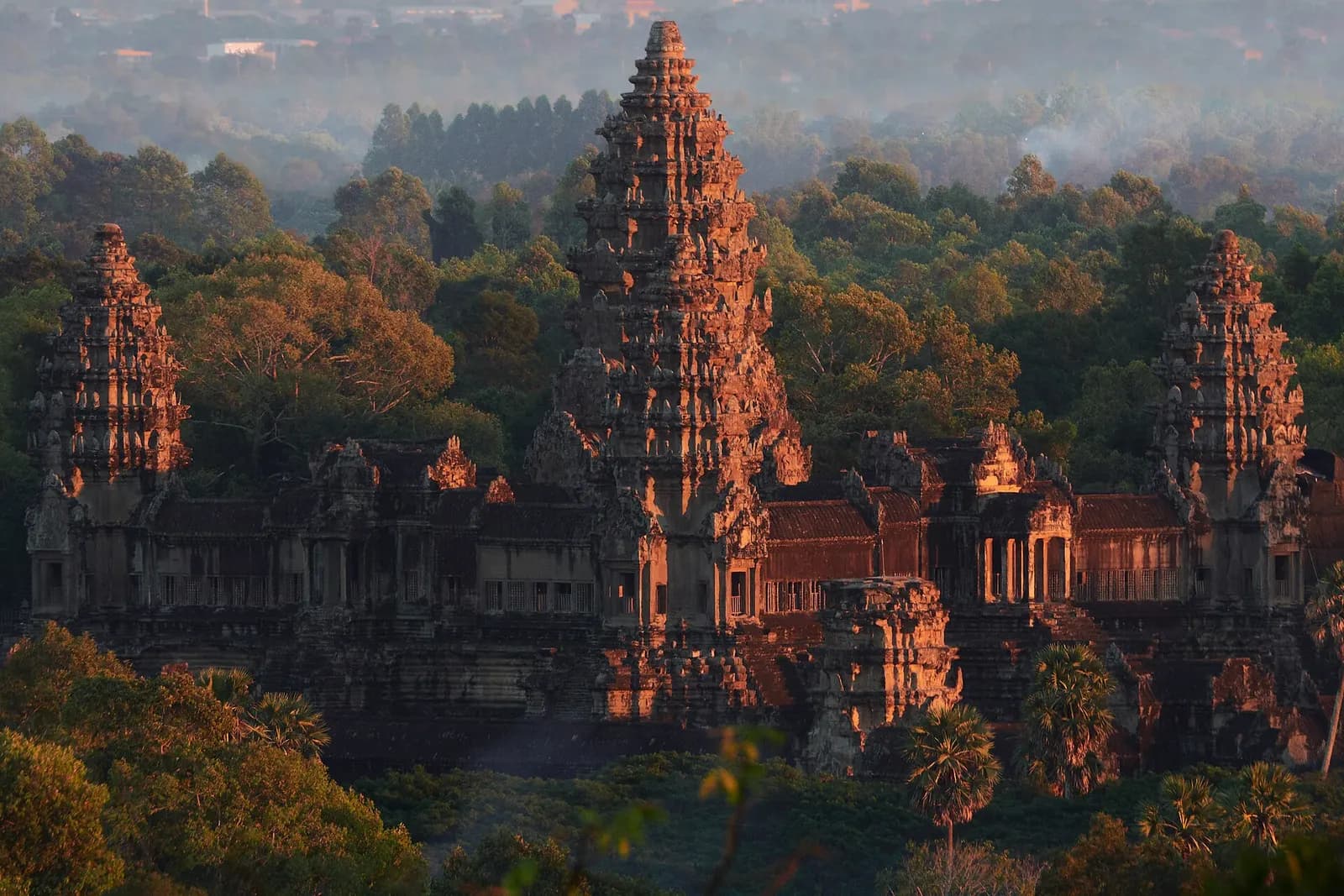
Up at about 4.30am for sunrise behind Angkor Wat's towers from the edge of the reflecting pools, then the temple itself with a guide while it is still cool. Back to the hotel through the midday heat, then out again for the walled city of Angkor Thom, the 216 stone faces of the Bayon, and Ta Prohm, where the jungle has been left in the masonry. Overnight in Siem Reap.
Day 9Banteay Srei and the Tonle Sap lake
About an hour north by road to Banteay Srei, a small tenth-century temple in pink sandstone with the finest carving at Angkor, stopping at a village making palm sugar on the way. Late afternoon by boat among the stilt houses of Kampong Phluk on the Tonle Sap; how high the stilts look depends on the month, because the lake rises and falls by metres through the year. Overnight in Siem Reap.
Day 10Fly to Bangkok, Thailand
A free morning — back to a temple, or to the Angkor National Museum. Midday transfer to the airport for the flight to Bangkok, about one hour ten minutes, and on to the hotel by the river. Evening free. Overnight in Bangkok.
Day 11Bangkok — the Grand Palace and Wat Pho
The Grand Palace and the Temple of the Emerald Buddha first thing, before the queue and the heat; the dress code is strict (shoulders and knees covered) and enforced at the gate. Then Wat Pho's 46-metre reclining Buddha, a long-tail boat along the Thonburi canals, and Wat Arun across the river. Overnight in Bangkok.
Day 12Damnoen Saduak floating market
Leave at about 6.30am for the two-hour drive west to Damnoen Saduak, to be on the canals by boat before the busiest hours. It is a market that now exists largely for visitors, and we say so; it is still a good look at canal life. On to the Maeklong railway market, where stalls are pulled back for the train, and back to Bangkok by mid-afternoon. Overnight in Bangkok.
Day 13Bangkok — free day
A day of your own. The tour leader can arrange a day trip to the old capital of Ayutthaya, about an hour and a half north, or point you to Chatuchak weekend market, Jim Thompson's House or a Thai massage. Farewell dinner together in the evening. Overnight in Bangkok.
Day 14Depart Bangkok
Transfer to Suvarnabhumi or Don Mueang airport for your onward flight. Allow at least an hour by road, more in the evening rush.
What’s included
- Twelve nights in hotels, twin share with private bathrooms, and one night on the Ha Long Bay cruise
- CONFIRM — Overnight Ha Long Bay cruise on a junk-style boat with private en-suite cabins, meals on board included; vessel named at booking
- CONFIRM — Internal flights Hanoi–Da Nang, Da Nang–Siem Reap (usually via Ho Chi Minh City) and Siem Reap–Bangkok, economy class with checked bag
- Daily breakfast, plus the meals on the cruise and five other lunches or dinners
- A tour leader throughout and licensed English-speaking local guides at each site
- CONFIRM — Three-day Angkor Pass, and entry fees for every site named in the itinerary
- All ground transport in private air-conditioned vehicles and every airport transfer
- Bottled water on touring days
Not included
- International flights to Hanoi and home from Bangkok
- Visas for Vietnam, Cambodia and Thailand, where your passport needs them
- Travel insurance, which is a condition of joining
- Meals not listed as included, and all drinks other than water
- Optional activities, such as a cooking class in Hoi An or a tuk-tuk evening in Bangkok
- Tips for guides, drivers and cruise crew
- Single rooms, available at a supplement
Good to know
Three countries, three sets of entry rules
Each country decides entry for itself, and the rules depend on your passport. Vietnam issues e-visas online, and some nationalities are exempt for short stays. Cambodia offers an e-visa and, for many passports, a visa on arrival. Thailand's rules vary more by nationality than the other two and have changed several times recently. Check all three for your own passport when you book, not the week before, and make sure it is valid for at least six months beyond the end of the trip with blank pages for stamps.
We fly between all three countries rather than crossing by land, so there are no land border crossings on this route. Check your government's travel advice for the Thailand–Cambodia border region before you travel; it does not affect the flight between Siem Reap and Bangkok, but the situation there has changed at short notice.
The season, and what November to April actually means
November to April is the dry season across most of the route, but the three places do not share one climate. Hanoi and Ha Long in December to February are cool and often grey, around 15 to 20°C, with mist on the bay that some people love. Central Vietnam's wet season runs into November and Hoi An's old town floods in some years; early-November departures carry that risk. Angkor and Bangkok are dry and warm from November to February and hot in March and April, often above 35°C, which is why the temple days are split around midday.
Ha Long Bay cruises are occasionally cancelled or shortened by the harbour authority in bad weather. If that happens we replace the night with a hotel and the bay with whatever can still be done safely.
Accommodation
Comfortable three- and four-star hotels, chosen for location — the Old Quarter, walking distance of Hoi An's old town, central Siem Reap, by the river in Bangkok. Rooms are twin share with private bathrooms and air conditioning. The Ha Long cruise boat has private cabins with en-suite bathrooms; the exact vessel is confirmed at booking.
What easy really means here
No altitude, no trekking, nothing that needs fitness beyond walking two to three hours over uneven ground and climbing steep temple steps. What tires people is the combination of heat, humidity, early starts and three flights in ten days. Bring a hat, light long clothing for temples and palaces, and the expectation of an afternoon rest at Angkor.
Money and connectivity
Three currencies: Vietnamese dong, Cambodian riel — though US dollars are used everywhere in Cambodia — and Thai baht. ATMs are easy in all the towns on the route, and cards are accepted in hotels and larger restaurants. A regional eSIM or a local SIM in each country costs little and works well; hotel wifi is generally good.
Temple and palace etiquette
Shoulders and knees covered at the Grand Palace, at Angkor's upper levels and at most temples, and shoes off where you see others take them off. The Grand Palace turns people away at the gate for this, and sarongs for hire run out on busy days.
Questions about this trip
How hard is this tour?
It is easy in the sense that matters: no altitude, no trekking, and nothing beyond two to three hours on foot at a time. The tiring part is the heat and humidity, the early starts for sunrise and the markets, and three internal flights in ten days. If you can walk comfortably for a morning in warm weather and manage steep steps, you will be fine.
When is the best month to go?
December to February is the most comfortable overall: cool in Hanoi, dry and warm at Angkor and in Bangkok. November can still bring rain and flooding to Hoi An, and March and April are very hot in Cambodia and Thailand, often above 35°C. The departure window is November to April because that is the dry season across most of the route.
Do I need visas?
Possibly for all three countries, and it depends entirely on your passport. Vietnam uses e-visas, Cambodia an e-visa or visa on arrival for many nationalities, and Thailand has different rules for different passports which have changed recently. Visas are not included; we send a checklist when you book, but the official government sites are the final word.
Is it safe?
Vietnam, Cambodia and Thailand are among the most visited countries in Asia, and the everyday risks on this route are traffic, heat and petty theft in crowds rather than anything serious. We fly between the countries rather than crossing by land. Check your government's travel advice before you book, particularly on the Thailand–Cambodia border area, which is not on our route.
What is the Ha Long Bay boat like?
A junk-style cruise boat in the mid to upper range, with private cabins, en-suite bathrooms, air conditioning and meals on board. Boats on the bay vary enormously in standard, so we confirm the exact vessel when you book rather than promise a name now. Cruises are occasionally cancelled by the harbour authority in bad weather, in which case we substitute a hotel night.
Can I join as a single traveller?
Yes, and many people do. We pair you with another traveller of the same sex to share a twin room, or you can take a single room for a supplement. Cruise cabins are twin share in the same way.
Can this be done privately or changed?
Yes. The same route can run as a private trip for a family or a small group on dates you choose, with more time in one place — an extra day at Angkor is the most common request — or extended to Laos. For Indonesia instead, see our Bali, Mount Bromo and Komodo expedition.
What is not included that I should budget for?
International flights, visas, travel insurance, drinks, tips, and the lunches and dinners not listed as included. Meals are inexpensive across the region; budget roughly US$ 20 to 35 a day for meals and drinks outside the included ones, more in Bangkok if you eat in hotels.
Explore the region
You might also consider
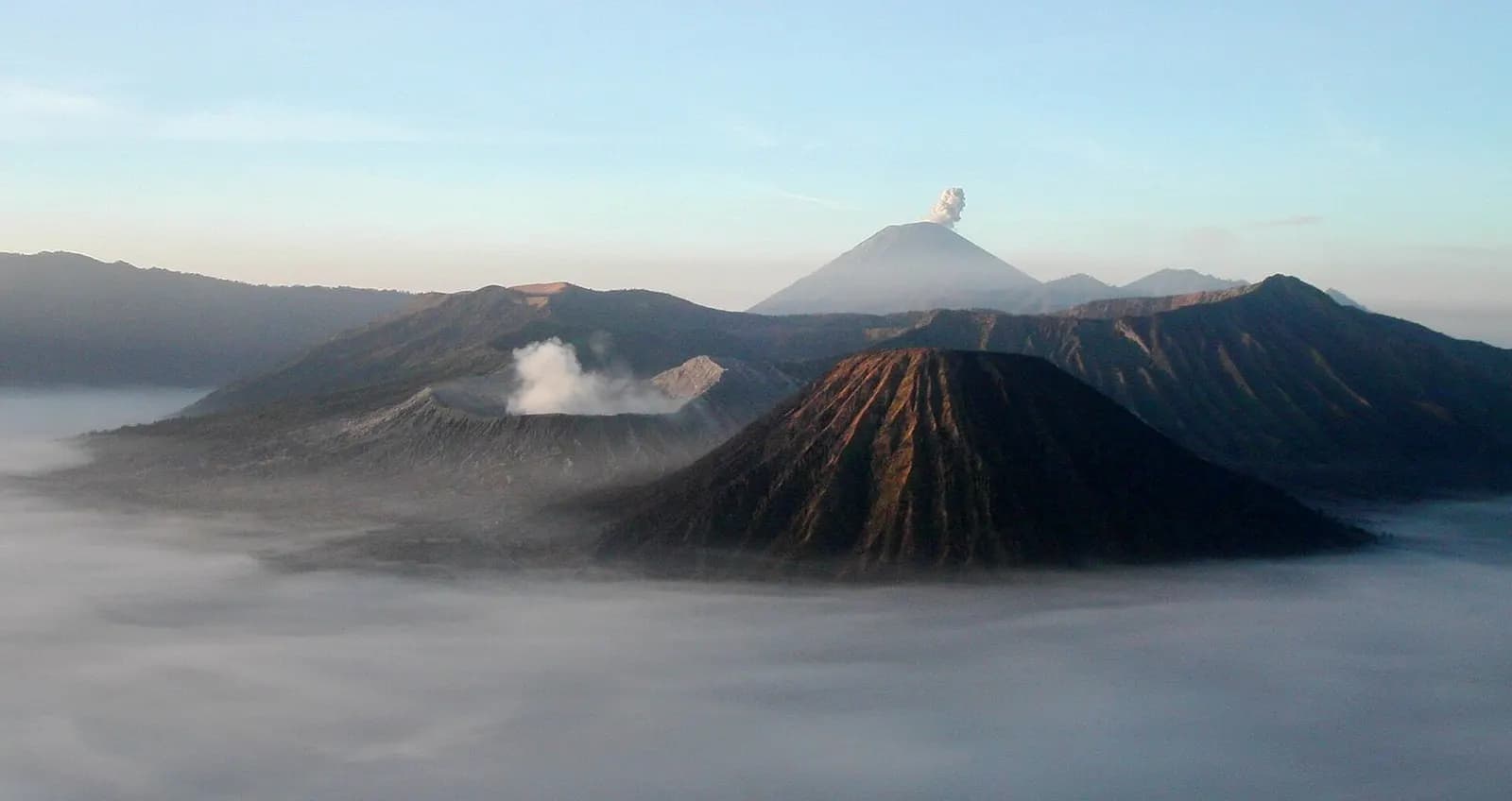
Photographs: Satdeep Gill (CC BY-SA 4.0); Vyacheslav Argenberg (CC BY 4.0); Thomas Hirsch (= user Ravn) (CC BY-SA 3.0), via Wikimedia Commons.
Enquire about this trip
Tell us who is travelling and roughly when. A trip planner — not a call centre — replies within three hours between 9am and 11pm Pakistan time with a day-by-day itinerary and the full price, per person, with nothing hidden underneath it.
- Every itinerary written from scratch around your dates.
- Licensed operator, running these routes since 2020.
- A full costing up front — no deposit to see one.
- +92 310 5344471
- info@elhamasia.com
- 9am – 11pm PKT, seven days a week
- Office No. 227, Rohtas Road, G-9/1, Islamabad, Pakistan


