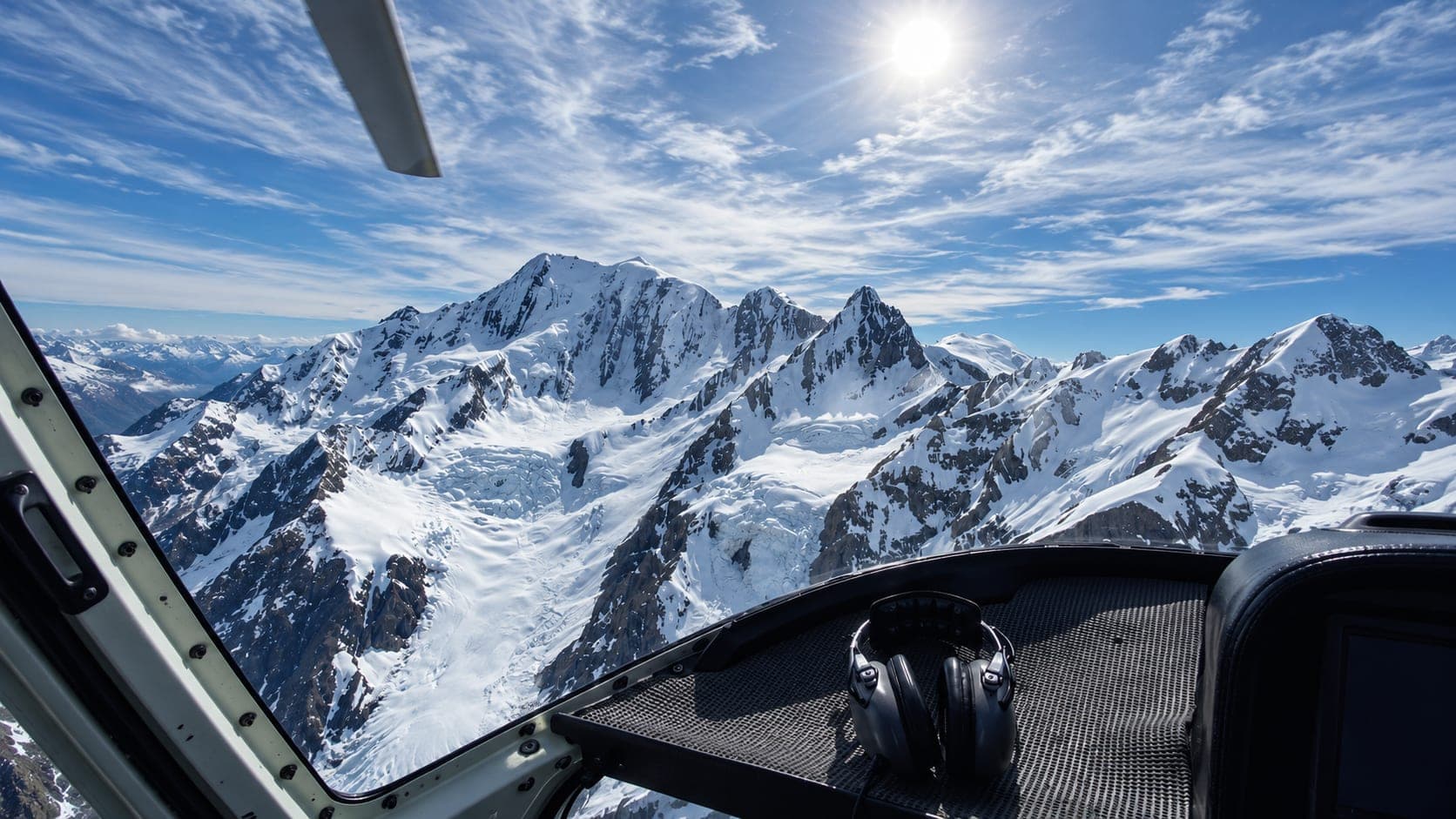
Helicopter Safari Pakistan
- Up to 4,750 m
- Karakoram Range
- Four 8,000 m peaks in one flight
- No trekking, no acclimatisation days
- May to early October
- Weather days built in
- 12-day itinerary
About this tour
A helicopter safari in Pakistan buys you one thing that nothing else can: the Karakoram from above, in an afternoon, without the fourteen days on foot that are otherwise the only price of admission.
The walk to Concordia — the amphitheatre where the Baltoro and Godwin-Austen glaciers meet, with K2 at the head of it — takes a fit trekker about seven days in from Askole and seven days back out, sleeping on moraine. From Skardu the same ground is forty minutes of flying. You lift out of the Indus valley at 2,200 metres, follow the Shigar and then the Braldu upstream, and the country changes underneath you from apricot terraces to bare rock to a fifty-kilometre river of ice with granite towers standing out of it. Then Concordia opens up and there are four of the world's fourteen 8,000-metre peaks in the windows at once.
This is not a scenic flight bolted onto a coach tour. It is a flying itinerary built around the fact that Karakoram weather decides when anything happens: we base you in Skardu with days in hand, fly when the mornings are clear, and fill the ground days with the Shigar and Khaplu valleys, the old forts and the polo ground, so that a grounded day is still a day worth having.
It suits people who have the money but not the fortnight, people who have trekked here before and want to see what they walked through, photographers who need altitude and light rather than time, and anyone for whom the walking was never going to be possible. We have flown grandparents to Concordia. It is the only way most of them were ever going to see it.
Trip highlights
Concordia, and four 8,000ers
Roughly 4,600 metres, where the Baltoro and Godwin-Austen glaciers meet — ringed by K2 at 8,611 m, Broad Peak at 8,051 m and Gasherbrum I and II. Trekkers reach it after about seven days on moraine. You reach it after breakfast.
Fifty kilometres of the Baltoro
The full length of the glacier from the air, with the Trango Towers, Uli Biaho and the Cathedral spires standing off it — a wall of granite that is one of the great rock-climbing landscapes on earth, and invisible from any road.
Masherbrum's other side
7,821 metres, seen from the side no photograph on the internet shows, because the road side is the other one.
Shigar and Khaplu between flights
The restored Shigar Fort, the Khaplu palace, apricot orchards and a polo ground that has been in use for centuries — the ground days that make a grounded morning worth having.
The scale problem, solved
Pictures of the Karakoram never work because there is nothing in them for scale. From 4,750 metres, with the glacier below and the summits still two vertical miles above you, it finally lands.
Route
- 1 Start
- 2 Stop in order
- 9 Finish
- Route travelled
Loading map…
At a glance
- Up to 4,750 mConcordia and the Baltoro, reached in under an hour from Skardu.
- Karakoram RangeBaltoro, Concordia, Masherbrum and the Khaplu valley.
- Four 8,000 m peaks in one flightK2, Broad Peak and both Gasherbrums stand around Concordia.
- No trekking, no acclimatisation daysYou gain and lose the altitude inside a single flight.
- May to early OctoberJune and September give the most settled flying mornings.
- Weather days built inThe itinerary holds spare days because the mountain decides, not the schedule.
Day by day
Day 1Arrive Islamabad

Met at the airport and driven to the hotel. Dinner, and a first look at the shape of the next twelve days — which, on this trip more than any other we run, means talking about weather. You will hear that word a great deal and it is better heard on day one than on day four.
Day 2Islamabad to Skardu by air

The hour-long flight north is the best-value scheduled flight in Pakistan: the aircraft threads the mountains with Nanga Parbat off the left wing, and passengers routinely spend the whole of it at the windows. It is also weather-dependent and cancels often, so we hold the two-day road journey up the Karakoram Highway as the alternative and the itinerary carries the slack to absorb it. Afternoon at leisure in Skardu at 2,230 metres.
Day 3Skardu — Kharpocho Fort, Shangrila, and the flight briefing
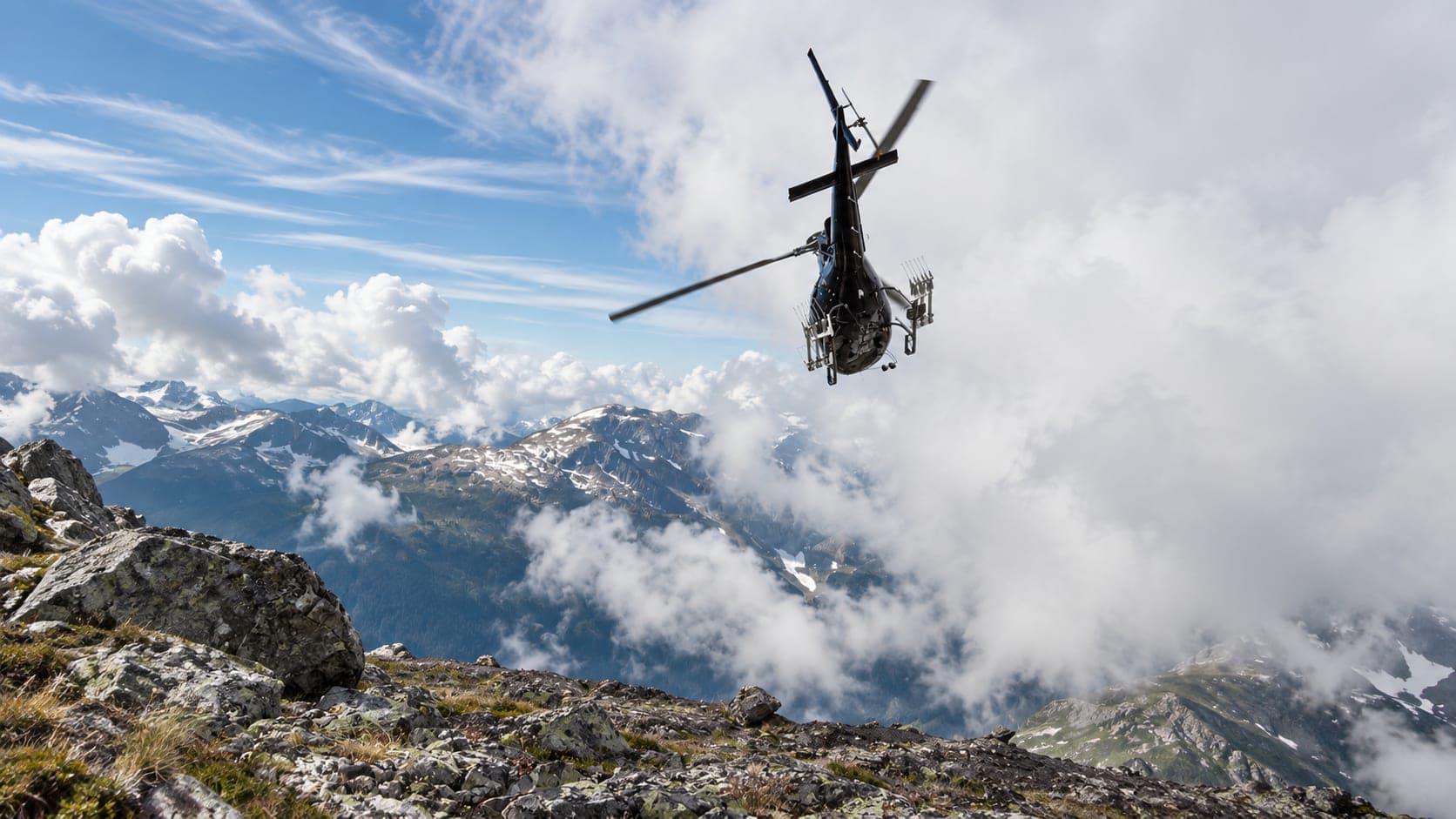
A deliberately gentle day while the crews watch the forecast. Kharpocho Fort stands above the town where the Shigar meets the Indus, and Shangrila's lake sits in the old riverbed at Kachura. In the afternoon you meet the crew, the aircraft and the safety briefing, and we take the weights the pilot needs. Bring what you plan to fly with so it can be weighed rather than guessed at.
Day 4Flying day — the Baltoro glacier, Concordia and K2

The reason you came. An early lift from Skardu, up the Shigar and into the Braldu gorge, over Askole — the last village, and the roadhead where every K2 trek begins on foot — and then out onto the Baltoro. Fifty kilometres of glacier unwind beneath you with the Trango Towers and the Cathedral spires standing off the ice. Concordia opens at the end of it: K2 at 8,611 m straight up the Godwin-Austen, Broad Peak at 8,051 m, and Gasherbrum I and II to the east. Four of the world's fourteen highest mountains, in the windows at once, about forty minutes after breakfast.
Day 5Shigar valley and Shigar Fort — and the reserve for yesterday

A ground day by design, and the spare day for flying day one if the morning went against us. The Shigar valley is apricot orchards, poplars and irrigation channels running between them, and the fort at the top of it is a seventeenth-century raja's palace restored over a decade and now the best building you can sleep in north of Islamabad. Lunch there, and the cold-desert dunes on the way back if there is light for it.
Day 6Flying day — Trango, Masherbrum and the Hushe valley
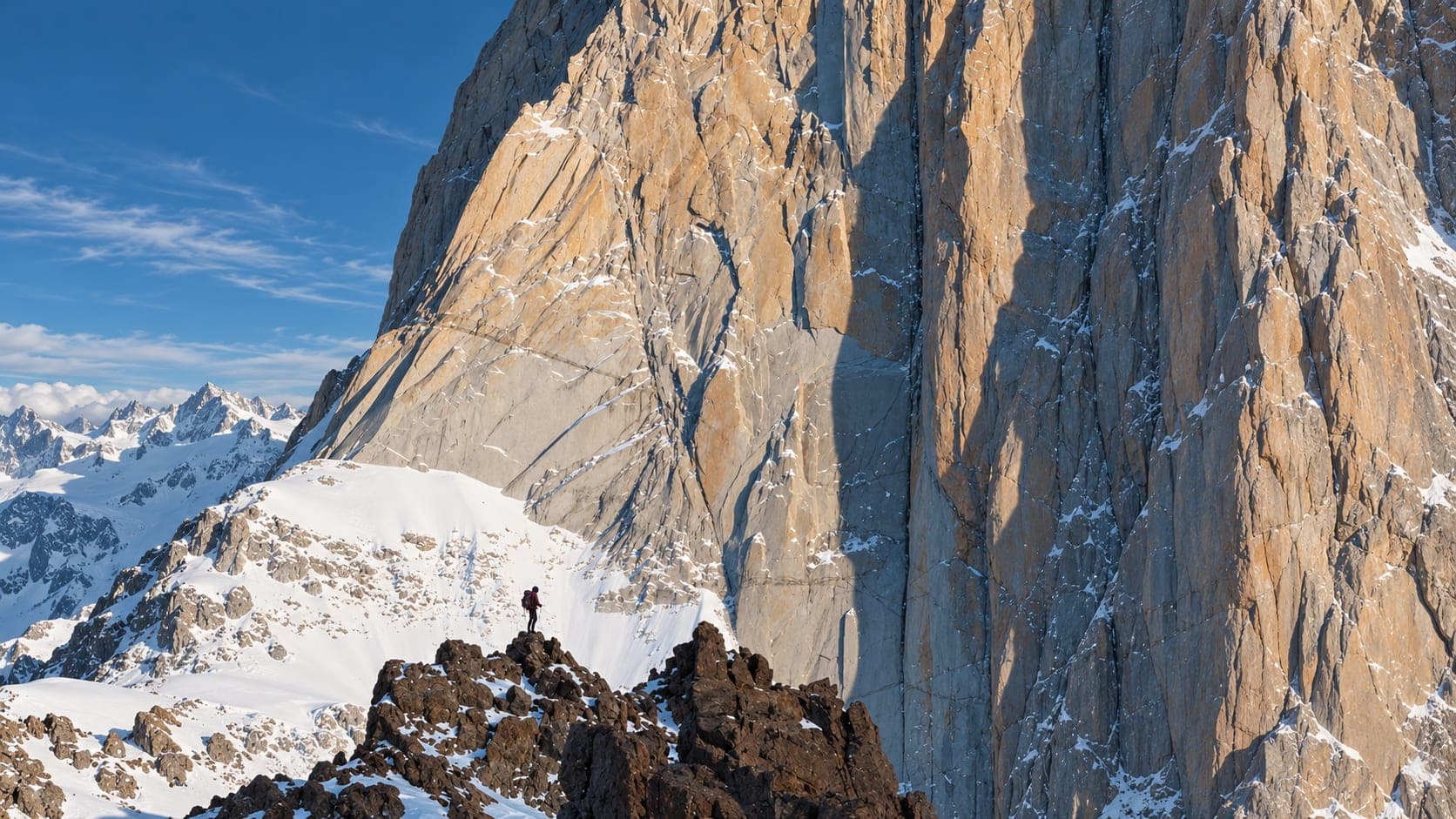
The second flight works the country south and east of the Baltoro, which almost nobody photographs because no road reaches it. Masherbrum at 7,821 m shows the face the Khaplu road never sees. The Trango group — Great Trango, Uli Biaho, Nameless Tower — is a kilometre of vertical granite standing straight out of the ice, and from the air you finally get the one thing photographs of it always lack, which is something to measure it against.
Day 7Khaplu by road — and the reserve for yesterday

Two and a half hours up the Shyok to Khaplu at 2,600 metres, and the spare day for flying day two. The palace here is the other great restoration in Baltistan, a nineteenth-century royal house on a terrace above the valley. If there is polo on, we go: the Baltistan game is the old one, played hard, with no umpire worth the name and a band on the sideline.
Day 8Skardu to Gilgit along the Indus

Six to seven hours west, following the Indus out of Baltistan through a gorge that runs for most of the day between rock walls with the river the only green thing in it. The road has been rebuilt in recent years and is far better than its reputation. Gilgit in the late afternoon.
Day 9Gilgit to Karimabad, and Baltit Fort

A short morning up the Karakoram Highway into Hunza — under three hours, with Rakaposhi at 7,788 m standing over the road for much of it. Karimabad sits on the terrace above the river with Baltit Fort at the top of the village, a 700-year-old building on a spur that was the seat of the Mirs of Hunza until the 1940s. Afternoon in the fort and the old lanes below it.
Day 10Upper Hunza — Attabad, Passu and the Khunjerab road

North to the lake at Attabad, which did not exist before a landslide dammed the river in 2010 and is now a startling turquoise sheet with the highway running along it on new bridges. Beyond it the Passu cones, the most photographed skyline in Pakistan and a rare case of a thing that looks exactly as advertised. If the day and the permits allow, we continue to the Khunjerab Pass at 4,693 m and the Chinese border gate.
Day 11Karimabad to Besham, down the Karakoram Highway

The long day, and an honest one: eight to nine hours on the road. It is also the day the scale of the country lands, because you drive the whole length of the Indus gorge with Nanga Parbat's 8,126 m bulk on one side and the Karakoram ending on the other, past the point where three of the world's great ranges meet. Night at Besham on the river.
Day 12Besham to Islamabad via Taxila, and departure

Six to seven hours south, out of the mountains and into Punjab, stopping at Taxila — the Gandharan city where Buddhist monasteries stood for a thousand years and the museum holds what was dug out of them. Into Islamabad in the afternoon, with a day room held for you, and onward flights from the evening. Most international departures leave late, which is why the drive works on the last day rather than needing a thirteenth.
What’s included
- Two scheduled helicopter flying days over the Baltoro, Concordia and the Masherbrum group — flying hours as set out in your quotation
- Return flights Islamabad to Skardu, with the Karakoram Highway drive held as the weather alternative at no extra cost
- Eleven nights: hotels in Islamabad, Skardu, Gilgit, Karimabad and Besham, twin share and en-suite
- All meals from Islamabad to Islamabad
- All ground transport, including the Skardu–Gilgit–Hunza–Islamabad overland return
- An English-speaking guide throughout, and a day room in Islamabad before departure
- Restricted-zone permits and the paperwork the flying areas require
- All airport transfers, international and domestic
Not included
- International flights to and from Pakistan
- Pakistan visa fee
- Travel insurance, which must cover helicopter travel and altitude to 5,000 m
- Single-room supplement
- Additional flying time beyond the hours quoted, if you want it and the weather allows it
- Tips, laundry, drinks and anything personal
- Costs arising from weather delays outside the itinerary — see Good to know
Good to know
**The weather decides, and it decides late**
This is the single most important thing to understand before booking a helicopter safari, and the thing every brochure underplays. Karakoram flying weather is a morning phenomenon: valley winds get up through the day and cloud builds on the peaks, so flights go early or they do not go. A clear evening in Skardu tells you nothing about tomorrow.
We build spare days into every itinerary for this reason and we will not sell you a version without them. A safari with no margin is a safari that returns your money instead of showing you Concordia, and those are not the same outcome.
**What happens if it does not fly**
Unflown hours are refunded or rescheduled — your quotation will say which, and you should read that clause before you pay anything. What is not refundable is the hotel you slept in while waiting, and no operator anywhere can make it so. Budget for the possibility of two extra nights and treat them as the cost of the attempt.
**Skardu is a weather airport too**
The scheduled flight from Islamabad to Skardu is famously cancellable — it runs visually through mountain terrain and goes when the corridor is clear. We hold the two-day road journey up the Karakoram Highway as the alternative, which is why the itinerary starts with slack in it rather than a tight connection.
**Altitude, without the acclimatisation**
You will go from roughly 2,200 metres to about 4,750 metres and back inside a single flight. That is a fast profile, though a short exposure, and most people feel nothing worse than slight breathlessness. Anyone with a heart or lung condition, anyone pregnant, and anyone who has had altitude sickness badly before should speak to a doctor first and tell us what they said. We would rather rearrange a flight than carry someone who should not be on it.
**Weight is not a formality**
Helicopters lose lifting performance as they climb, and 4,750 metres is high for any airframe. Passenger numbers, baggage and fuel are traded against each other on the day, and the pilot's figure is final. We will ask for real body weights before you travel — not because anyone wants to know, but because the alternative is finding out at the pad that somebody is not flying. Bring a small bag for the flight and leave the rest at the hotel.
**Cameras**
Wide lenses are more useful than long ones; the subject is nearly always bigger than you expect. Doors stay closed, so a polariser will fight the window glass — take it off. Shoot at a high shutter speed for the vibration, and keep the lens hood off so it is not reflected back at you in the glass.
**Permits and where you may fly**
Parts of the Karakoram are restricted, and flying in them needs permissions that are applied for in advance and are not always granted. We handle the applications, and we will tell you plainly if something you have asked for is not going to be approved rather than let you find out on the morning.
Questions about this trip
How much does a helicopter safari in Pakistan cost?
US$ 5,000 per person on the standard safari, and how that number is built is worth understanding before you compare it with anything. Helicopter time is charged by the flying hour against the whole aircraft, not by the seat, so the cost per head falls as the party grows: two people split an airframe between two, five split the same airframe between five. If your dates have any give in them we will also try to pair you with another party flying the same route. Ask for a quotation with your real numbers rather than working from the headline.
How high does the helicopter go?
Up to about 4,750 metres on the Concordia flight — the amphitheatre itself sits at roughly 4,600 m and the aircraft works above it. That is high for a helicopter and it is the reason passenger numbers and baggage are calculated so carefully on the day. You are still some 3,900 metres below the summit of K2 when you are level with Concordia, which is the fact that tells you how big this place is.
Do I need to be fit, or to acclimatise first?
No walking is involved and there are no acclimatisation days, which is the whole point of the trip. What you cannot avoid is a fast altitude profile: roughly 2,200 m to 4,750 m and back within one flight. Most people notice nothing more than slight breathlessness. If you have a heart or lung condition, are pregnant, or have had bad altitude sickness before, get a doctor's opinion first and tell us what it was.
What happens if the weather stops the flight?
It is a real possibility and the itinerary is built for it, with spare days in Skardu rather than a schedule that assumes clear mornings. Unflown hours are refunded or rescheduled on the terms in your quotation. Nights spent waiting are not refundable — that is true of every operator — so budget for one or two extra and think of them as the cost of the attempt. The ground days in the Shigar and Khaplu valleys are genuinely good days, not filler.
Can I see K2 from a helicopter?
Yes. K2 stands at the head of the Godwin-Austen glacier and is in clear view from Concordia, along with Broad Peak and both Gasherbrums — four 8,000 m peaks visible from one place. The flight does not land on or approach the mountain itself; it works the Concordia basin, which is where the view is and where the aircraft can safely operate.
When is the best time of year for a helicopter safari?
May to early October. June and September are the most reliable for settled morning air: July and August bring more cloud build-up and the monsoon's edge reaches the southern approaches, and by late October the flying window has shortened and the cold at altitude has arrived. Spring gives you more snow on the peaks and a slightly higher cancellation risk.
How many people fit in the helicopter?
It depends on the aircraft, the altitude and the day's temperature, and the pilot decides it rather than we do — a helicopter carries less as it goes higher and as the air warms. This is why we ask for real body weights in advance and why baggage on flying days is limited to a small bag. If your party is larger than one load we fly in waves rather than squeeze, and the quotation will say how that is costed.
Is a helicopter safari safe?
Helicopter operations in the Karakoram are demanding and are flown by crews who do this work constantly, under permissions that are issued flight by flight. The two things within your control are insurance and honesty. Your policy must explicitly cover helicopter travel and altitude to 5,000 metres, because a general travel policy often excludes both. And tell us about any medical condition before you travel rather than at the pad.
Can the helicopter land at Concordia or K2 Base Camp?
The safari is planned and priced as an overflight, and that is how you should book it. A landing depends on three things that are decided close to the day: the permissions held for that area at that time, the aircraft's performance at the altitude and temperature, and whether there is a surface anyone is willing to put skids on. Ask the office when you enquire and you will get a straight answer for your dates. What we will not do is sell a landing in advance and then explain on the morning why it is not happening.
You might also consider

Enquire about this trip
Tell us who is travelling and roughly when. A trip planner — not a call centre — replies within three hours between 9am and 11pm Pakistan time with a day-by-day itinerary and the full price, per person, with nothing hidden underneath it.
- Every itinerary written from scratch around your dates.
- Licensed operator, running these routes since 2014.
- A full costing up front — no deposit to see one.
- +92 310 5344471
- info@elhamasia.com
- 9am – 11pm PKT, seven days a week
- Office No. 227, Rohtas Road, G-9/1, Islamabad, Pakistan