
Hunza Valley Cherry Blossom Tour
- 10 days, late March to April
- Khunjerab Pass, 4,693 m
- Blossom in three valleys
- Hotels throughout
- Maximum 14
- Sunrise at Duikar
- Karakoram Highway both ways
- 10-day itinerary
About this tour
For about two weeks between late March and the third week of April, the floor of the Hunza valley disappears under blossom. Apricot goes first and there is far more of it than cherry — the apricot is the valley's staple, dried on every roof in September — and then cherry, almond and apple follow. Against bare rock, old snow and Rakaposhi at 7,788 metres, the effect is out of all proportion to the size of the trees.
The complication is that it moves. Bloom runs up the valley as the altitude rises: lower Hunza and Nagar around Ghulmet and Minapin come first, Karimabad and Altit a few days later, and Gulmit and upper Hunza can be a full week behind that. A warm March pulls everything forward, a cold one pushes it back, and nobody knows in January what the last week of March will do. This itinerary is built to move with it — we hold the shape and choose which valleys to spend the days in once we can see what is actually open.
Beyond the blossom it is the Hunza road trip: Karimabad under Baltit Fort, the Eagle's Nest at Duikar for sunrise on Rakaposhi and Ultar, Attabad Lake, the Passu Cones and the Khunjerab Pass at 4,693 metres on the Chinese border. In April the upper valley still has snow on it, which is exactly why the blossom lower down looks the way it does.
Trip highlights
Blossom under a 7,788 m peak
Apricot and cherry across the valley floor at Ghulmet and Minapin with Rakaposhi straight above it. There is nowhere else that stages spring quite like this.
An itinerary that follows the bloom
Flowering runs up the valley with altitude, so we decide on the ground which valleys get the days — Nagar early in the window, Gojal late.
Sunrise from the Eagle's Nest
2,800 metres above Karimabad, with Rakaposhi, Diran, Golden Peak and the Ultar spires going pink in order.
Two seasons, three hours apart
The Khunjerab Pass at 4,693 metres is still under snow in April, on the same trip as blossom at 2,000 metres.
Route
- 1 Start
- 2 Stop in order
- 8 Finish
- Route travelled
Loading map…
At a glance
- 10 days, late March to AprilDates track the bloom, which moves a week either way with the spring.
- Khunjerab Pass, 4,693 mThe highest paved border crossing in the world. Snow on it in April.
- Blossom in three valleysNagar, central Hunza and Gojal bloom up to a week apart.
- Hotels throughoutTwin share with en-suite. No camping on this trip.
- Maximum 14One minibus, and 4x4s where the side valleys need them.
- Sunrise at DuikarRakaposhi, Diran and the Ultar wall from the Eagle's Nest.
- Karakoram Highway both waysOr fly Gilgit if the weather allows and you would rather.
Day by day
Day 1Arrive Islamabad
Met at the airport and driven to the hotel. Dinner and a briefing, including the honest version of where the bloom is this week — by the time you land we know, and the plan for the middle of the trip firms up here.
Day 2Islamabad to Chilas on the Karakoram Highway

The long first driving day: out of the Potohar plateau, through Besham and up the Indus gorge onto the Karakoram Highway proper. Eight to nine hours with stops. The scenery earns it from about Besham onwards — the river below the road the whole way, and the point where the Himalaya, Karakoram and Hindu Kush meet marked by a sign nobody believes until they see the rivers.
Day 3Chilas to Nagar and Karimabad — into the blossom
Five hours up the KKH past Nanga Parbat and the Rakaposhi viewpoint, and this is usually where the blossom starts. Ghulmet and Minapin in Nagar bloom first, being lower, and the valley floor below Rakaposhi in full apricot is the photograph people come for. On to Karimabad for three nights.
Day 4Karimabad — Baltit, Altit and the old town

Baltit Fort above the town, seven hundred years old and restored properly; Altit Fort below it, older still, with the royal garden and the lanes of Altit village around it. The apricot orchards through Altit and Ganish are among the densest in the valley. An easy day on foot with a lot of climbing up and down stone lanes.
Day 5Sunrise at Duikar, and a side valley
Up to the Eagle's Nest at Duikar before first light, which is cold and worth it: Rakaposhi at 7,788 metres, Diran, Golden Peak and the Ultar spires lighting in sequence over the valley with the blossom still in shadow below. The rest of the day in a side valley — Hoper and its glacier, or the Hopar–Nagar road — depending on where the bloom is best that week.
Day 6The Khunjerab Pass — 4,693 m
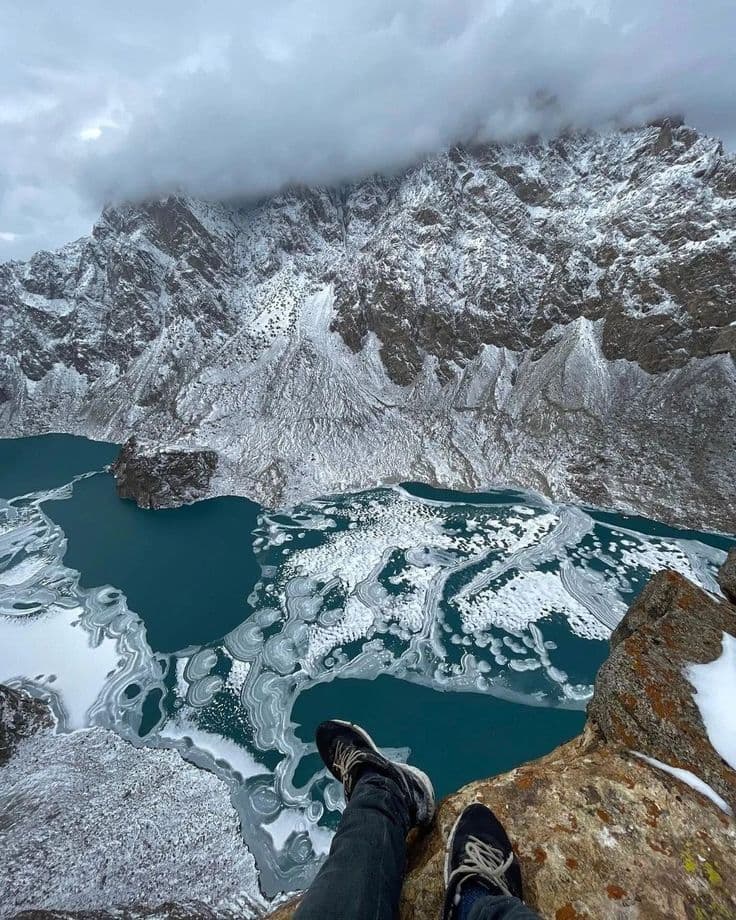
Three to four hours up through Gojal to the Chinese border at Khunjerab, the highest paved frontier crossing in the world. In April there is deep snow at the top and often a marmot or two out of hibernation. The contrast is the point: blossom at 2,000 metres in the morning, a snowfield at 4,693 in the afternoon. Back to Gulmit or Karimabad for the night.
Day 7Upper Hunza — Attabad, Passu and Gulmit
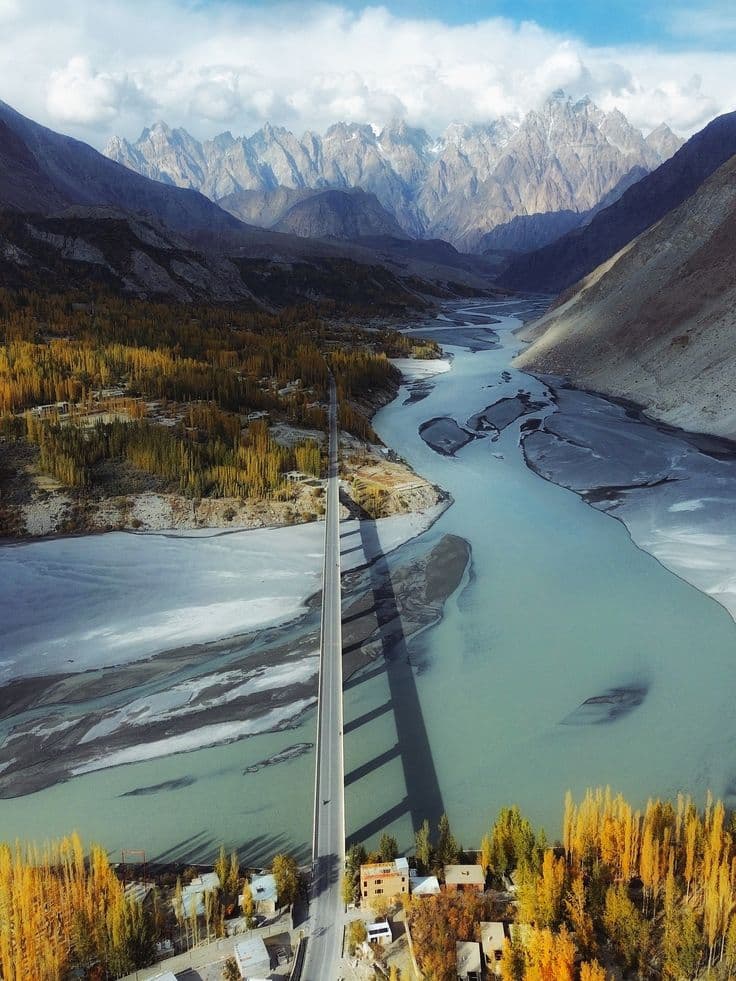
Gojal at its own pace: Attabad Lake, which is fifteen years old and was a landslide before that, the Hussaini suspension bridge for anyone who fancies it, the Passu Cones, and Gulmit village. Upper Hunza blooms last, so in a late season this is the day the blossom is at its best.
Day 8Hunza to Naran, or fly from Gilgit

Back down the Karakoram Highway. The drive to Naran is long and good; alternatively the Gilgit–Islamabad flight is fifty minutes when it runs, and we will put you on it if the weather holds and you would rather have the day.
Day 9Naran to Islamabad
Down the Kaghan valley and back into the plains, five to six hours. An afternoon in Islamabad — Faisal Mosque, the Margalla hills or the Saidpur lanes — and a last dinner.
Day 10Departure
Transfer to Islamabad International. A day room at the hotel if your flight is in the evening.
What’s included
- All road transport on the Karakoram Highway, and 4x4 jeeps into the side valleys
- Nine nights in hotels, twin share with en-suite, breakfast included
- All meals from Islamabad to Islamabad
- English-speaking guide throughout
- Khunjerab National Park fees and all permits
- Airport transfers at both ends
- Entry to Baltit Fort, Altit Fort and the royal garden
Not included
- International flights to and from Islamabad
- Pakistan visa, currently around US$ 100 — see our visa guide
- Travel insurance
- Domestic flights, if you would rather fly Islamabad–Gilgit than drive — we will quote it
- Lunch and dinner in Islamabad
- Tips, personal expenses and anything not listed above
Good to know
**When the blossom actually happens**
Late March to the third week of April, and it is a moving target. Flowering runs up the valley with altitude: lower Hunza and Nagar — Ghulmet, Minapin, around 1,900 to 2,000 metres — go first; Karimabad and Altit at 2,400 metres follow three to five days later; Gulmit and upper Hunza can be a week behind that. A warm spring pulls the whole sequence forward by a week or more, a cold one pushes it back.
What that means for you: nobody can promise a specific valley in full bloom on a specific date, and any operator who does is guessing. What we do instead is hold the shape of the itinerary and decide on the ground which valleys get the days. Early in the window we weight Nagar; late in it we weight Gojal. Booking the middle of the window — the first ten days of April — gives you the best odds of catching something at peak somewhere.
**Apricot, not cherry**
Most of what you will photograph is apricot. Hunza is an apricot valley — it is the staple, dried on the flat roofs every September — and the apricot bloom is white and far more abundant than the cherry, which is pinker and comes slightly later. The tour has the name it has because that is what people search for, but the valley floor in early April is apricot.
**Weather and what to bring**
Spring in Hunza is warm in the sun and cold out of it, and April nights in Karimabad drop near freezing. The Khunjerab day is genuinely cold — snow underfoot, wind, and 4,693 metres. Layers, a proper jacket, gloves and sunglasses. Heating in valley hotels is limited and often a gas heater in the room rather than central.
**Altitude**
Not an issue on this trip. You sleep at 2,400 metres at the highest and the only significant height is the hour or so at Khunjerab, which is a drive-up. People occasionally feel the pass; nobody gets ill from it on this itinerary.
**Getting there**
We drive the Karakoram Highway both ways as standard, because the flight to Gilgit cancels often in spring and stranding a group at either end is worse than a long drive. If the forecast is good we will offer the flight for one leg. Do not book a same-day international connection at the end.
Questions about this trip
When is cherry blossom season in Hunza?
Late March to the third week of April. It moves with altitude and with the spring: lower Hunza and Nagar around 1,900 metres bloom first, Karimabad at 2,400 metres three to five days later, and upper Hunza and Gulmit up to a week after that. A warm March pulls it all forward. The first ten days of April is the window with the best odds of catching a valley at peak.
Is it cherry or apricot blossom in Hunza?
Mostly apricot. Hunza is an apricot valley — it is the staple crop, dried on the roofs every autumn — and apricot blossom is white and far more abundant than cherry, which is pinker and comes a little later. Almond and apple follow. The trip is called a cherry blossom tour because that is the phrase people search for, but what fills the valley floor in early April is apricot.
Can you guarantee the blossom will be out?
No, and nobody honestly can. Bloom timing shifts by a week or more with the spring, and it is not the same date in every valley. What we do is hold the itinerary's shape and decide on the ground which valleys get the days — Nagar early in the window, Gojal late — so that you are where the bloom is rather than where a schedule printed in January said you would be.
How high is the Khunjerab Pass and is it open in April?
4,693 metres, the highest paved border crossing in the world. The road to the pass is normally open on the Pakistani side through April, with deep snow at the top and often marmots about. The border itself with China is usually closed to traffic until later in the spring, which does not affect the visit. If snow closes the road we substitute Attabad and the upper valley.
Do you fly or drive to Hunza?
Drive, both ways, as standard — two long days on the Karakoram Highway, and good ones. The Islamabad–Gilgit flight is fifty minutes and spectacular but cancels frequently in spring weather, and a stranded group at either end costs more than the drive. If the forecast is settled we will offer the flight for one leg and quote it separately.
Is the Hunza blossom tour suitable for families?
Yes. There is no trekking, no altitude to speak of, hotels every night, and the walking is short. The long driving days on the Karakoram Highway are the thing to weigh with young children. We have taken children from about six upwards on this itinerary.
You might also consider
 Kalash Uchal Harvest FestivalThe Kalasha harvest festival in late August — the herds come down from the high pastures, the wheat is in, and the valleys dance for three days with almost nobody watching. The quiet one.From US$ 1,650
 Hunza Valley Autumn TourThe five weeks when Hunza's poplars go gold and the apricot orchards turn red, the air clears and Rakaposhi comes out from behind the summer haze. Ten days through Nagar, Karimabad and Gojal.From US$ 1,280
 Kalash Festival (Chilam Joshi)Four days in the Kalash valleys for Chilam Joshi, the spring festival — walnut branches, milk poured over thresholds, and dancing that goes on until the light fails. Nine days from Islamabad, with two full days in the valleys.From US$ 1,650
Enquire about this trip
Tell us who is travelling and roughly when. A trip planner — not a call centre — replies within three hours between 9am and 11pm Pakistan time with a day-by-day itinerary and the full price, per person, with nothing hidden underneath it.
- Every itinerary written from scratch around your dates.
- Licensed operator, running these routes since 2014.
- A full costing up front — no deposit to see one.
- +92 310 5344471
- info@elhamasia.com
- 9am – 11pm PKT, seven days a week
- Office No. 227, Rohtas Road, G-9/1, Islamabad, Pakistan