
Kalash Uchal Harvest Festival
- 8 days, late August
- Three nights in the valleys
- The quiet festival
- A Kalasha guide in the valleys
- Chitral and the Hindu Kush
- Hotels and valley guest houses
- No altitude
- 8-day itinerary
About this tour
Uchal is the harvest. In late August the wheat and barley are in, the goats and the shepherds come back down from the high pastures with the summer's cheese, and the Kalasha valleys hold three days of thanksgiving for it. Milk and cheese are shared, bread is baked, and there is dancing in the charso — the flat ground each hamlet keeps for it — in the late afternoons.
It is the counterpart to Chilam Joshi in May, and in almost every respect it is the opposite. Chilam Joshi sends the herds up; Uchal brings them down. Chilam Joshi is the famous one, with news crews and several hundred outside visitors in Bumburet; Uchal is the one the valleys keep more or less to themselves. If you have read about the Kalasha and want to see the festival that is still mostly for the people whose festival it is, this is the one.
We give it three nights in the valleys out of eight days, weighted towards Rumbur and Birir rather than Bumburet. Late August is also the green end of the year up there — the fields are cut but the walnut and mulberry are heavy, the river is still running full from the glaciers, and the apricots are drying on every flat roof. The rest of the trip is Chitral, the Lowari and the flight.
Trip highlights
A Kalasha festival without the crowd
Uchal draws a fraction of the visitors Chilam Joshi does, and in Rumbur or Birir you may be one of very few outsiders present.
The herds coming down
Shepherds returning from the high summer pastures with cheese made up there over the season — the whole point of the festival, and it is handed round.
Three nights in the valleys
Rather than a day trip, and weighted to the two smaller valleys where the festival is least altered by being watched.
Late-August Chitral
The fort, the bazaar, the polo ground in town, and Tirich Mir at 7,708 metres clear of cloud more often than in spring.
Route
- 1 Start
- 2 Stop in order
- 5 Finish
- Route travelled
Loading map…
At a glance
- 8 days, late AugustUchal runs about three days, set by the Kalasha calendar.
- Three nights in the valleysWeighted to Rumbur and Birir, the two quieter valleys.
- The quiet festivalA fraction of the visitors Chilam Joshi draws in May.
- A Kalasha guide in the valleysLocal, paid directly, and the reason it makes sense.
- Chitral and the Hindu KushTirich Mir, 7,708 m, over the town on a clear morning.
- Hotels and valley guest housesRooms are far easier to get than in May.
- No altitudeThe valleys are around 2,000 m. Nothing here goes high.
Day by day
Day 1Arrive Islamabad
Met at the airport, driven to the hotel, and a briefing over dinner — what Uchal is, how it differs from the spring festival, and the handful of things worth knowing before arriving somewhere people live.
Day 2Fly to Chitral

An hour over the Lowari, or seven hours through the tunnel if the cloud is down. Late August is the better end of the year for this flight — the monsoon is easing and Tirich Mir is out more often than not. Afternoon in Chitral: the fort, the Shahi Mosque and the bazaar.
Day 3Chitral into Rumbur
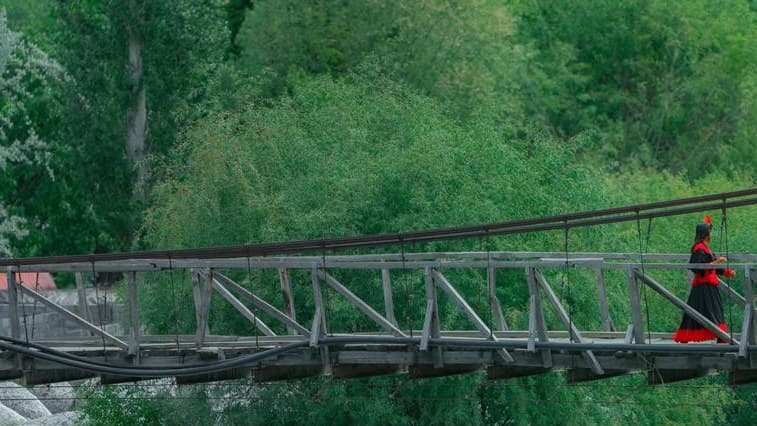
Two hours by jeep up the track beside the river into Rumbur, the steeper and quieter of the two main valleys. Arrive in the afternoon as the festival is getting going. Rumbur has fewer guest houses than Bumburet and that is the reason we use it.
Day 4Uchal — the herds come down

The festival's core: shepherds returning from the high pastures with the summer's cheese, milk and cheese shared out, bread baked, and the first of the dancing in the charso through the afternoon. Between it all, the valley in late summer — cut fields, heavy walnut and mulberry trees, apricots drying on the roofs.
Day 5Birir, and the second day of the festival

Across to Birir, the smallest and least visited of the three valleys, where Uchal is at its least altered. On foot between the hamlets, and the dancing again in the late afternoon. If the schedule in Bumburet is stronger this year we go there instead — the valleys do not keep identical calendars and our guide will know by the time you arrive.
Day 6The last morning, and back to Chitral

A final morning in the valleys for the closing dances, then down the track to Chitral in the afternoon. A hot shower and a proper bed.
Day 7Fly to Islamabad
The morning flight, or the Lowari road if it is grounded — which is why this day exists rather than flying on day 6. Afternoon in Islamabad and a last dinner.
Day 8Departure
Transfer to Islamabad International. A day room is arranged if your flight is late.
What’s included
- Islamabad to Chitral flights both ways, with the Lowari road held in reserve
- Hotels in Islamabad and Chitral, twin share, breakfast included
- Guest house accommodation in the Kalash valleys, twin share
- All meals from Chitral to Chitral
- All road transport, including 4x4 jeeps into and between the valleys
- English-speaking guide throughout and a Kalasha guide in the valleys
- Kalash valley entry fees and all permits
- Airport transfers at both ends
Not included
- International flights to and from Islamabad
- Pakistan visa, currently around US$ 100 — see our visa guide
- Travel insurance
- Lunch and dinner in Islamabad
- Tips, personal expenses and anything not listed above
Good to know
**The dates**
Uchal falls in the second half of August and runs about three days. Like the rest of the Kalasha calendar it is confirmed by the valleys rather than published a year ahead, so treat late August as the window and book with us before you commit to international flights.
**Uchal or Chilam Joshi?**
A fair question and the answer depends on what you want. Chilam Joshi in May is the spectacle — the most colourful, the most photographed, the one with the crowd, and the one where finding a bed in Bumburet takes months of notice. Uchal in August is the harvest, it is quieter by a large margin, and in Rumbur or Birir you may be among very few outsiders there.
If you want the images you have seen of massed dancers in full dress, come in May. If the appeal is being somewhere that is still mostly for the people whose festival it is, come in August. We run both.
**How to be there**
Uchal is a religious festival, not a show. Ask before photographing anyone and particularly before photographing women closely — the answer is usually yes and the asking is the point. The *bashali*, the women's house, and the altars above the villages are off limits to all outsiders and to Kalasha men too. If you are offered a place in the dance, take it. Our guide will walk you through all of this on the way up.
**Late August weather**
Warm days in the valleys, around 28 to 30 °C, and comfortable nights. The monsoon is easing by then but the tail of it can still bring rain to Chitral and make the jeep track slippery. A light waterproof is enough. The valleys sit near 2,000 metres so there is no altitude issue.
**Accommodation**
Simple valley guest houses — clean, basic, hot water sometimes from a bucket. Rooms are much easier to come by than during Chilam Joshi, which is one of the practical arguments for August. Chitral and Islamabad are ordinary hotels.
**Getting to Chitral**
The flight is an hour; the Lowari tunnel road is about seven. The flight cancels in cloud, so the itinerary carries a buffer day in Chitral at the end and we will not book you a same-day international connection.
Questions about this trip
When is the Kalash Uchal festival?
The second half of August, running about three days. Uchal is the Kalasha harvest festival, marking the wheat and barley being in and the herds returning from the high summer pastures. Exact dates are set by the Kalasha calendar and confirmed by the valleys rather than published far ahead, so treat late August as the window.
What happens at the Uchal festival?
The shepherds come down from the high pastures with the cheese made there over the summer, and milk, cheese and fresh bread are shared out. There is dancing in the charso — the flat dancing ground each hamlet keeps — in the late afternoons across the three days. It is a thanksgiving for the harvest and it is held for the valley, not for visitors.
Is Uchal or Chilam Joshi the better festival to visit?
Chilam Joshi in May is the spectacle: the most colourful, the most photographed and by far the busiest, with beds in Bumburet booked months ahead. Uchal in August is much quieter, and in Rumbur or Birir you may be one of very few outsiders present. Come in May for the images; come in August to be somewhere still mostly for the people whose festival it is.
How many Kalash festivals are there in a year?
Three main ones. Chilam Joshi in mid-May opens the season and sends the herds up. Uchal in late August is the harvest and brings them down. Chaumos runs across the winter solstice in December and is the most important religiously, as well as the hardest to reach — the Lowari can close on snow. We run trips to the first two.
Do I need a permit for the Kalash valleys?
No separate permit for the valleys themselves, but there is a police check post on the road in where foreign visitors are registered, and a valley entry fee. Both are handled by us and included. You need a Pakistani visa, currently around US$ 100, and a passport valid six months beyond your return.
What is the weather like in the Kalash valleys in August?
Warm — around 28 to 30 °C in the daytime — with comfortable nights, and the valleys at their greenest. The monsoon is easing by late August but its tail can still bring rain to Chitral and make the jeep track in slippery rather than impassable. A light waterproof covers it. There is no altitude problem: the valleys sit near 2,000 metres.
You might also consider
 Hunza Valley Autumn TourThe five weeks when Hunza's poplars go gold and the apricot orchards turn red, the air clears and Rakaposhi comes out from behind the summer haze. Ten days through Nagar, Karimabad and Gojal.From US$ 1,280
 Kalash Festival (Chilam Joshi)Four days in the Kalash valleys for Chilam Joshi, the spring festival — walnut branches, milk poured over thresholds, and dancing that goes on until the light fails. Nine days from Islamabad, with two full days in the valleys.From US$ 1,650
 Shandur Polo Festival TourThe world's highest polo ground at 3,743 metres, and the one week a year it is used. Gilgit against Chitral, no umpire worth the name, and ten thousand people camped on a pass with no village on it.From US$ 1,880
Enquire about this trip
Tell us who is travelling and roughly when. A trip planner — not a call centre — replies within three hours between 9am and 11pm Pakistan time with a day-by-day itinerary and the full price, per person, with nothing hidden underneath it.
- Every itinerary written from scratch around your dates.
- Licensed operator, running these routes since 2014.
- A full costing up front — no deposit to see one.
- +92 310 5344471
- info@elhamasia.com
- 9am – 11pm PKT, seven days a week
- Office No. 227, Rohtas Road, G-9/1, Islamabad, Pakistan