
Jeep Safari Pakistan
- 14 days, July to mid-September
- 4x4 with driver throughout
- Four passes above 4,000 m
- Deosai plateau, 4,114 m
- Hunza and Baltistan in one trip
- Hotels, and one night under canvas
- Maximum three jeeps
- 14-day itinerary
About this tour
This is the trip that joins up the bits of northern Pakistan that ordinary tours have to choose between. Most itineraries pick a side: Hunza and the Karakoram Highway, or Skardu and Baltistan. A jeep safari takes both, and then adds the roads between them that a minibus cannot use — the Babusar Pass at 4,173 metres, and the Deosai plateau at an average of 4,114, which is the second-highest plateau on earth after the Tibetan and is a national park with no road through it worth the name.
Fourteen days, four passes over 4,000 metres, and about half of it on surfaces that are not tarmac. You are in a 4x4 with a driver who has done these roads for years, four to a jeep so nobody is in a middle seat, and every night booked ahead — hotels where they exist, a camp on Deosai where they do not. The walking is optional and short. The demand is time in the seat and a tolerance for corrugated gravel.
What you get for it is range. The Khunjerab Pass at 4,693 metres on the Chinese border, which is the old Silk Route and the highest paved frontier crossing in the world. Fairy Meadows under Nanga Parbat. Shigar and the cold desert at Skardu. And then Deosai, which is the reason people book this rather than a road tour: 843 square kilometres of high plateau above the treeline, wildflowers to the horizon in July, marmots everywhere and about seventy-eight Himalayan brown bears, which is up from nineteen in 1993 and is one of the better conservation stories in the region.
Trip highlights
A night on the Deosai plateau
843 square kilometres above the treeline at an average of 4,114 metres, crossed in a day and slept on for a night. In July it is wildflowers to the horizon, marmots on every bank, and a real chance of a Himalayan brown bear at distance.
Four passes above 4,000 metres
Babusar at 4,173 m, Khunjerab at 4,693 m on the Chinese border, and the two crossings onto and off Deosai.
Both halves of the north
Hunza, Karimabad and the Karakoram Highway on the way up; Skardu, Shigar and Baltistan on the way back — joined by the Deosai track rather than by driving the same road twice.
Fairy Meadows and the Raikot face
Nanga Parbat reached the way it should be: the jeep track up from the Karakoram Highway, which is the most talked-about piece of road in Pakistan.
Route
- 1 Start
- 2 Stop in order
- 9 Finish
- Route travelled
Loading map…
At a glance
- 14 days, July to mid-SeptemberThe only window when Babusar, Khunjerab and the Deosai tracks are all open.
- 4x4 with driver throughoutFour to a jeep. No middle seats, and everyone gets a window.
- Four passes above 4,000 mBabusar 4,173 m, Khunjerab 4,693 m, and both Deosai crossings.
- Deosai plateau, 4,114 mSecond-highest plateau on earth. A night camped on it.
- Hunza and Baltistan in one tripMost itineraries make you choose. This one does not.
- Hotels, and one night under canvasEverything booked ahead. Deosai is the exception, and it is a camp.
- Maximum three jeepsTwelve people at the most, and usually fewer.
Day by day
Day 1Arrive Islamabad
Met at the airport and driven to the hotel. Dinner, a briefing, and a look at the jeeps and the drivers who will be with you for the next two weeks.
Day 2Islamabad to Naran, up the Kaghan valley

Out through Abbottabad and into the Kaghan valley, following the Kunhar river up to Naran at 2,400 metres. Six to seven hours, the last of it climbing. This is the gentle start: tarmac, pine forest and a night that begins your acclimatisation for tomorrow.
Day 3Over the Babusar Pass — 4,173 m — to Chilas

The first real jeep day and one of the best. Up past Lulusar lake and onto the Babusar Pass at 4,173 metres, where the Kaghan valley ends and the Indus basin opens out in front of you with Nanga Parbat somewhere in the haze to the north. Down the far side to the Karakoram Highway and Chilas. The pass is only open from about April to September, which is one of the two things that set this trip's season.
Day 4The Raikot track and the walk to Fairy Meadows

The jeep track up from Raikot Bridge — narrow, unsurfaced and cut into the side of the gorge, and by a distance the most discussed piece of road in the country. It ends at Tato, and from there it is an hour and a half on foot or on a pony up through the pines to Fairy Meadows at 3,300 metres, with the Raikot face of Nanga Parbat filling the end of the meadow.
Day 5Fairy Meadows — a day on foot
The one day with real walking in it, and it is optional. Up to Beyal camp and on towards the Nanga Parbat base camp viewpoint, four to five hours return, for the closest legal look at the Raikot face. Or stay in the meadow and do nothing, which plenty of people choose and nobody regrets.
Day 6Down to the Karakoram Highway and north to Karimabad
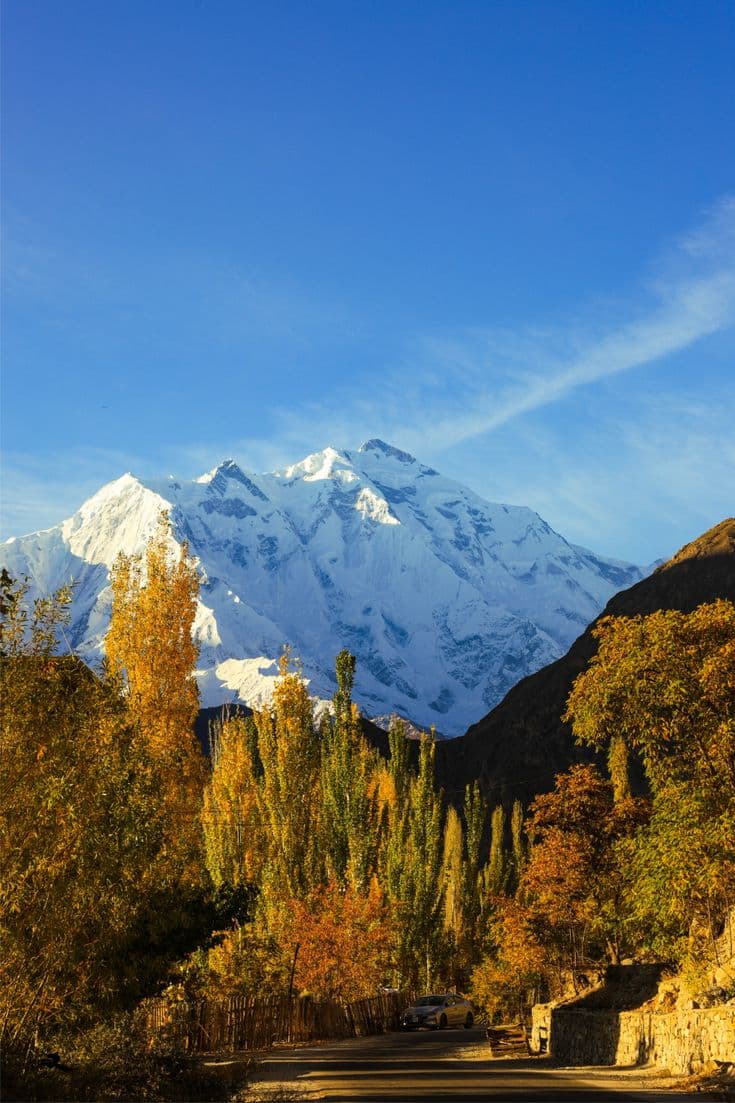
Back down to Raikot and onto the Karakoram Highway proper — the old Silk Route, following the Indus and then the Hunza river north past the Rakaposhi viewpoint to Karimabad. Three nights here, and a hotel with a view of Ultar after two nights at altitude.
Day 7Karimabad — Baltit, Altit and Duikar

Baltit Fort above the town, seven hundred years old and properly restored, and Altit Fort below it with the royal garden. Up to the Eagle's Nest at Duikar for sunset over Rakaposhi, Diran and the Ultar spires. An easy day, on purpose, before the pass.
Day 8The Khunjerab Pass — 4,693 m
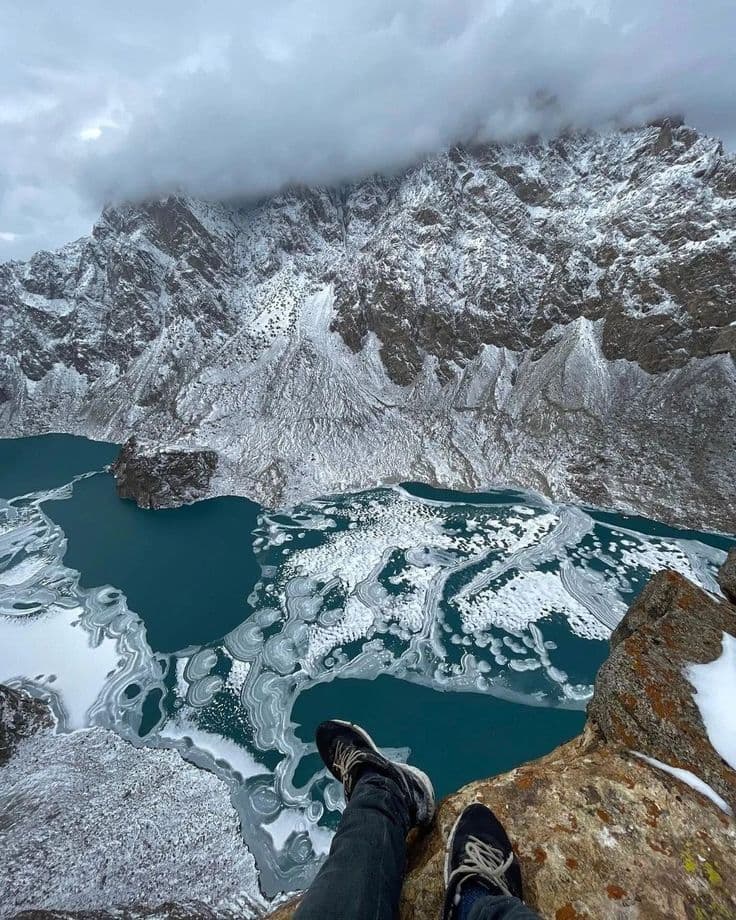
North through Gojal on the Karakoram Highway: Attabad Lake, the Passu Cones, Sost, and then the climb to the Chinese border at Khunjerab, the highest paved international border crossing in the world. Yaks, marmots and usually a queue of trucks. Back down to Karimabad or Gulmit for the night.
Day 9Hunza to Skardu

Back down to Gilgit and then east along the Indus into Baltistan — seven hours on a road that was one of the hardest in Pakistan until recently and is now mostly sealed. The landscape changes completely: wider, drier, bigger, with the cold desert around Skardu at the far end.
Day 10Skardu and the Shigar valley
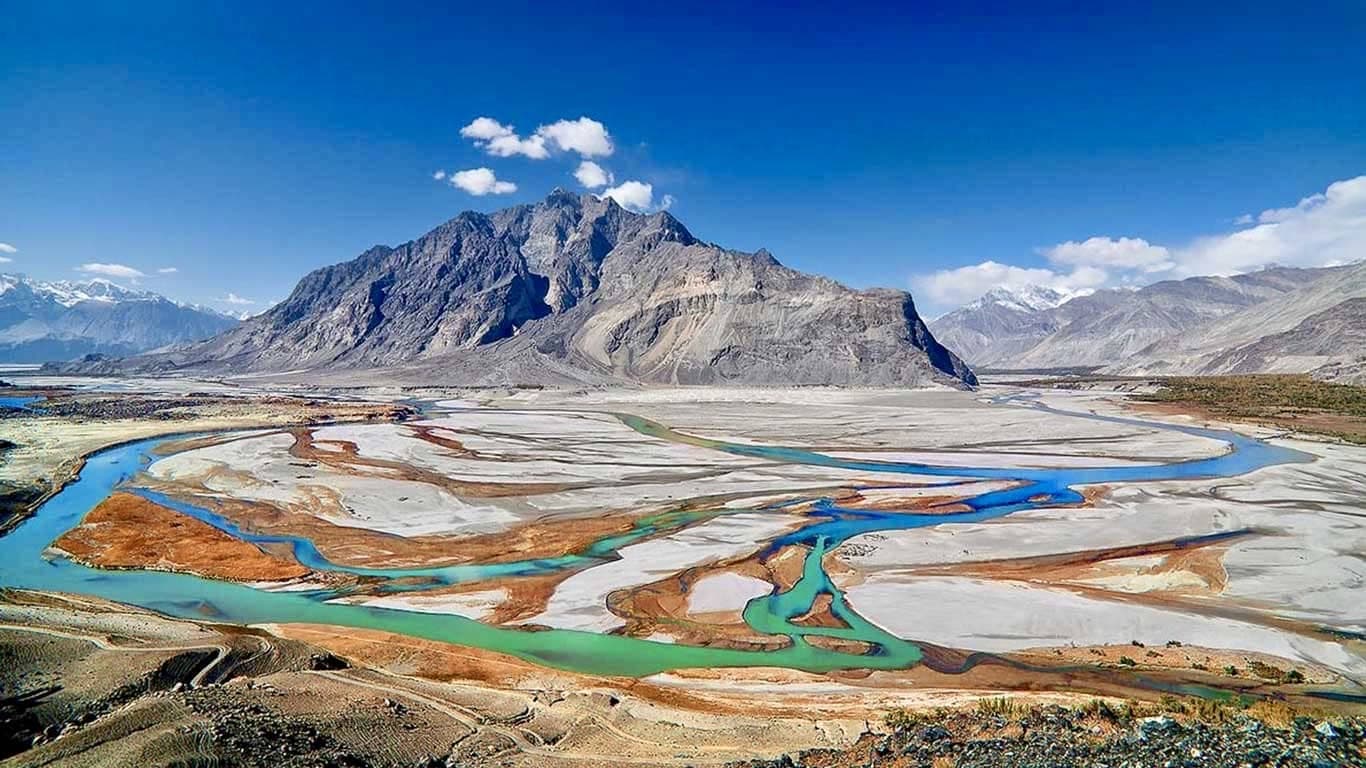
Kharpocho fort above the town, the Shigar valley and its restored fort, the sand dunes of the cold desert, and Upper Kachura lake. A day off the rough roads while the jeeps are checked over for Deosai.
Day 11Onto the Deosai plateau — 4,114 m — and camp

Thirty kilometres and a world away. The track climbs out of Skardu and onto the plateau, and then there is nothing above you but sky: 843 square kilometres of high grassland above the treeline, no trees at all, wildflowers through July, marmots on every bank and streams the colour of glass. Camp is pitched near Sheosar lake. It is cold at night, even in August, and the sky is as good as it gets anywhere.
Day 12Across Deosai to Astore

The rest of the plateau in the morning, which is the best time for bears — there are about seventy-eight Himalayan brown bears on Deosai now, up from nineteen in 1993, and while nothing is promised, the drivers know where to look. Off the western side and down into the Astore valley, losing two thousand metres in an afternoon.
Day 13Astore to Naran, or down the Karakoram Highway
Out of the Astore valley to the Karakoram Highway and south. If Babusar is open and the weather is settled we go back over it into Kaghan, which is the better road; if not, the KKH all the way, which is longer and equally fine. A long day either way.
Day 14To Islamabad and onward
Into Islamabad by early afternoon. A day room at the hotel, time to wash two weeks of Deosai dust out of everything, and a transfer to the airport for an evening flight.
What’s included
- 4x4 jeeps with experienced drivers for the whole route, four passengers to a vehicle
- Thirteen nights: hotels and guest houses throughout, and a full-service camp on Deosai
- All meals from Islamabad to Islamabad
- English-speaking guide travelling with the group
- Full camp kit for the Deosai night — tents, mattresses, mess tent, kitchen and crew
- Deosai National Park, Khunjerab National Park and all other entry fees and permits
- Fairy Meadows jeep transfer and the porter for your bag on the walk in
- Airport transfers at both ends
Not included
- International flights to and from Islamabad
- Pakistan visa, currently around US$ 100 — see our visa guide
- Travel insurance, which should cover road travel and camping to 4,500 metres
- Sleeping bag for the Deosai night — bring one rated to 0 °C or hire in Skardu
- Lunch and dinner in Islamabad
- Tips for the drivers and camp crew, customary and at your discretion
- Personal expenses and anything not listed above
Good to know
**The season is narrow and it is set by the passes**
July to mid-September. This is not a preference, it is arithmetic: Babusar is open roughly April to September, the Deosai tracks are under snow until late June, and Khunjerab is a summer road. The only window when all of them are open at once is high summer, and even then an early snowfall in September can shut Babusar overnight. We carry an alternative down the Karakoram Highway for exactly that, and it costs you a view rather than a day.
**What fourteen days in a jeep is actually like**
About half the route is sealed road and about half is not. The unsealed half is corrugated gravel, river crossings on plank bridges, and a certain amount of shelf road with a drop on one side. The drivers do it for a living, the vehicles are maintained for it, and it is safer than it looks — but if exposure bothers you, this is the wrong trip and we would rather tell you now.
Four passengers to a jeep, which means everyone has a window and nobody is in a middle seat for two weeks. Days run from four to eight hours of driving, with stops.
**Deosai and the night on it**
The camp on Deosai is the only night not in a building, and it is the one people remember. At 4,114 metres it gets close to freezing after dark even in August. Bring a sleeping bag rated to 0 °C — you can hire one in Skardu, but bringing your own is better. Full camp kit, mess tent, kitchen and crew are ours and included.
Altitude is worth a thought. You sleep at 2,400 m in Naran, 3,300 m at Fairy Meadows and 4,114 m on Deosai, in that order, which is a sensible progression and not an accident. The Khunjerab day is a drive-up to 4,693 m and back down, which is where people most often feel it.
**Brown bears**
Deosai's Himalayan brown bear population has gone from nineteen in 1993 to about seventy-eight in 2022. That makes a sighting genuinely possible and nowhere near guaranteed, usually at distance and usually in early morning. Bring binoculars. Anyone who promises you a bear is selling something.
**Who this suits**
People who want to cover ground and are not interested in trekking. There is one optional walking day at Fairy Meadows and nothing else longer than an hour. It suits photographers, it suits anyone who has done a Hunza road tour and wants the half of the north they missed, and it suits families with older children. It does not suit anyone who dislikes long days in a vehicle, because that is the trip.
Questions about this trip
What is the best time for a jeep safari in northern Pakistan?
July to mid-September. The season is fixed by the passes rather than by the weather generally: Babusar at 4,173 m is open roughly April to September, the Deosai tracks are snowbound until late June, and Khunjerab is a summer road. High summer is the only window when all of them are open together, and an early September snowfall can close Babusar at no notice.
How high is the Deosai plateau and what is there?
Deosai sits at an average of 4,114 metres and covers 843 square kilometres — the second-highest plateau in the world after the Tibetan. It is above the treeline, so there are no trees at all: high grassland, wildflowers through July, streams, marmots everywhere, and about 78 Himalayan brown bears, up from 19 in 1993. The Balti name Ghbiarsa means 'summer's place', because that is the only time you can get onto it.
Will I see a brown bear on Deosai?
Possibly, and nobody can promise it. The population is around 78 animals across 843 square kilometres, so sightings are real but not routine — usually at distance and usually early in the morning. Our drivers know the ground and where the bears tend to be. Bring binoculars, and treat any operator guaranteeing a sighting with suspicion.
Do I need to be fit for a jeep safari?
No. There is one optional walking day at Fairy Meadows — four to five hours return towards the Nanga Parbat viewpoint — and nothing else longer than an hour. What the trip demands is tolerance for long days in a vehicle on rough ground, and for one night camped at 4,114 metres. If exposure on shelf roads bothers you, this is the wrong trip.
How high is the Khunjerab Pass?
4,693 metres, the highest paved international border crossing in the world and the high point of the Karakoram Highway. You reach it by road from Karimabad in about three hours and come back the same day, so there is no sleeping at that height. It is also where people most often notice the altitude, having driven up two thousand metres in a morning.
Where do you sleep on a jeep safari?
Hotels and guest houses for thirteen of the fourteen nights, all booked ahead — Naran, Chilas, Fairy Meadows, Karimabad, Skardu and Astore. The exception is Deosai, where there is nothing, so we run a full camp with tents, mattresses, mess tent, kitchen and crew. Bring a sleeping bag rated to 0 °C for that night; it drops close to freezing even in August.
How is this different from a Hunza road tour?
A standard road tour takes the Karakoram Highway to Hunza and back down the same road. This takes the Babusar Pass up, Hunza and Khunjerab, then crosses east to Skardu and returns over the Deosai plateau to Astore — so you cover both Hunza and Baltistan without repeating a mile, and on roads a minibus cannot use. It is four passes over 4,000 metres rather than one.
You might also consider
Enquire about this trip
Tell us who is travelling and roughly when. A trip planner — not a call centre — replies within three hours between 9am and 11pm Pakistan time with a day-by-day itinerary and the full price, per person, with nothing hidden underneath it.
- Every itinerary written from scratch around your dates.
- Licensed operator, running these routes since 2014.
- A full costing up front — no deposit to see one.
- +92 310 5344471
- info@elhamasia.com
- 9am – 11pm PKT, seven days a week
- Office No. 227, Rohtas Road, G-9/1, Islamabad, Pakistan