
Hunza Leadership Retreat
- Hunza Valley
- 5 days, 4 nights
- 8 to 40 delegates
- Four-star, en suite, twin or single
- Meeting room, AV and an event lead
- April to early November
- 5-day itinerary
About this tour
The reason to take a leadership team to Hunza is not the view from the terrace, although you will get it every morning of the trip. It is that Karimabad is far enough away, and awkward enough to reach, that nobody quietly goes back to their desk at eleven o'clock. An offsite ninety minutes from head office is a meeting with a buffet. This is four nights in the Karakoram with the working day protected, and everyone in the room knows why they came.
The programme is built the same way every time and filled differently for every client. Mornings are yours: a room we have walked ourselves, laid out how you asked, with power, projection, whiteboards and a printer that works. Afternoons are the valley — Baltit Fort, the Altit royal garden, the boats on Attabad Lake, the Duikar ridge at first light on the last morning. Evenings are dinner somewhere that is not a hotel banquet hall. A dedicated event lead travels with you from Islamabad and stays until you fly home, so the question of who chases the coach, the coffee or the missing HDMI cable never reaches anyone on your side.
We are also willing to say what a retreat brochure normally will not. Getting to Hunza depends on a flight to Gilgit that is flown visually through mountain country and cancels more often than any published schedule suggests, and the alternative is fourteen to sixteen hours on the Karakoram Highway. That single fact should shape your dates, and it is why this itinerary carries a night in Islamabad at the front and a margin at the back rather than a tight connection into a Monday board meeting. Meeting rooms in Karimabad are real, but they are not convention centres: we will tell you the true seated capacity of the room we are proposing, and if your headcount does not fit it we will tell you that too, rather than let you find out on day one.
What Hunza gives you in return is a valley that argues for itself. Baltit Fort has stood above Karimabad for around seven centuries and was pulled back from collapse in the 1990s by a restoration that is now studied internationally. Altit, below it, is older still. Attabad Lake did not exist before January 2010, when a mountainside came down and dammed the Hunza River, drowning villages and the highway with them — the turquoise water everyone photographs is a disaster the valley engineered its way out of, and the tunnels you drive through to reach it are the proof. There is a rhythm to a good offsite here: work in the morning, stand somewhere in the afternoon that resets the scale of whatever you were arguing about, come back to it the next day with the argument smaller.
It suits leadership teams of eight to forty, annual planning cycles, post-merger alignment, a new strategy that needs a room rather than a deck, and any group that has run out of road doing this over video. It is not a reward trip — that is the Skardu programme — and it is not a physical team-building exercise, which is Deosai. This one is for thinking.
Trip highlights
Three working mornings nobody can interrupt
Sessions run 09:00 to 13:00 with the room held all day, so a breakout can overrun without anyone losing the space. Coffee, water and a technician are there from the first morning, not from the second.
Baltit Fort, and a session in it
Roughly seven centuries old, restored over six years in the 1990s and now a museum above the town. The terrace takes a small group for a working session or a dinner, and it changes the tone of both.
Attabad Lake, and the tunnels that answered it
A landslide in January 2010 dammed the Hunza River and cut the Karakoram Highway for five years. The lake is twenty-odd kilometres of turquoise; the road now runs behind it through a series of tunnels. Both halves of that story are worth an afternoon.
Duikar at first light
The ridge above Karimabad at around 2,850 m, reached in the dark on the last morning. Rakaposhi at 7,788 m takes the sun first while the valley floor is still black. It is the photograph the team keeps and the fifteen minutes nobody talks over.
One event lead, arrival to departure
Travels with you from Islamabad, holds the schedule, the hotel, the vehicles and the room, and is the only person your team has to speak to about any of it.
A plan for the flight not flying
The Gilgit sector goes when the corridor is clear and not otherwise. Vehicles, drivers and the highway timing are held in reserve from the day you confirm, so the fallback is a decision rather than a scramble.
Route
- 1 Start
- 2 Stop in order
- 7 Finish
- Route travelled
Loading map…
At a glance
- Hunza ValleyKarimabad at about 2,500 m, with Rakaposhi, Ultar Sar and Lady Finger from the terrace.
- 5 days, 4 nightsOne night in Islamabad, three in Karimabad — three full working mornings in the mountains.
- 8 to 40 delegatesOne property up to about forty. Larger groups split, and we will say so before you book.
- Four-star, en suite, twin or singleSingle occupancy throughout is normal on a corporate booking and is quoted as standard.
- Meeting room, AV and an event leadProjector, screen, whiteboards, generator-backed power, and one person whose only job is your programme.
- April to early NovemberBlossom in April, hard blue light and gold poplars in October. July and August are hot and busy.
Day by day
Day 1Arrive Islamabad — welcome dinner, and the brief

Delegates arriving from abroad and from Karachi or Lahore are met at the airport and driven to the hotel. The evening is deliberately light: a welcome dinner, introductions for anyone joining the team new, and twenty minutes from your event lead on what actually happens over the next four days — including the morning's flight and what we do if it does not go. Starting here rather than connecting straight onto the Gilgit sector is the single thing that protects the programme, because a cancelled onward flight on day one costs an evening, and a missed one at the end of a same-day chain costs a working day.
Day 2Fly to Gilgit, drive to Karimabad — opening session and dinner at the fort
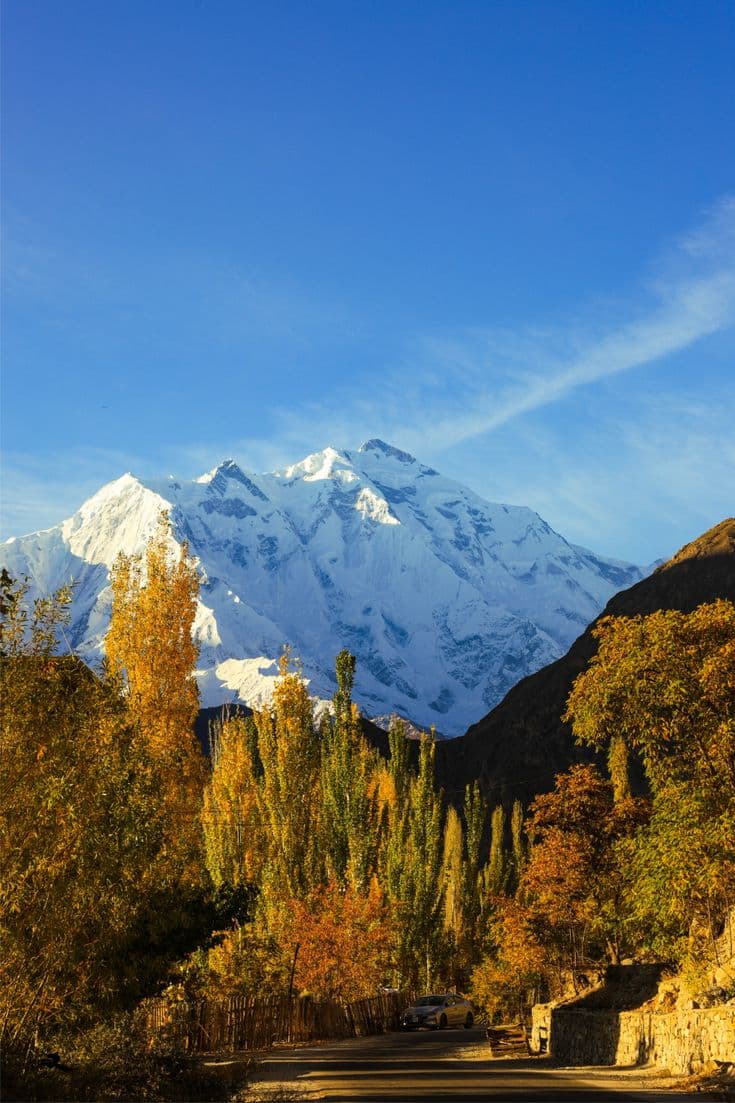
An early transfer for the morning flight north, which is an hour of low flying through the Indus gorge with Nanga Parbat off the left wing and passengers at the windows for all of it. From Gilgit it is around two and a half hours up the Karakoram Highway to Karimabad, past the viewpoint where Rakaposhi stands 7,788 m directly above the road. Rooms from the early afternoon, then your opening session at 16:00 — short, on purpose, because people have travelled. Dinner is on the Baltit Fort terrace above the town, with the valley going dark below it.
Day 3Full working day — plenary, breakouts, and the Altit garden

The heart of the programme, and the day your agenda owns completely. The main room is yours from 08:30 and breakout space is held next to it rather than across town. Lunch is served beside the room so the afternoon starts on time. We suggest closing the formal session at 16:00 and walking down to Altit — the older of the two forts, with a royal garden below it and a lane of apricot orchards between — because a session that ends in a room ends twice, and one that ends outdoors keeps going in the right way. Dinner back at the hotel, unstructured.
Day 4Morning session, then Attabad Lake and the Passu cones

A working morning, usually the one where decisions get written down, finishing at 13:00. Then north up the highway through the Pakistan–China Friendship Tunnels to Attabad Lake, where a chartered boat takes the group the length of the water — twenty-odd kilometres of it, with a village and the old road still underneath. On to Passu for the cones, the serrated ridge of Tupopdan standing over the river, and the Hussaini bridge for anyone who wants to say they crossed it. Back to Karimabad for the closing dinner, and whatever the team decides to do with it.
Day 5Duikar at sunrise, drive to Gilgit, fly to Islamabad
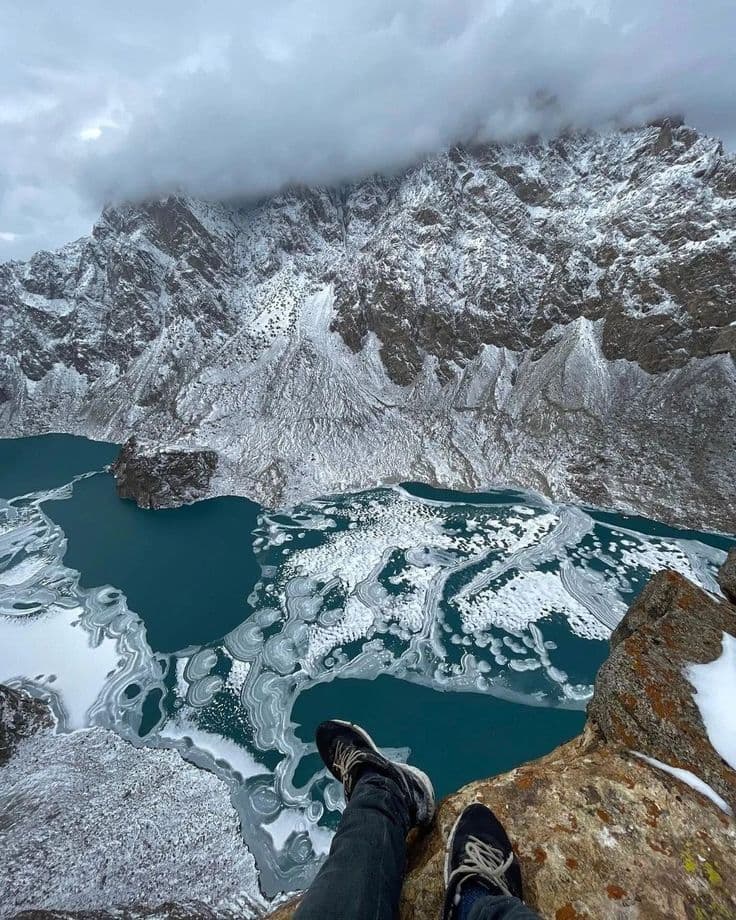
Jeeps leave in the dark for the Duikar ridge above Karimabad at around 2,850 m. Rakaposhi and the Ultar wall take the light first while the valley floor is still in shadow, and it takes about forty minutes for the sun to work down to the fields. Breakfast at the hotel afterwards, then the drive to Gilgit for the midday flight to Islamabad, with a day room held for delegates on evening departures. If the sector is cancelled we drive, which is why nobody on this programme should hold an international connection before the following morning.
What’s included
- Four nights' accommodation — one in Islamabad, three in Karimabad — en suite, single or twin as you specify
- Return domestic flights Islamabad to Gilgit, with the Karakoram Highway drive held as the weather alternative at no extra cost
- A meeting room in Karimabad held for the whole of each working day, with projector, screen, flip charts, whiteboards and generator-backed power
- All meals from arrival in Islamabad to departure, including the welcome dinner and the closing dinner
- Tea, coffee and water service through every session, and working lunches in or beside the room
- All ground transport in private air-conditioned coaches or jeeps, with drivers who know the valley
- A dedicated event lead travelling with the group, plus a local guide for the afternoon programme
- Entry fees at Baltit and Altit forts, the Attabad Lake boat charter and the Duikar sunrise run
- All airport transfers, and a day room in Islamabad on departure day when your flight is an evening one
Not included
- International flights to and from Pakistan, and Pakistan visa fees
- Travel insurance, which we require for every delegate and which must cover altitude to 3,000 m
- An external facilitator, executive coach or speaker — we will engage one on your behalf and pass the cost through at no markup if you would rather not source it yourself
- Printing beyond ordinary session materials, branded signage, stage sets and anything built for the event
- Tips, laundry, calls and anything personal charged to the room
- Costs arising from a weather delay outside the itinerary — see Good to know
Good to know
**The flight to Gilgit is the thing to plan around**
The Islamabad–Gilgit sector is flown visually through mountain terrain and goes when the corridor is clear. It cancels often enough that no corporate programme should be built as though it will certainly operate. The alternative is the Karakoram Highway: fourteen to sixteen hours to Gilgit, which we split across two days rather than drive in one.
This is why the itinerary opens with a night in Islamabad, and why we ask you not to book onward international flights for the evening of the last day. It is also why we hold coaches and drivers in reserve from the day you confirm. What we cannot do is make the weather someone's fault, and an operator promising you a guaranteed arrival date in Hunza is promising something nobody controls.
**Meeting rooms in Hunza are real, and they are not ballrooms**
Karimabad has good hotels with proper function space, but the largest rooms here seat a few dozen, not a few hundred. When we propose a property we will tell you the room's actual seated capacity in your preferred layout, and we walk it before your contract is signed rather than quote a brochure figure. Above roughly forty delegates a single property in Karimabad stops working, and the honest options are to split accommodation across two hotels with one shared session venue, or to move the retreat to Gilgit or Skardu where the rooms are bigger. We will tell you which we think is right for your numbers.
**Power, internet, and the value of both being imperfect**
Grid supply in Gilgit-Baltistan is not continuous and hotels run generators. Every room we book for a session is generator-backed, and we test the projector on the power that will actually be running. Mobile data reaches Karimabad and hotel wifi exists, but neither is reliable enough to stake a live all-hands or a board vote on. Plan for recorded rather than streamed, move anything large in Islamabad, and tell delegates in advance so nobody arrives expecting a video call with a client.
The upside is the one you came for. A team that cannot half-work is a team that works.
**Altitude, mildly**
Karimabad is around 2,500 m and Duikar around 2,850 m. That is high enough that some people sleep badly the first night and feel the fort stairs, and not high enough to need acclimatisation days. Drink more water than you think you need, go easy on the first evening, and tell your event lead about any heart or lung condition before you travel rather than at the top of a staircase.
**No bar, and it is better to know now**
Alcohol is not served publicly in Pakistan and there is none at the retreat. Plan the closing night around something else — the fort terrace, a bonfire, local musicians, all of which we can arrange — rather than discovering the point at 21:00 on day four. Catering is halal throughout; vegetarian, vegan, gluten-free and allergy requirements are straightforward here provided we have the list two weeks out.
**Foreign delegates and paperwork**
Most nationalities use Pakistan's online visa system, and a business visa needs an invitation letter — we issue one for the retreat on request. Hunza itself needs no special permit. Some areas beyond Sost towards the border do, and we handle the application if your programme goes that way. Carry passports on travel days; there are checkposts on the highway that record foreign nationals.
**Friday, and the working week**
Friday prayers take out roughly 12:30 to 14:30 for those attending. If your programme includes a Friday we run the session long in the morning and restart at 15:00, which works better than holding a half-full room through the middle of the day.
**Invoicing, deposits and moving numbers**
We quote per head against a confirmed headcount and a room list, invoice the company rather than individuals, and accept bank transfer in PKR or USD. Headcount can move by a few either way close to the date; what cannot move late is the room list for a property that is full in October. Ask early if your numbers are still soft and we will tell you which weeks have room to absorb them.
Questions about this trip
How much does a corporate retreat in Hunza cost?
It is quoted per head against your programme, and we do not publish a figure because the honest one moves too much to be useful. Four things drive it: headcount, because vehicles, guides and function space are step costs rather than smooth ones and a group of thirty pays less per head than a group of eight; single versus twin occupancy, usually the largest single line on a corporate booking; the season, since the April blossom fortnight and the October colour are the two weeks every hotel in Karimabad prices highest; and whether you want flights, a facilitator, branded production or an evening built for you. Send us headcount, approximate dates and what the days have to achieve, and you get a costed programme, itemised, with the options priced separately so you can take them out.
How many people can you take on one retreat?
Eight to forty in a single property in Karimabad, and the upper figure is a real constraint rather than a soft one — the function rooms here seat a few dozen. Above forty we either split accommodation across two hotels with one shared session venue, or move the retreat to Gilgit or Skardu where the rooms are larger. Both work; they are simply different trips, and we will tell you which one we would run for your numbers before you commit to anything.
Is there a meeting room, projector and reliable power?
Yes to the first two and a qualified yes to the third. The room is held for the whole working day rather than by the hour, and comes with projector, screen, flip charts, whiteboards and a technician for the first session. Grid power in Gilgit-Baltistan is not continuous, so every venue we use is generator-backed and we test the AV on generator supply before your first morning. If your session depends on something unusual — simultaneous translation, a stage, live streaming — tell us early, because some of it has to come up from Islamabad.
What happens if the flight to Gilgit is cancelled?
We drive. The Karakoram Highway takes fourteen to sixteen hours to Gilgit and we split it across two days rather than run it in one, with coaches and drivers held in reserve from the day you confirm rather than found on the morning. The itinerary carries a night in Islamabad at the front and margin at the back for exactly this reason. What a cancellation costs is time, so the rule for corporate groups is simple: no delegate should hold an international connection before the morning after the programme ends.
Is the internet good enough to work from Hunza?
Good enough for email, messaging and uploading a deck. Not good enough to stake a live all-hands, a client call or a board vote on. Mobile data reaches Karimabad and the hotels have wifi, but both vary by the hour. Treat the retreat as offline by design: move heavy files in Islamabad, record rather than stream, and tell delegates before they travel. Teams that plan for this get more out of the four days than teams that fight it.
When is the best time of year for a team offsite in Hunza?
April and October are the two everybody wants. Early to mid April is the apricot and cherry blossom, when the valley floor turns white and pink under snow peaks; October is clear, cold, sharply lit, and the poplars are gold. Both book out early and both price high. May, June and September are excellent and easier to get rooms in. July and August are hot in the valley, busy with domestic tourism, and bring occasional landslide closures on the highway. Winter is beautiful, genuinely cold, and much harder on the flight schedule.
Can you bring in a facilitator, or do you provide one?
Either. Most clients bring their own facilitator or run the sessions internally, and we give them a room that works. If you would rather not source one, we will engage a facilitator or executive coach on your behalf and pass the cost through without a markup — we are a tour operator, and we would rather be judged on the logistics than claim a competence we have not built. What we always provide is the event lead, which is a logistics role and not a content one.
Is Hunza safe for a corporate group, including women in the team?
Hunza is among the most settled parts of Pakistan and has been for decades. Women travel widely here, female delegates are unremarkable in the hotels we use, and the valley has one of the highest literacy rates in the country with women's education a long-established norm rather than a recent one. Practically: dress is relaxed by Pakistani standards and modest by Western ones — shoulders and knees covered is right for everyone — and a headscarf is not expected in the valley, although it is polite inside a mosque. Your event lead is contactable around the clock for the whole programme.
Can you add a day, or build the retreat somewhere other than Karimabad?
Yes to both. A fifth and sixth day gets you Khunjerab Pass at 4,693 m on the Chinese border, or a night in Gilgit on the way out. If Hunza is not the right room for your headcount we run the same programme shape out of Skardu, which has larger hotels and a different afternoon programme. And if what you want is a reward trip rather than a working one, look at the Skardu incentive itinerary instead — it is built for a different purpose, and it shows.
You might also consider
 Deosai Team-Building ExpeditionCamp on the high plains, split into crews for navigation and cooking challenges, and finish around the fire — remote by design, fully supported throughout.On request
 Skardu Incentive TripReward the top performers — Shangrila, Shigar Fort and the Sarfaranga cold desert, with private transport and a dedicated event lead.On request
Enquire about this trip
Tell us who is travelling and roughly when. A trip planner — not a call centre — replies within three hours between 9am and 11pm Pakistan time with a day-by-day itinerary and the full price, per person, with nothing hidden underneath it.
- Every itinerary written from scratch around your dates.
- Licensed operator, running these routes since 2014.
- A full costing up front — no deposit to see one.
- +92 310 5344471
- info@elhamasia.com
- 9am – 11pm PKT, seven days a week
- Office No. 227, Rohtas Road, G-9/1, Islamabad, Pakistan